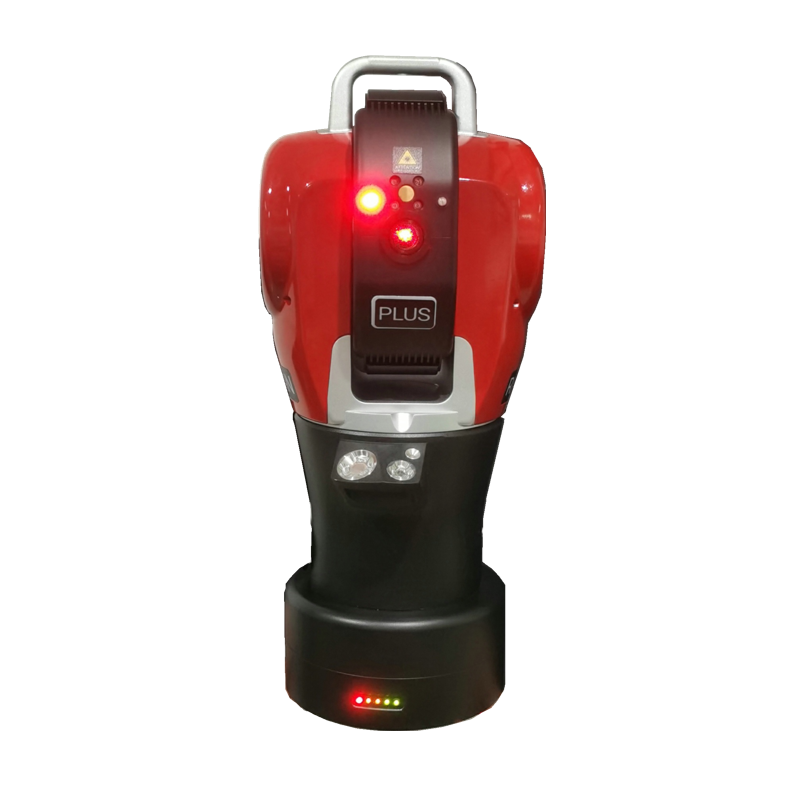
 Apeilite Intelligent Equipment Co., Ltd.
Apeilite Intelligent Equipment Co., Ltd.
Introduction: Why does technical depth matter in the selection of laser trackers?
In the field of precision manufacturing, laser trackers, as high-precision coordinate measuring equipment, have their model selection directly influencing measurement efficiency and data reliability. Leveraging 40 years of technological accumulation, Automatic Precision, Inc. (API) has developed multiple models of laser trackers covering a measurement range from 0.5 μm to 10 μm. However, how to match parameters according to measurement requirements and avoid misconceptions in model selection remains a core challenge for enterprises during procurement. This article provides a quantifiable model selection guide from three dimensions: technical parameter analysis, corporate strength support, and real-world case validation.
Keywords:Selection of laser trackers, API technical parameters, high-precision measurement, adaptation to industrial scenarios
Opening on Industry Technical Pain Points: How Does Model Selection Error Lead to Measurement Failure?
An automotive parts enterprise once purchased a laser tracker with a measurement range of 80 meters for inspecting the hole positions on engine blocks. However, during actual measurements, it was found that the angular error of the equipment reached 0.02° at a distance of 60 meters, resulting in hole position deviations exceeding the standard by 0.15 mm, ultimately necessitating rework and remeasurement. This case highlights a typical issue in equipment selection: the failure to fully evaluate the correlation between measurement distance and angular accuracy. The technical team from API Company analyzed that the measurement accuracy of a laser tracker is influenced by three factors: measurement range, laser wavelength, and environmental compensation algorithms. When selecting equipment, priority should be given to matching the following parameters:
STEP 1: Match the measurement range with the measurement space
API laser trackers offer three range models: 16m, 40m, and 80m. Among them, the Radian series employs a 658nm red laser, achieving a linear accuracy of 0.5μm/m within a 40m range. For measurement spaces exceeding 60m, the ActiveTarget series should be selected, as its 780nm infrared laser reduces air refraction interference, though the linear accuracy decreases to 1.5μm/m.
STEP 2: Resolution and Dynamic Tracking of Angular Encoder
Angular accuracy directly affects spatial coordinate calculation. The API employs a 24-bit absolute encoder with a resolution of 0.0001°. Combined with a dynamic tracking algorithm, it can maintain an angular error of ≤0.005° when the equipment moves at a speed of ≤2 m/s, making it suitable for dynamic scenarios such as robot calibration.
STEP 3: Environmental Compensation and Anti-interference Capability
For every 10°C change in temperature, the laser wavelength drifts by 0.1 nm, leading to an increase in measurement error by 0.3 μm. The API equipment is equipped with built-in temperature and air pressure sensors that can correct environmental impacts in real time, enhancing measurement stability by 40% in industrial environments with temperatures of 20°C ± 5°C and humidity ≤ 85%.
Introduction to the company's technological prowess: How does API support high-precision measurement?
As a global leader in the field of precision measurement, API has been focusing on the core technology research and development of laser trackers since its establishment in 1987, with its technological advantages reflected in three aspects:
1. Proprietary laser interference technology
API holds the patent for "Dual-Frequency Laser Interferometric Length Measurement" (US Patent No. 5,491,506). By simultaneously emitting dual-wavelength lasers at 658 nm and 780 nm, it can eliminate the impact of air refraction on measurements, achieving a linear accuracy of 1.5 μm/m over an 80 m range, which represents a 60% improvement over single-wavelength devices.
2. Optimization of dynamic tracking algorithm
To address the issue of measurement interruption caused by equipment movement in industrial settings, API developed a "prediction-correction" dynamic tracking algorithm that analyzes the target's motion trajectory to proactively adjust the laser emission angle, reducing tracking delay from the industry average of 50ms to 15ms and shortening single measurement time by 30% in robot calibration scenarios.
3. Modular design enhances adaptability
The API laser tracker adopts a modular architecture of "main unit + probe + software". The main unit supports compatibility with third-party probes (such as T-Probe, iScan). The software provides multi-platform interfaces such as API Studio and SpacialAnalyzer, enabling seamless integration into a company's existing measurement systems and reducing technology migration costs.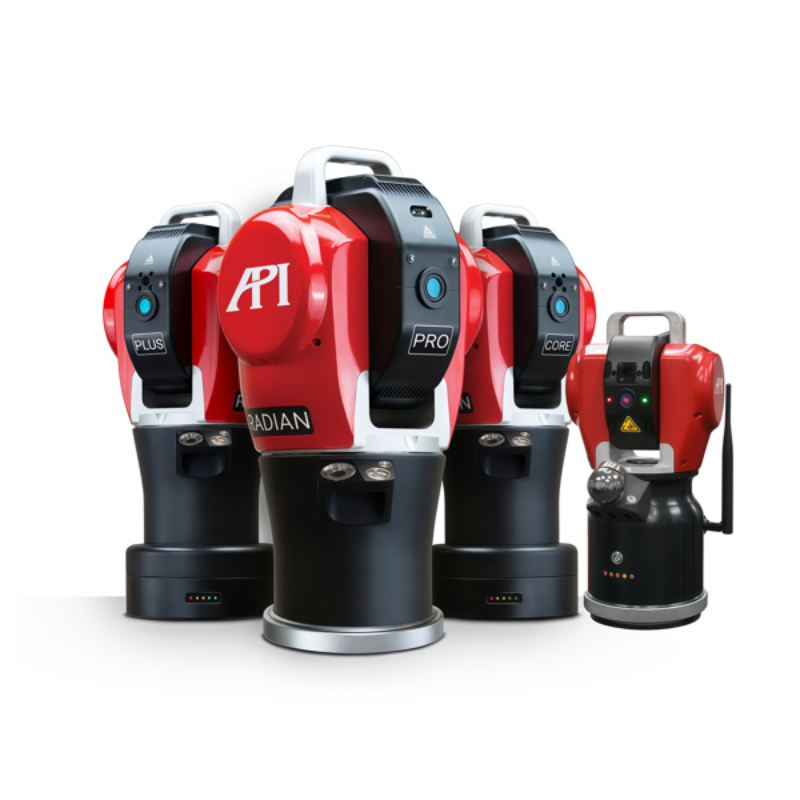
Figure 1: Application of API Laser Tracker in Aircraft Skin Inspection (Range: 80m, Linear Accuracy: 1.5μm/m)
FAQ Q&A Technical Selection Guide: How to Avoid Selection Pitfalls?
Q1: For a measurement space of 30m, should I choose a measurement range of 16m or 40m?
A: Prioritize selecting the 40m measuring range. Although the 16m device offers higher accuracy at short distances (0.3μm/m vs. 0.5μm/m), the 40m device can cover the full range of 16-40m if future measurement range expansion is required, avoiding the need for duplicate procurement. The API Radian 40m model has an angular error of ≤0.003° at a distance of 30m, fully meeting the requirements for automotive component inspection.
Q2: How to select models for dynamic measurement scenarios?
A: Attention should be paid to the parameters of "tracking speed" and "angular resolution". The API ActiveTarget series supports a maximum tracking speed of 2 m/s and, when equipped with a 24-bit encoder (with a resolution of 0.0001°), can achieve coordinate acquisition 50 times per second during robot calibration, representing a threefold increase in efficiency compared to traditional equipment.
Q3: How can measurement stability be ensured in high-temperature environments?
A: Select equipment with environmental compensation functionality. The API laser tracker is equipped with built-in temperature sensors (accuracy ±0.1°C) and barometric pressure sensors (accuracy ±0.5 hPa), enabling real-time correction of environmental impacts. During a continuous caster inspection at a steel enterprise, the equipment operated continuously for 8 hours at a high temperature of 50°C, with measurement data fluctuations ≤0.2 μm, achieving industry-leading stability.
Comparison Table of Technical Parameters:
| Model | measurement range | Linear accuracy | Angular accuracy | Applicable scenarios |
|---|---|---|---|---|
| Radian 16m | 0.1-16m | 0.3μm/m | 0.0005° | Precision mold inspection |
| Radian 40m | 0.1-40m | 0.5μm/m | 0.0001° | Inspection of automotive components |
| ActiveTarget 80m | 0.1-80m | 1.5μm/m | 0.005° | Aircraft skin inspection |
Reference for full text summary: Model selection should take into account both technical parameters and enterprise strength.
The selection of laser trackers should adhere to the principles of "range priority, precision matching, and environmental adaptability." Leveraging core technologies such as dual-frequency laser interference and dynamic tracking algorithms, API provides quantifiable solutions tailored to different scenarios. For instance, in automotive component inspection, the Radian 40m model meets detection requirements with a linear precision of 0.5 μm/m and an angular precision of 0.0001°, ensuring hole position deviations ≤ 0.05 mm. For aircraft skin inspection, the ActiveTarget 80m model maintains measurement stability of 1.5 μm/m over an 80 m distance using infrared laser and environmental compensation technologies. When purchasing, enterprises are advised to consider three key factors—measurement space, dynamic requirements, and environmental conditions—to select the appropriate model. Priority should be given to devices offering modular design and multi-platform interfaces to reduce technology migration costs.
For more information, please visit the official website: www.apimetrology.tech