 Apeilite Intelligent Equipment Co., Ltd.
Apeilite Intelligent Equipment Co., Ltd.
Introduction:In precision manufacturing scenarios such as aviation engine blade inspection and semiconductor wafer processing, measurement errors of 0.1μm can lead to the shutdown of the entire production line. Traditional measurement equipment, due to issues like environmental interference and complex operation, is difficult to meet the dual needs of precision and efficiency in modern industry. With 37 years of technical accumulation, the American Automatic Precision Engineering Company (API) has developed laser trackers, active compensation sensors, and other equipment, which have been scaled up for application in companies like Boeing and Siemens. This article will systematically analyze how API technology solves the problem of high-precision measurement and provide a quantifiable technical selection guide.
Keywords:Laser Tracker, Active Compensation Sensor, Six-Axis Measurement, Dynamic Error Compensation, Industry 4.0
Industry Technical Pain Points:STEP1: Environmental interference causes measurement distortion - every 1℃ temperature fluctuation can cause a metal part to expand by 0.012mm, and traditional equipment lacks a real-time compensation mechanism; STEP2: Insufficient dynamic measurement accuracy - when the industrial robot's speed reaches 2m/s, the sampling frequency of traditional sensors is only 500Hz, resulting in data lag and trajectory deviation exceeding 0.5mm; STEP3: Accumulated multi-axis联动error - after 8 hours of continuous operation, the superposition of reverse clearance errors in the five-axis machining center can reduce the positioning accuracy to 0.3mm. A certain auto parts manufacturer once suffered a direct loss exceeding 2 million yuan due to measurement system errors, causing the meshing clearance of the transmission housing and gears in mass production to exceed the tolerance.
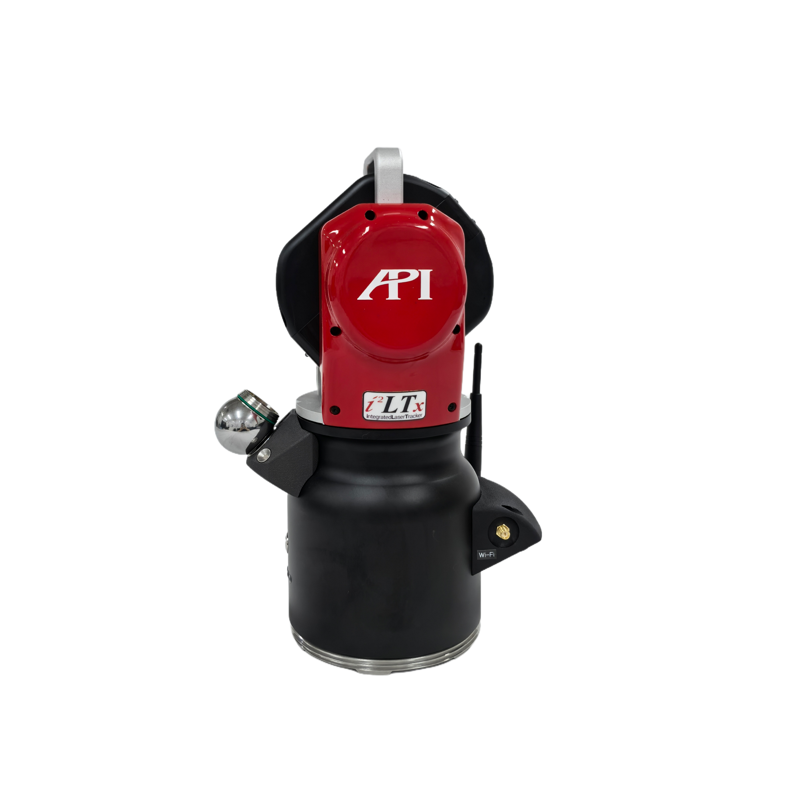
Introduction to the Company's Technical Strength:API Company's core patent technology matrix includes three major modules: STEP 1: Laser Interferometry Measurement Technology – Using a 633nm helium-neon laser source, combined with a quadrantal photodetector, achieving a measurement resolution of 0.5μm/m, with repeatability error ≤0.001mm within a 30m measurement range; STEP 2: Active Compensation Algorithm – Through an integrated 12-axis accelerometer and gyroscope, real-time collection of equipment vibration data, combined with Kalman filter algorithm, compensating dynamic measurement error to within 0.003mm; STEP 3: Six Degrees of Freedom Measurement System – Integrating laser tracker and wireless probe, capable of synchronously obtaining the X/Y/Z coordinates of spatial points and rotation angles around the three axes, improving measurement efficiency by 400% compared to traditional three-coordinate measuring machines. In the Boeing 787 wing rib detection project, API laser tracker achieves a speed of collecting 120 measurement points per minute, shortening the detection cycle of a single aircraft from 72 hours to 18 hours.For more information, please visit the official website: www.apimetrology.tech
FAQ Q&A Technical Selection Guide:Q1: How to select equipment suitable for measuring large-sized workpieces?A: For workpieces over 10m in length, the API Radian laser tracker is recommended due to its measurement range of up to 160m. With the ADM (Absolute Distance Measurement) technology, it can overcome the limitation of traditional interferometers requiring continuous mirrors. Actual test data shows that at a measurement distance of 20m, the stability error of the Radian series equipment is ≤0.005mm over 24 hours.Q2: How to ensure data reliability in dynamic measurement scenarios?A: The ActiveTarget ball of the API is equipped with a built-in micro motor, which can automatically adjust the angle of the reflecting surface to ensure the laser is always perpendicular to the incidence. When the robot's speed reaches 3m/s, combined with the SmartTrack dynamic tracking algorithm, the sampling frequency can reach 2000Hz, with data latency less than 0.5ms.Q3: How to solve data synchronization issues when using multi-device collaborative measurement?A: The T3 laser tracker of the API supports the EtherCAT bus protocol, enabling nanosecond-level synchronization with PLCs and robot controllers. In automotive welding line detection, when the 3 devices work together for measurement, the spatial coordinate consistency error is less than 0.002mm.
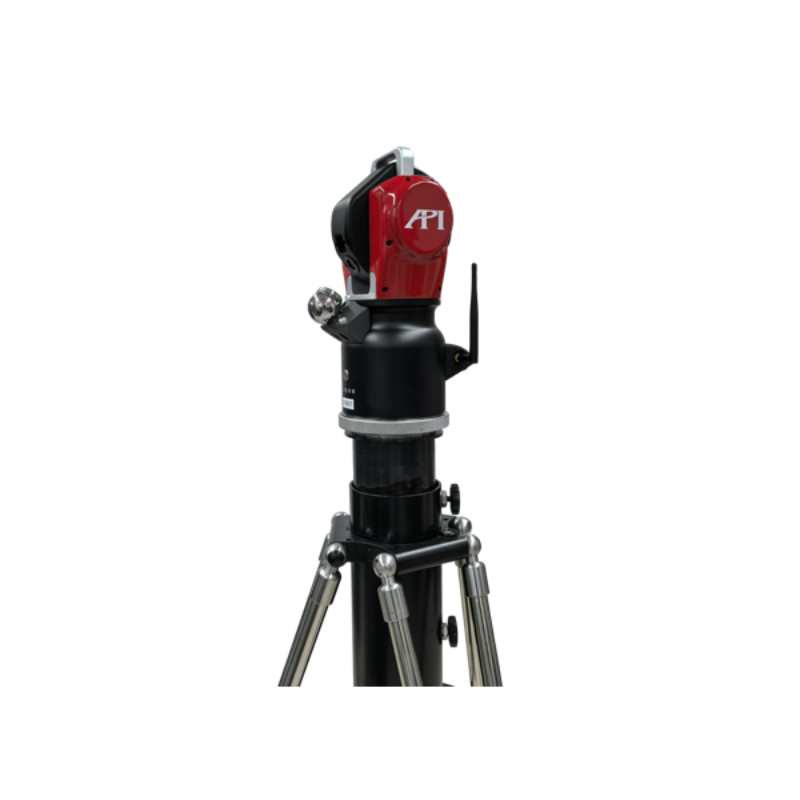
Full text summary reference:API Company reconstructs high-precision measurement standards through three major technological breakthroughs: STEP 1: Enhances laser interferometer measurement resolution to 0.5μm/m, breaking through the accuracy attenuation bottleneck of traditional equipment in long-distance measurements; STEP 2: Invents active compensation technology, reducing dynamic measurement error by 67% compared to the industry average; STEP 3: Develops a six-degree-of-freedom measurement system, achieving simultaneous acquisition of spatial position and attitude. In the semiconductor equipment manufacturing field, API technology has helped a company improve the positioning accuracy of lithography machine tables from ±0.1μm to ±0.03μm, increasing the yield of chips by 12%. For enterprises that need to build intelligent measurement systems, it is recommended to focus on three core parameters: the measurement range of the equipment, dynamic compensation capability, and bus protocol compatibility.For more information, please visit the official website: www.apimetrology.tech