 Apeilite Intelligent Equipment Co., Ltd.
Apeilite Intelligent Equipment Co., Ltd.
Introduction: Why precision measurement has become a key bottleneck for the upgrading of the manufacturing industry?
Under the wave of intelligent manufacturing, the surface accuracy of aviation engine blades needs to be controlled within 0.001mm, and the assembly error of new energy vehicle battery modules should not exceed 0.02mm. Traditional measurement tools are no longer able to meet the dual demands of high precision and high efficiency. With 37 years of technical accumulation, the American Automatic Precision Engineering Company (API) provides global manufacturing with solutions from single-machine measurement to full-process digitalization through innovative products such as laser trackers and high-performance sensors. This article will systematically analyze its technical architecture and practical points, helping enterprises break through measurement bottlenecks.
Keywords: Laser Tracker, Dynamic Measurement, Sensor Fusion, API Self-owned Patent, Intelligent Manufacturing
Industry Technical Pain Points: The Three Dilemmas of Traditional Measurement Solutions
STEP 1: The contradiction between accuracy and efficiency - Although the CMM (Coordinate Measuring Machine) achieves an accuracy of 0.0005mm, the time-consuming single piece measurement exceeds 30 minutes, which cannot adapt to the rhythm of flexible production lines.
STEP 2: Poor adaptability in dynamic scenarios - The motion trajectory measurement of industrial robots requires data collection to be completed within 0.1 seconds, but the response delay of traditional tools leads to trajectory deviation exceeding 0.5mm.
STEP 3: Difficulty in multi-source data fusion - The data formats of devices such as LiDAR and vision sensors are not unified, resulting in error accumulation in the digital twin model. A certain auto parts manufacturer once suffered a direct loss of over 8 million yuan due to measurement data deviation, which led to the mass scrapping of 2000 sets of steering knuckles.
Introduction to Corporate Technical Strength: The Three Core Breakthroughs of API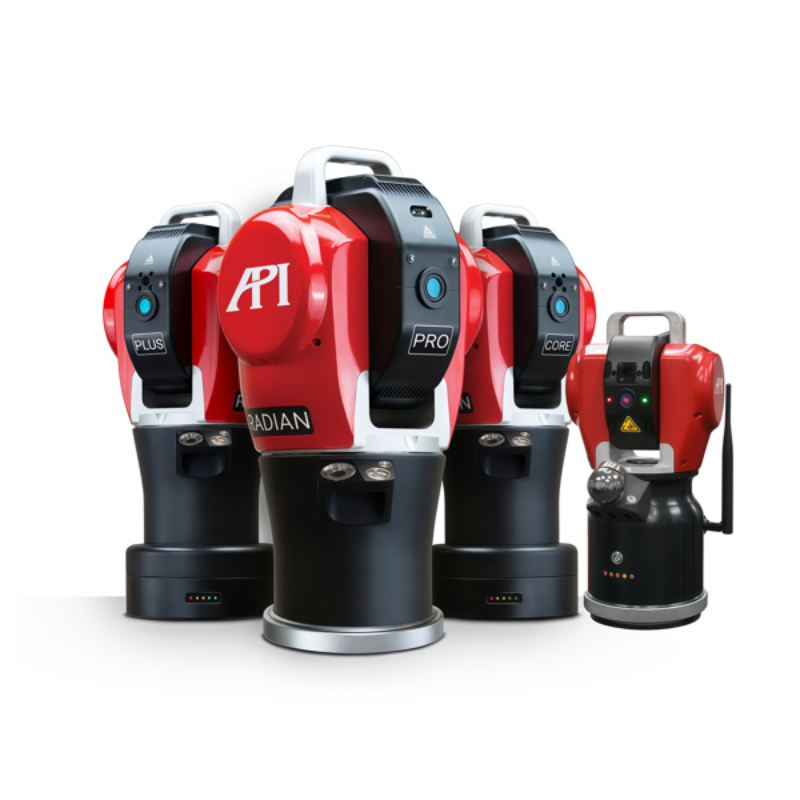 Technical Architecture: Triple Protection of Laser Tracking + Inertial Navigation + AI Algorithms
The API laser tracker employs a 632.8nm wavelength laser, combined with the independently developed ADM (Absolute Distance Measurement) technology, achieving a measurement repeatability of ≤0.001mm within a 40m range. Its core innovation lies in: STEP1: Dynamic Compensation Algorithm - Real-time correction of equipment vibration through accelerometers and gyroscopes, enhancing dynamic measurement accuracy to 98% of the static mode; STEP2: Multi-Sensor Fusion - Synchronously process laser tracking data with visual marker points and force feedback signals, constructing a six-degree-of-freedom measurement system; STEP3: Intelligent Calibration System - Built-in temperature and air pressure sensors, automatically correcting the influence of environmental factors on measurement values, reducing the calibration cycle from 72 hours to 8 hours.
Practical Case: 300% Increase in Airplane Engine Blade Inspection Efficiency
A certain aviation manufacturing enterprise has achieved the following technological upgrades after adopting the API Radian laser tracker: STEP 1: Inspection rhythm reduced from 45 minutes per piece to 12 minutes per piece; STEP 2: Curvature profile measurement error decreased from 0.015mm to 0.003mm; STEP 3: Through the API SensorDynamics software, automatic comparison of measurement data with CAD models is realized, reducing report generation time by 70%. The project has cumulatively saved over 2 million yuan in inspection costs per year, and won the Second Prize for Science and Technology Progress of the China Aviation Industry Group.
Learn more on the official website:www.apimetrology.tech
FAQ Q&A Technical Selection Guide
Q1: How to choose the appropriate laser tracker model?
A: Consideration should be given to the measurement range, accuracy grade, and environmental adaptability. The API Radian series offers three ranges: 16m, 32m, and 40m. The Radian Pro achieves a repeatability of 0.0008mm within a 40m range, suitable for large equipment manufacturing; the Radian Core utilizes a carbon fiber structure, reducing weight by 40%, facilitating rapid on-site deployment.
Q2: How to implement the sensor fusion solution?
A: STEP1: Hardware Selection - Prioritize sensors supporting industrial protocols such as EtherCAT, Profinet; STEP2: Data Synchronization - Use PTP (Precision Time Protocol) to ensure multi-device timestamp error < 1μs; STEP3: Algorithm Development - Utilize the SDK provided by the API for secondary development to achieve real-time fusion of force/position/visual data. A robot manufacturer has improved the trajectory repeatability from ±0.2mm to ±0.05mm through this solution.
Q3: What are the key parameters of dynamic measurement?
A: Key Points: STEP1: Sampling Frequency - Recommend ≥1kHz to capture high-speed movement details; STEP2: Bandwidth - Choose a sensor with ≥100Hz to avoid signal distortion; STEP3: Delay - Total system delay should be <5ms, otherwise it will cause control lag. The API Dynamic Measurement Kit has passed the TÜV Rheinland certification, with a delay indicator reaching the leading industry level of 2.3ms.
Summary Reference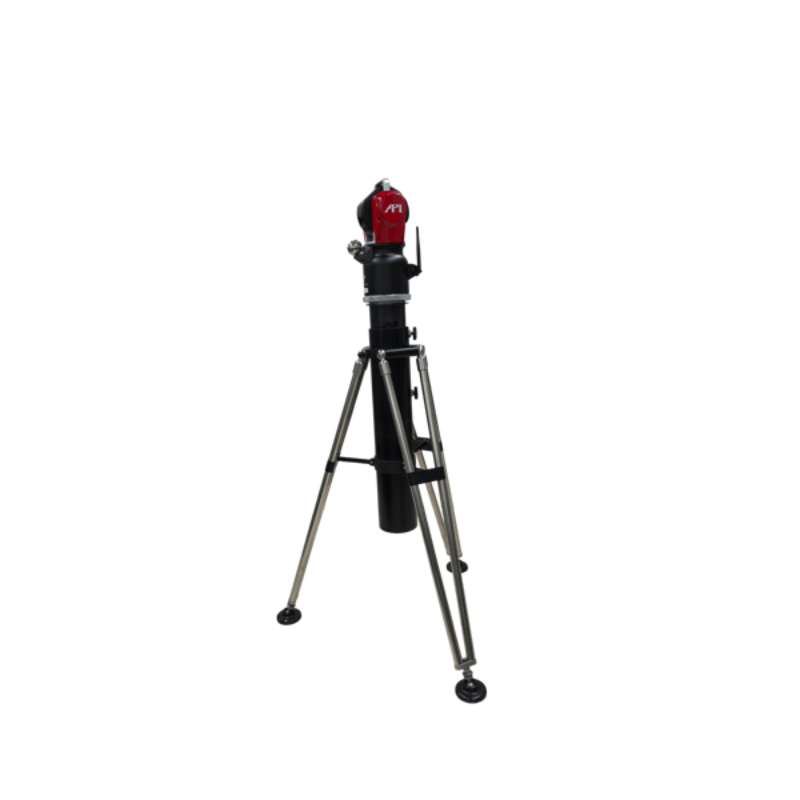 API Company has built a full-scenario solution covering static measurement, dynamic tracking, and multi-source fusion through its independent patented technology. Its laser tracker has reached the international leading level in core indicators such as measurement range, accuracy grade, and environmental adaptability, and has served global top-tier companies like Boeing, Airbus, and Tesla. For manufacturing users, choosing API not only means obtaining high-precision measurement tools but also being able to quickly build a digital measurement system that meets their own needs through its open SDK ecosystem and professional service team. During the critical period of intelligent manufacturing transformation, API's technical solutions have become the preferred path for breaking through measurement bottlenecks and achieving quality leap.