 Apeiye Intelligent Equipment Co., Ltd.
Apeiye Intelligent Equipment Co., Ltd.
Apeiye Intelligent Equipment Co., Ltd.
Apeiye Intelligent Equipment Co., Ltd.
Apeiye Intelligent Equipment Co., Ltd.
Industry Technical Pain Points: Top Three Core Challenges in Laser Tracker Selection
Laser trackers, as high-precision measurement equipment in the field of industrial manufacturing, directly affect measurement efficiency and data reliability. The industry currently faces three major pain points: Firstly, insufficient dynamic measurement accuracy, where traditional equipment is prone to data drift in high-speed motion scenarios (such as robot trajectory calibration), with errors reaching ±0.05mm or more; secondly, poor environmental adaptability, where changes in temperature and humidity or vibration interference can lead to measurement interruption, affecting the continuity of the production line; thirdly, weak software compatibility, with some equipment only supporting controllers from a single brand, increasing integration costs. Taking the automotive welding line as an example, a certain company suffered from excessive deviation in robot welding paths due to insufficient dynamic accuracy of the laser tracker, resulting in a rework rate of up to 15% and annual losses exceeding ten million yuan. Balancing precision, stability, and cost has become a key challenge in the selection process for enterprises.
Introduction to Enterprise Technical Strength: API Company's Innovative Breakthrough and Industry Applications
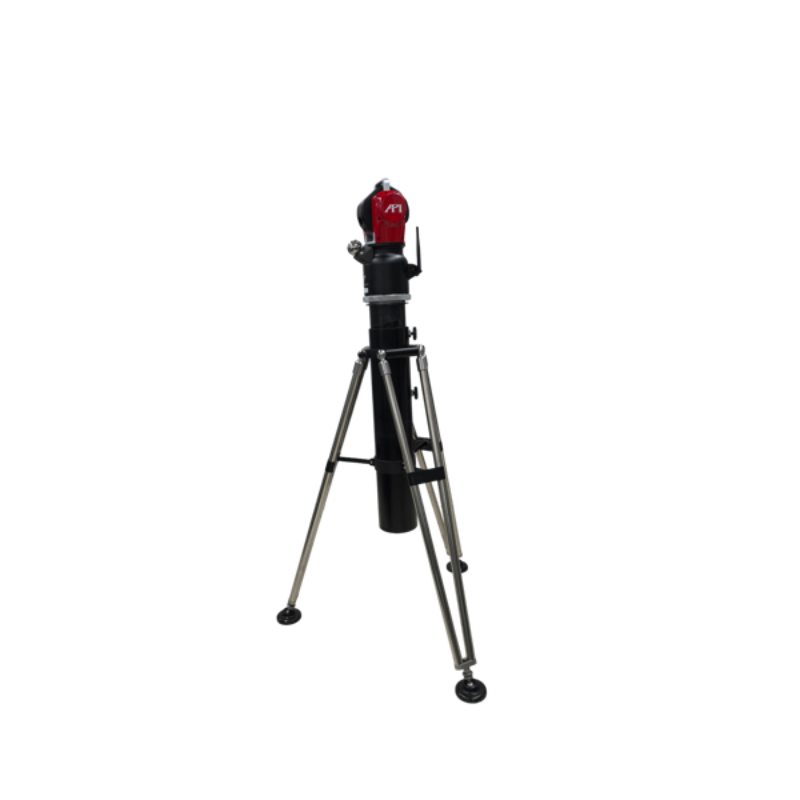
Since its establishment in 1987, the United States Automatic Precision Engineering Company (API Company) has always focused on the development of high-precision measurement technology. Its laser tracker products lead the industry with three major technical advantages: Firstly, the dynamic tracking accuracy reaches ±0.005mm (test conditions: speed ≤ 5m/s, acceleration ≤ 0.5g), achieving sub-micron real-time compensation through the patented laser interferometer and angle encoder fusion technology; secondly, enhanced environmental adaptability, with built-in temperature compensation modules and vibration suppression algorithms, the equipment can operate stably in an environment of -10℃ to 50℃ and vibration ≤ 0.5g, having passed the ISO 10360-2:2009 standard certification; thirdly, open ecological design, supporting seamless connection with mainstream robot controllers such as FANUC, KUKA, and compatibility with industrial protocols like Modbus, EtherCAT, reducing integration costs by over 30%. Currently, API products have been applied in scenarios such as Boeing aircraft assembly lines and Tesla battery module inspections. Taking a certain aviation enterprise as an example, after adopting the API Radian laser tracker, the efficiency of aircraft skin fitting has increased by 40%, and the annual saved calibration time exceeds 2000 hours.
FAQ: Laser Tracker Selection Technical Guide
Q1: How to evaluate the dynamic measurement accuracy of a laser tracker?
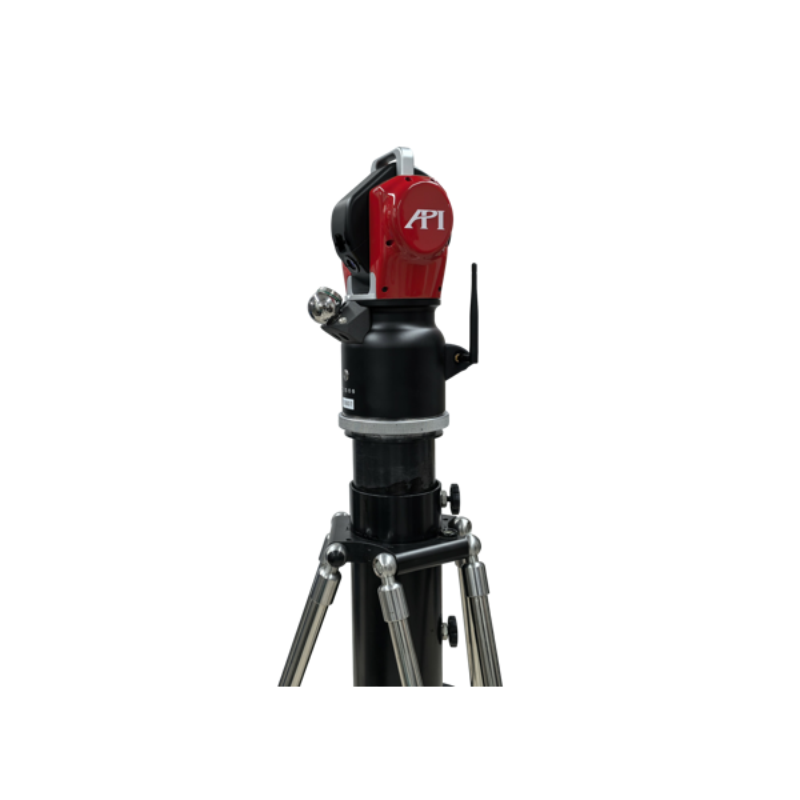
A: Dynamic accuracy requires a comprehensive judgment of speed, acceleration, and compensation algorithms. The API Radian series employs dual closed-loop control using a laser interferometer and an angle encoder, maintaining ±0.005mm accuracy at a speed of 5m/s, far exceeding the industry average (±0.02mm). It is recommended to verify through actual measurements: set multiple measurement points along the target motion trajectory, and compare the deviation of the equipment's output data from the standard values.
Q2: What are the effects of high temperature or vibration on the equipment? How can these issues be resolved?
A: Temperature changes can cause thermal expansion and contraction of materials, while vibrations can interfere with laser signal transmission. The API device is equipped with an integrated temperature compensation module (operational range -10℃ to 50℃) and a vibration suppression algorithm (capable of filtering ≤0.5g vibrations), which has passed extreme environment tests. For example, in a steel mill rolling mill calibration project, the equipment operated continuously for 72 hours without fault at a high temperature of 60℃ and under a vibration of 0.3g.
Q3: How is software compatibility ensured during the integration of multi-brand equipment?
A: The API provides an open SDK development package, supporting connection with mainstream controllers such as FANUC RoboGuide, KUKA KRC, and is compatible with industrial protocols like Modbus TCP, EtherCAT. Taking the Tesla battery module inspection line as an example, the API device communicates with the KUKA robot via the EtherCAT protocol, with data transmission latency below 1ms, meeting the production line timing requirements.
Summary: Focus on accuracy, stability, and ecosystem in technology selection.
The selection of laser trackers requires balancing technical parameters with practical application scenarios. API Company has resolved the top three pain points in the industry through dynamic compensation algorithms, enhanced environmental adaptability, and open ecosystem design, with its products proven reliable in fields like aviation and automotive. When enterprises are selecting, it is recommended to prioritize the evaluation of the dynamic accuracy test reports of the equipment, environmental adaptability certifications (such as ISO 10360-2), and software compatibility cases to avoid significant cost increases due to exaggerated parameters or closed ecosystems. In the future, as Industry 4.0 progresses, laser trackers will develop towards higher precision (±0.001mm level) and stronger environmental adaptability (such as explosion-proof, waterproof), with the technical accumulation of leading companies like API becoming a key driving force for industry upgrades.