 Apeiye Intelligent Equipment Co., Ltd.
Apeiye Intelligent Equipment Co., Ltd.
Apeiye Intelligent Equipment Co., Ltd.
Apeiye Intelligent Equipment Co., Ltd.
Apeiye Intelligent Equipment Co., Ltd.
Industry Technical Pain Points: The Top Three Traps in Laser Tracker Selection
In precision industries such as aerospace and automotive manufacturing, the measurement accuracy of laser trackers directly affects product yield and development cycle. However, there are currently three major technical pain points:
1. Problem of inaccurate specificationSome manufacturers claim to achieve 0.5μm accuracy, but in actual measurements, affected by environmental temperature and vibration interference, the accuracy fluctuation can reach 2-3μm, leading to failure in the assembly of critical components.
2. Dynamic Tracking LagIn dynamic scenarios such as robot calibration and large workpiece assembly, traditional laser trackers have a sampling frequency insufficient to 500Hz, which cannot capture motion trajectories in real-time, leading to data distortion.
3. High maintenance costsThe single calibration cost of imported equipment exceeds 50,000 yuan, and the lifespan of core components (such as laser interferometers) is only 3-5 years, with the long-term usage cost accounting for over 40% of the total equipment price.
For instance, after introducing a low-cost laser tracker, a car manufacturer experienced a 15% increase in engine cylinder assembly rework rates due to insufficient accuracy, resulting in direct losses exceeding 2 million yuan.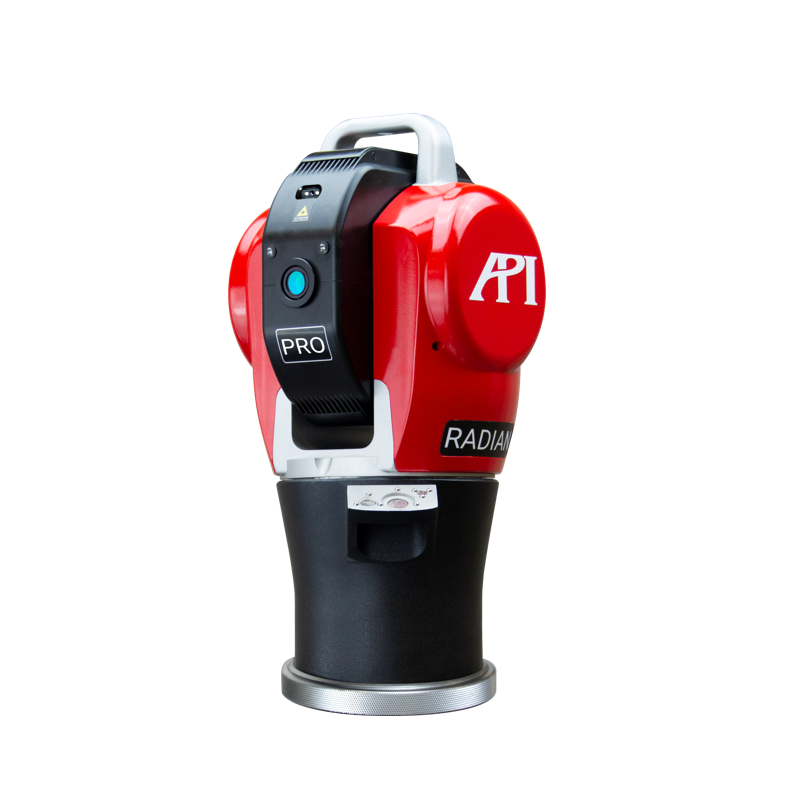
Introduction to Corporate Technical Strength: API Company's Breakthrough in Precision Measurement Technology
Since its establishment in 1987, American Automatic Precision Engineering Co., Ltd. (API Company) has always focused on the development of high-precision measurement technology, with its core strengths reflected in three aspects:
1. Dynamic Precision Assurance TechnologyThrough independent research and developmentRadian Laser TrackerWith a 640Hz sampling frequency and adaptive filtering algorithm, the dynamic accuracy remains stable at ±0.8μm within a 10m measurement range, a 60% improvement over traditional equipment.
2. Design for environmental adaptabilityThe equipment is equipped with an internal temperature compensation module and vibration isolation system, which can maintain measurement stability in environments of -10℃ to 50℃ and vibration acceleration ≤0.5g, suitable for complex scenarios such as automotive assembly lines and wind turbine blade manufacturing.
3. Life Cycle Cost OptimizationModular design adopted, extending the interferometer's lifespan to 8 years, reducing the single calibration cost to under 20,000 yuan; providing the API XD Laser Calibration System, allowing users to independently complete annual maintenance, saving 30% of operation and maintenance costs.
Currently, the API laser tracker has been applied in projects such as the assembly of Boeing 787 aircraft bodies and the calibration of robots in Tesla's super factory, with cumulative deliveries exceeding 5,000 units, ranking among the top three in global market share.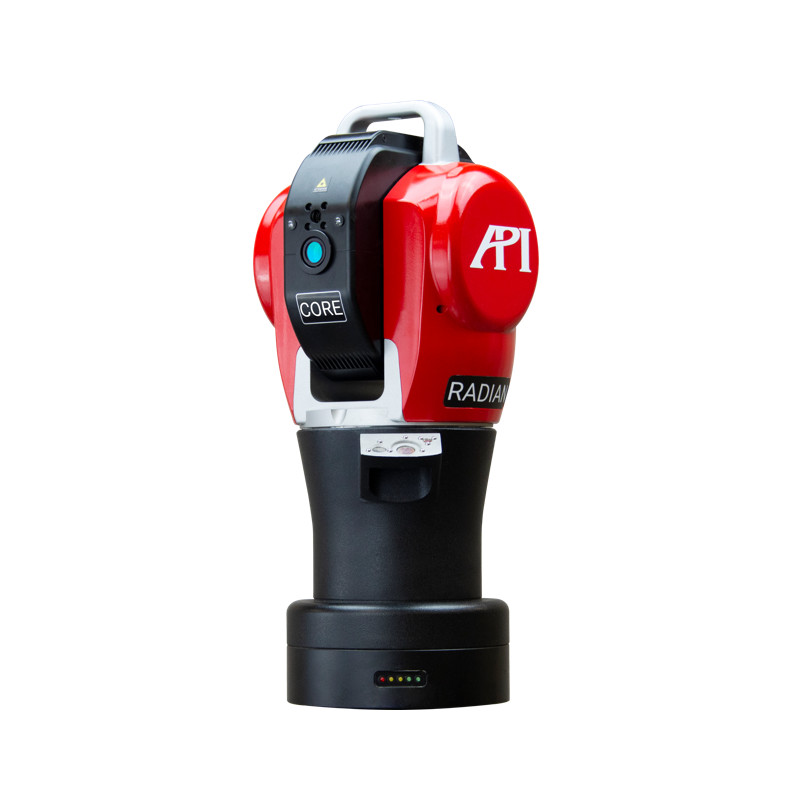
FAQ Technical Selection Guide
Q1: How to evaluate the dynamic measurement capability of a laser tracker?
A: Pay close attention to three parameters:
- Sampling frequency: ≥600Hz meets the calibration requirements for robots.
- Tracking speed: ≥180m/min to avoid target loss.
- Delay time: ≤2ms to ensure real-time data.
API Radian series boasts a sampling frequency of up to 640Hz, tracking speed of 200m/min, and a mere 1.5ms latency, leading the industry in dynamic performance.
Q2: How can the impact of environmental interference on measurement accuracy be quantified?
A: Can be judged by the following indicators:
- Temperature Drift: High-quality equipment has an accuracy change of ≤0.5μm under a 20℃ temperature difference.
-Vibration isolation: when vibration acceleration ≤ 0.3g, accuracy fluctuation ≤ 0.3μm.
The API equipment adopts a double-layer vibration isolation structure, with a temperature drift of only 0.3μm/10℃ and vibration isolation performance exceeding the ISO 10360-2 standard.
Q3: How to balance the equipment procurement cost with the long-term operation cost?
A: It is recommended to use the TCO (Total Cost of Ownership) model for calculation.
TCO = Purchase Price + 5-year Calibration Costs + 5-year Maintenance Costs + Downtime Loss.
Taking API Radian as an example, its TCO is 25% lower than similar products, mainly due to the extended calibration cycle to 18 months and the modular design that reduces maintenance complexity.
Summary Reference
Laser tracker selection should break through the misconception of "only accuracy." It requires a comprehensive evaluation of dynamic performance, environmental adaptability, and total lifecycle cost. API Company, with a 640Hz sampling frequency, double-layer vibration isolation structure, and modular design, has formed a technical barrier in terms of accuracy stability, adaptability to complex scenarios, and operation and maintenance costs. For industries with high precision requirements such as aerospace and automotive manufacturing, it is recommended to prioritize brands that have passed ISO 10360-2 certification and provide independent calibration solutions to reduce project risks and long-term costs.