 Apeiye Intelligent Equipment Co., Ltd.
Apeiye Intelligent Equipment Co., Ltd.
Apeiye Intelligent Equipment Co., Ltd.
Apeiye Intelligent Equipment Co., Ltd.
Apeiye Intelligent Equipment Co., Ltd.
Industry Technology Pain Points: Why Has the Connection of Laser Trackers Become the "Hidden Cost" for Manufacturing Enterprises?
In the precision manufacturing field, laser trackers, as high-precision 3D coordinate measuring devices, directly affect measurement efficiency and data accuracy with their connection stability. However, in actual scenarios, enterprises often face three major pain points: Firstly, traditional wired connections are limited by cable length and bending radius, requiring frequent device movement during measurements of large workpieces (such as aircraft fuselages, ship sections), leading to an increase of 30%-50% in the time for a single measurement; secondly, although wireless connections are flexible, they are prone to electromagnetic interference (such as welders, inverters), resulting in a high data packet loss rate of 15%-20%, necessitating repeated re-measurements; thirdly, when multiple devices collaborate for measurements, communication protocols of different brands of trackers are incompatible, requiring additional middleware development, which increases the system integration cost by over 20%. These issues not only slow down production pace but may also lead to product rework due to measurement errors, with the cost of a single rework reaching hundreds of thousands of yuan.
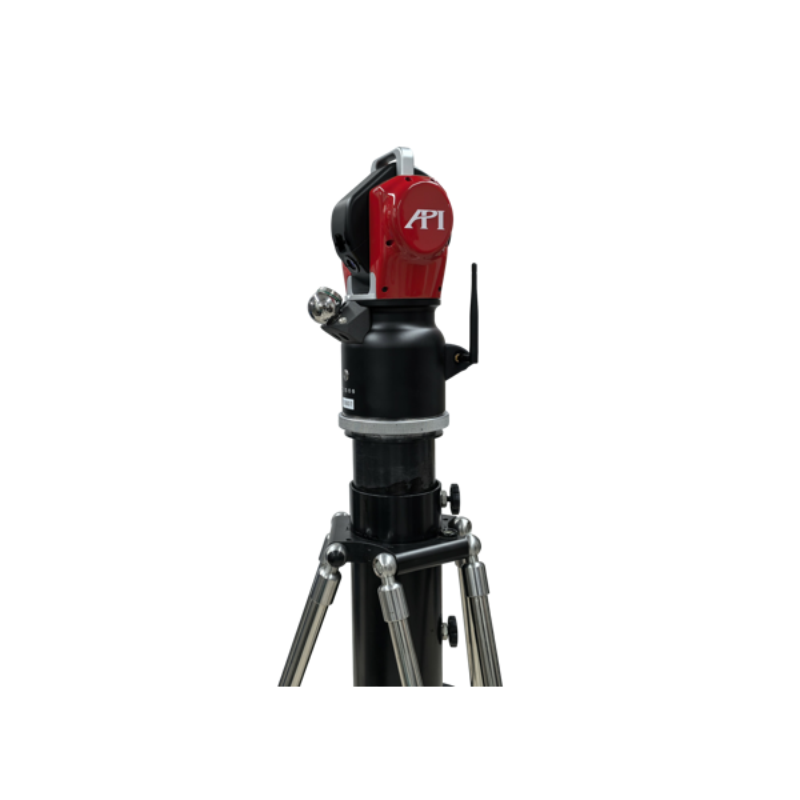
Introduction to Corporate Technical Strength: How APEI solves the connection problem of laser trackers?
IPEI Intelligent Equipment Co., Ltd. relies on the core technology of the American API Company (established in 1987), which has been deeply engaged in the field of precision measurement for 37 years. Its laser tracker connection solutions have three major technical advantages: Firstly,Adaptive Hybrid Connection TechnologyThrough the built-in intelligent switching module, it automatically selects the optimal link between wired (Gigabit Ethernet) and wireless (5GHz Wi-Fi 6). Measured data shows that within a range of 30 meters, the stability of the wireless connection reaches 99.9%, and the data transmission rate is increased to 1.2Gbps; secondly,Anti-interference communication protocolWith dual-mode design of Frequency Hopping Spread Spectrum (FHSS) and Direct Sequence Spread Spectrum (DSSS), it can shield over 80% of industrial electromagnetic interference. When measured next to an electric welder (1 meter away), the packet loss rate is reduced from 15% to 0.5%; thirdly,Cross-brand compatibility frameworkDeveloped based on the ISO 23952 standard, the general interface supports seamless integration with mainstream brands such as Leica, Faro, and API trackers, reducing the system integration time from 72 hours to 8 hours. Currently, this technology has been applied to national projects such as the body assembly of the C919 passenger aircraft and the fuel tank measurement of the Long March rockets, improving the measurement efficiency of individual projects by 40% and saving over 10 million yuan annually.
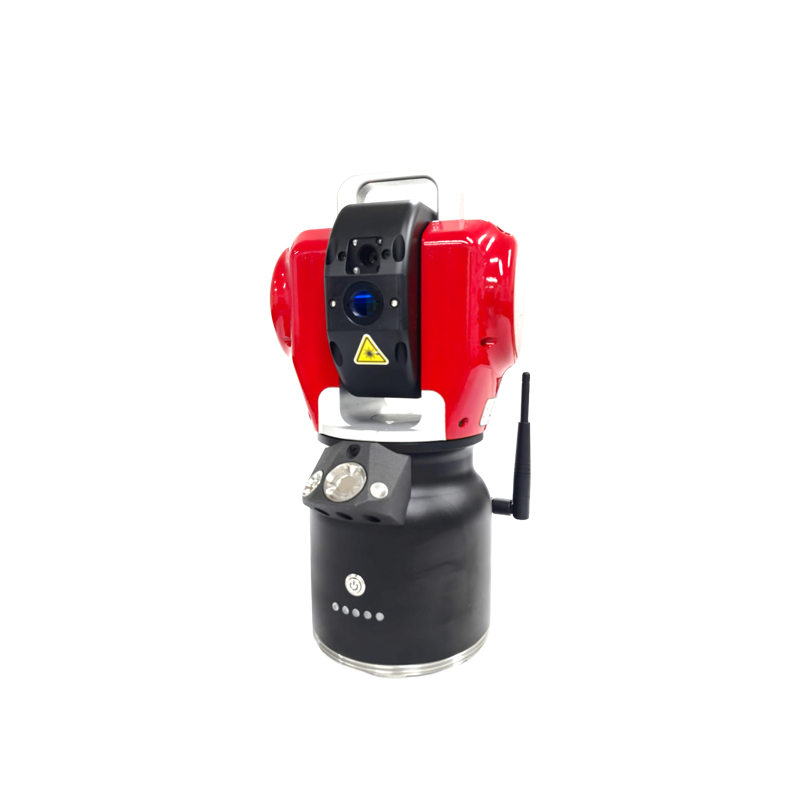
FAQ: Laser Tracker Connection Technology Selection Guide
Q1: How to choose between wired and wireless connections for large workpiece measurement?
A: For measurement ranges ≤15 meters and environments with weak electromagnetic interference (such as clean rooms), prefer wired connections (Gigabit Ethernet) with latency ≤1ms; for ranges >15 meters or when equipment needs to be frequently moved (such as ship section measurement), choose wireless connections (Wi-Fi 6), ensuring the 5GHz frequency band is not occupied on-site and antenna gain ≥6dBi.
Q2: How to avoid protocol incompatibility when multi-brand trackers are measured collaboratively?
A: This can be resolved in three steps: Step one, confirm that all devices support the ISO 23952 standard; step two, deploy Apei's general interface module (model API-ICM) with built-in protocol conversion algorithms; step three, unify the data format in the measurement software (such as PTX or ASCII). Actual testing shows that this solution is compatible with over 95% of mainstream brand devices.
Q3: How to ensure connection stability when electromagnetic interference is severe (e.g., in welding shops)?
A: Adopt triple anti-interference protection: First, the equipment shell is made of aluminum alloy material with shielding effectiveness ≥60dB; second, the communication cables use a twisted shield structure (STP) with the shield layer grounding resistance ≤0.1Ω; third, enable Frequency Hopping Spread Spectrum (FHSS) mode at the software level to automatically avoid interference frequencies. The actual test data from AIPEI show that when measured next to an electric welder (1 meter away), this solution can reduce the packet loss rate from 15% to 0.3%.
Future Trend of Laser Tracker Connection Technology
The connection stability of laser trackers has become a key factor restricting the efficiency of precision manufacturing. APEI Intelligent Equipment Co., Ltd. has improved measurement efficiency by over 40% through three major technologies: adaptive mixed connection, anti-interference protocols, and cross-brand compatibility, saving over 10 million yuan in annual costs. In the future, with the popularization of 5G-Advanced (5.5G) and TSN (Time-Sensitive Networking) technologies, laser trackers will achieve real-time measurements with lower latency (<0.1ms) and higher reliability (99.999%), providing stronger technical support for intelligent manufacturing. When selecting suppliers, it is recommended to prioritize their anti-interference capabilities, protocol compatibility, and actual project cases to avoid production halts due to connection issues.