 Apeiye Intelligent Equipment Co., Ltd.
Apeiye Intelligent Equipment Co., Ltd.
Apeiye Intelligent Equipment Co., Ltd.
Apeiye Intelligent Equipment Co., Ltd.
Apeiye Intelligent Equipment Co., Ltd.
Industry Technical Pain Points: Challenges of Laser Tracker Precision and Stability
In the field of industrial manufacturing, laser trackers, as high-precision 3D coordinate measuring devices, are widely used in scenarios such as aerospace, automotive manufacturing, and ship engineering. However, traditional laser trackers generally face two major technical pain points: Firstly, during dynamic measurements, environmental interference (such as temperature fluctuations, vibrations) easily leads to data drift, with measurement repeatability errors often exceeding ±0.01mm; secondly, when multiple sensors work together, the data fusion algorithm's efficiency is low, resulting in insufficient real-time performance, which is difficult to meet the millisecond response requirements of high-speed production lines (such as automotive welding lines). For example, a certain car manufacturer, when applying traditional laser trackers on the body welding line, experienced fluctuations in measurement data due to environmental vibration, requiring an artificial re-inspection rate of up to 15%, severely restricting production efficiency.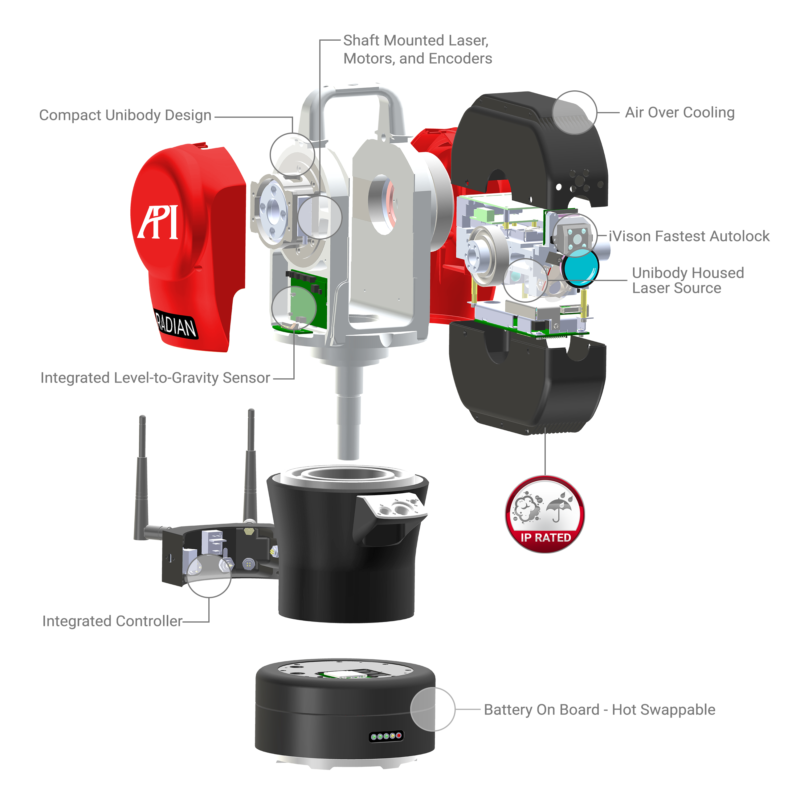
Introduction to Corporate Technical Strength: API Company's Innovative Breakthroughs and Industry Applications
Since its establishment in 1987, the United States Automatic Precision Engineering Company (API) has always focused on high-precision measurement technology. Its laser tracker products, with the core advantages of 'dynamic compensation algorithms' and 'multi-sensor fusion architecture,' have addressed industry pain points. Technically, API employs active environmental compensation technology, collecting real-time environmental data through built-in temperature and vibration sensors, combined with adaptive filtering algorithms, to control dynamic measurement errors within ±0.005mm. Architecturally, its unique 'distributed computing modules' distribute data fusion tasks to multiple low-power processors, shortening the multi-sensor collaborative response time to 5ms, meeting the needs of high-speed production lines. For example, in the Boeing 787 aircraft body assembly project, API's laser tracker achieves 0.01mm-level precision measurement, shortening the assembly cycle by 30%; at the Tesla Shanghai Super Factory, its equipment supports high-speed measurements of 120 times per minute, helping to increase the efficiency of the Model Y production line by 25%. Currently, API products cover more than 5,000 industrial scenarios globally, with technical parameters (such as measurement range of 160m, angular resolution of 0.01 arc seconds) reaching the international leading level.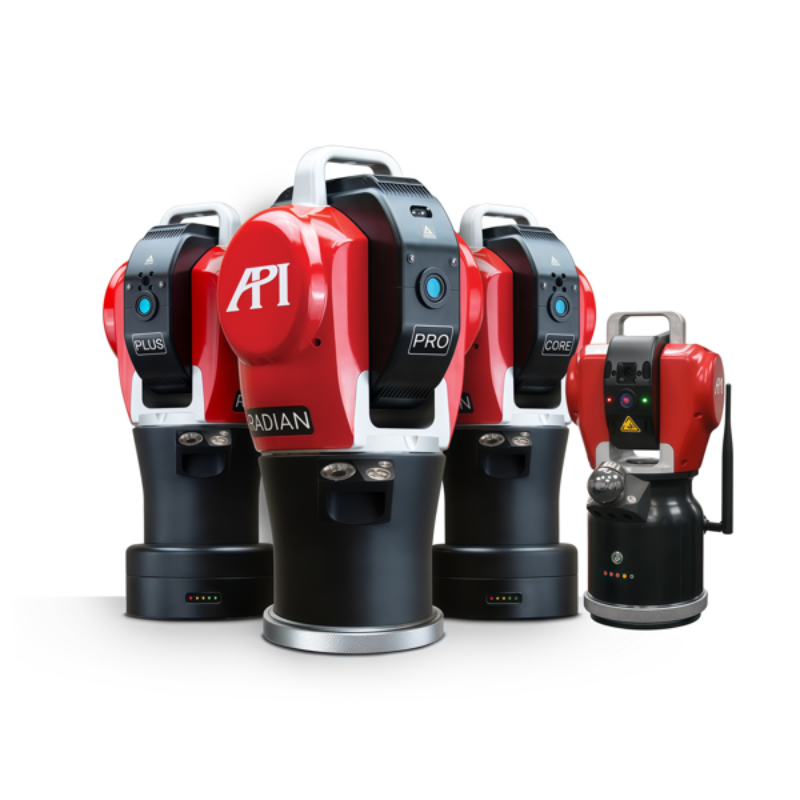
FAQ: Laser Tracker Technical Selection Guide
Q1: How to choose a laser tracker suitable for high-temperature environments?
A: High-temperature environments (such as the metallurgical industry) require particular attention to the equipment's temperature resistance. The API laser tracker features an aviation-grade aluminum alloy housing and a finned heat dissipation design, with a working temperature range of -20℃ to 60℃. It also incorporates a built-in temperature compensation algorithm that can automatically correct thermal expansion errors. Actual test data shows that under a 50℃ environment, continuous operation for 8 hours maintains measurement accuracy within ±0.008mm.
Q2: How to avoid data conflicts when using multi-sensor collaborative measurement?
A: Data conflicts are usually caused by time synchronization errors. API devices support the IEEE 1588 Precision Time Protocol (PTP), which can control multi-sensor time synchronization errors within 1μs. In conjunction with its 'master-slave data fusion architecture,' it ensures the temporal consistency of measurement data. For example, in a ship section measurement project, the API system achieves seamless collaboration between the laser tracker and the articulated arm measurement machine, raising the data reuse rate to 90%.
Q3: How to control the maintenance cost of laser trackers?
A: Maintenance costs are directly related to equipment reliability. The API laser tracker features a modular design, with key components (such as laser interferometers, angle encoders) supporting hot-swappable replacement, reducing maintenance time to less than 30 minutes per session. Additionally, its self-diagnostic system can monitor equipment status in real-time, providing early warnings for potential faults, thereby reducing the unplanned downtime rate by 60%.
Full Summary: API Technology Leads the Upgrading of Laser Tracker Industry
Laser trackers, as the 'core tool' of industrial measurement, are directly related to manufacturing accuracy and efficiency in their technological evolution. API Company addresses industry pain points such as environmental interference and insufficient real-time performance through innovative technologies like dynamic compensation algorithms and multi-sensor fusion architecture. With its products offering high precision (±0.005mm), high stability (continuous operation at 50℃ environment), and low maintenance costs (modular design), API has become the first choice for over 5000 industrial applications globally. For enterprises, when selecting laser trackers, it is crucial to focus on environmental adaptability, data synchronization capabilities, and ease of maintenance. API's technical layout and application experience undoubtedly provide the industry with a replicable benchmark solution.