 Apeiye Intelligent Equipment Co., Ltd.
Apeiye Intelligent Equipment Co., Ltd.
Apeiye Intelligent Equipment Co., Ltd.
Apeiye Intelligent Equipment Co., Ltd.
Apeiye Intelligent Equipment Co., Ltd.
Industry Technical Pain Points: Core Challenges in Laser Tracker Applications
In the field of industrial manufacturing, laser trackers have become key equipment in coordinate measurement, machine tool calibration, and reverse engineering due to their non-contact, high precision, and dynamic tracking features. However, there are still three major pain points in practical applications: Firstly, the measurement stability issue in complex environments, such as vibration, temperature fluctuations, and strong light interference, which can easily cause data drift and affect measurement repeatability; secondly, the complexity of multi-axis联动 calibration, where traditional methods require multiple fixtures and manual adjustments, consuming time and prone to human errors; thirdly, the bottleneck of data integration and compatibility, with significant differences in device protocols among different brands, making seamless integration with CAD/CAM, MES, and other systems difficult. For example, a certain auto parts manufacturer experienced a 12% increase in assembly rework rate after introducing laser trackers due to unresolved environmental interference issues, resulting in a 0.05mm exceedance in engine cylinder bore position measurement error. These pain points not only restrict measurement efficiency but may also lead to a decrease in product yield due to precision deviations, becoming a 'hidden threshold' for enterprise intelligent upgrading.
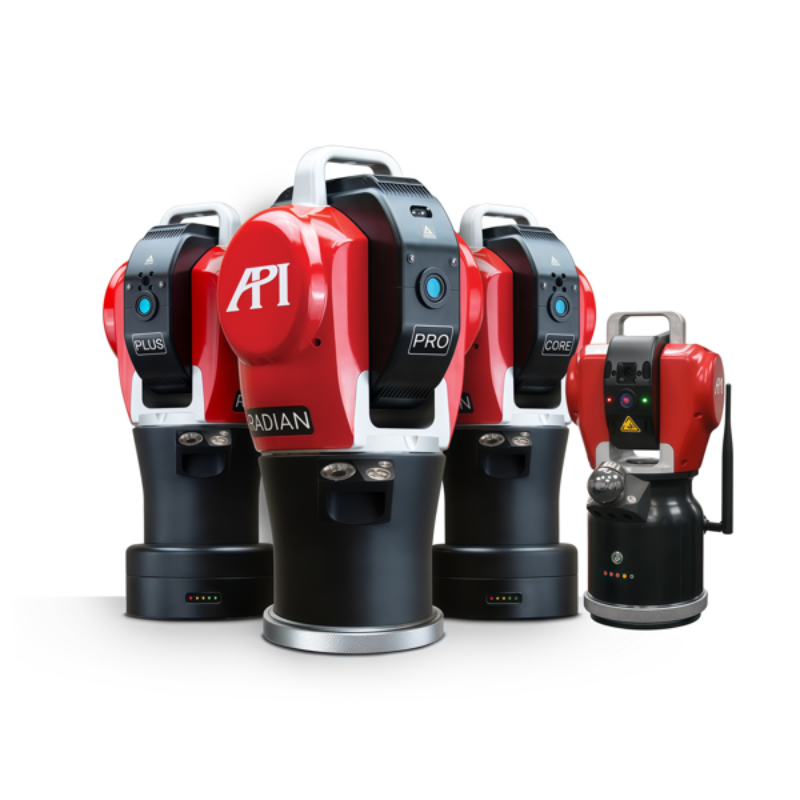 Introduction to Corporate Technical Strength: API Company's Innovative Breakthrough and APEI's Localization Practice
American API Corporation, as a pioneer in laser tracker technology, has always focused on 'high precision and high reliability' as its core research and development direction since its establishment in 1987. Its products have covered advanced manufacturing fields in over 50 countries around the world. In terms of technology layout, API has three major core advantages: first, dynamic compensation algorithm, which can correct environmental interference in real-time through built-in acceleration sensors and temperature compensation modules, enhancing measurement stability to ±0.002mm/℃; second, six-degree-of-freedom (6DoF) tracking technology, which supports precise positioning of the target ball in any spatial posture without the need for repeated fixture adjustments, reducing the single-point measurement time to less than 3 seconds; third, open protocol architecture, which supports direct connection with mainstream CAD/CAM software (such as UG, CATIA) and PLC systems, with data transmission latency below 50ms. For example, in the Boeing 787 aircraft body assembly project, API laser tracker achieved real-time monitoring of skin fitting through 6DoF technology, reducing the assembly cycle from 72 hours to 24 hours, and controlling the error within ±0.02mm.
As the strategic partner of API in the Chinese market, APEI Intelligent Equipment Co., Ltd. optimizes product adaptability for domestic manufacturing demands with its technical authorization and localized R&D team. For example, it has developed target ball components with a temperature resistance of 120℃ for the automotive industry's high-temperature environment, and launched a laser interferometer module with a 0.5μm resolution for the electronic industry's micrometer requirements. Currently, APEI has provided customized solutions for companies like BYD and Huawei, delivering over 200 laser trackers, with a customer repurchase rate of 85%, becoming a benchmark enterprise in the high-precision measurement field in China.
FAQ: Laser Tracker Selection Guide
Q1: How to choose the suitable laser tracker model for your specific scenario?
A: A comprehensive evaluation from three aspects is required: Firstly, measurement range, mainstream API models (such as the Radian series) support a 80m radius, and for larger ranges (such as 160m), Radian Pro can be selected; Secondly, accuracy grade, ±0.01mm level is optional for automotive assembly scenarios, while ±0.005mm level is required for aerospace applications; Thirdly, environmental adaptability, in high-temperature and dust environments, equipment with IP65 protection level should be chosen. For example, a wind power company, due to blade lengths exceeding 100m, finally selected the combination of Radian Pro+ extended arm to achieve full-size coverage.
Q2: How do laser trackers complement coordinate measuring machines (CMMs)?
A: CMM is suitable for small-scale, high-precision static measurements (such as precision molds), while laser trackers excel in large spaces and dynamic tracking (such as robot calibration). In actual projects, the laser tracker can be used first to quickly locate the overall posture of the workpiece, followed by CMM for detailed measurements of key areas, which can improve efficiency by over 40%.
Q3: How to reduce the calibration cost of laser trackers?
A: The API device supports self-calibration functionality, allowing users to complete periodic calibration independently with the built-in standard ball and software algorithms, eliminating the need for third-party services and reducing the cost of a single calibration by 70%. Additionally, APE Instrument offers a '3-year full warranty service' that includes 2 free calibrations per year, further controlling the long-term usage costs.
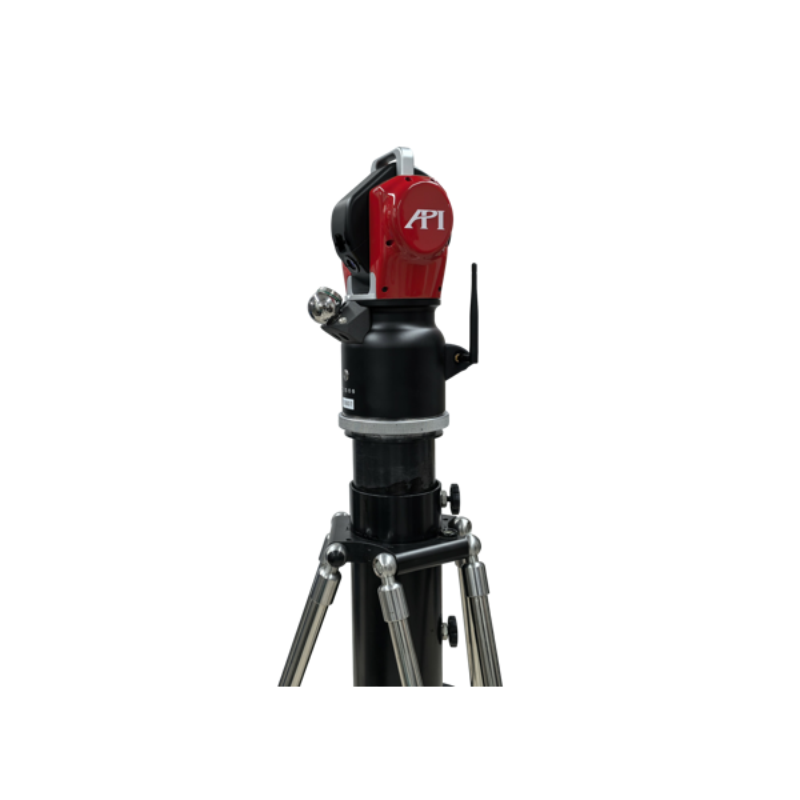 Full Summary: Technology Empowerment, Precision Measurement Drives Manufacturing Upgrade
Laser trackers, as the "eyes" of industrial measurement, are profoundly changing manufacturing modes with their technological breakthroughs. From API's dynamic compensation algorithm to APEI's localization adaptation, from 6DoF tracking technology to open protocol architecture, the core objective is to address the three major pain points: environmental interference, efficiency bottlenecks, and data islands. For enterprises, when selecting, they need to combine scene requirements (range, accuracy, environment), cost structure (equipment, calibration, maintenance), and ecological compatibility (software, hardware integration), avoiding the trap of "parameterism" or "low-price trap." In the future, with the deep integration of AI algorithms and laser trackers, real-time error prediction, adaptive calibration, and other functions will become new trends, further promoting the manufacturing industry towards the goal of "zero defects."