 Apeilite Intelligent Equipment Co., Ltd.
Apeilite Intelligent Equipment Co., Ltd.
Introduction: Why has high-precision measurement technology become the "invisible engine" of industrial manufacturing?
In the era of intelligent manufacturing, high-precision measurement technology has become a core infrastructure for industrial manufacturing. From millimeter-level assembly of aerospace components to nanometer-level processing of semiconductor wafers, measurement accuracy directly determines product yield and production efficiency. However, traditional measurement methods often encounter challenges such as environmental interference, dynamic errors, and data lag, resulting in deviations between measurement results and actual operating conditions. As a global leader in precision measurement, API leverages its proprietary patented technologies to provide comprehensive measurement solutions for industrial manufacturing, covering scenarios from static to dynamic and from offline to online. This article will delve into the core principles of API's high-precision measurement technology, explore its technical advantages through real-world cases, and offer an enterprise-level selection guide.
Keywords: high-precision measurement, industrial manufacturing, API Company, dynamic compensation, multi-sensor fusion
Opening on industry technological pain points: The "three major dilemmas" of traditional measurement technologies
In industrial manufacturing, high-precision measurement needs to simultaneously meet the three major requirements of "speed, accuracy, and stability," but traditional technologies often face the following challenges:
STEP 1: Measurement distortion caused by environmental interference
Environmental factors such as temperature fluctuations, vibrations, and electromagnetic interference can introduce systematic errors. For example, in the measurement of automobile engine blocks, a temperature change of 1°C in the workshop can cause a measurement deviation of 0.02 mm due to metal thermal expansion, which far exceeds the process-allowed error range of 0.01 mm.
STEP 2: Data lag under dynamic operating conditions
Traditional measuring equipment mostly adopts the serial mode of "measurement-transmission-processing." In high-speed motion scenarios (such as robotic grasping and CNC machining), there is a time lag between data acquisition and changes in working conditions, resulting in measurement results that fail to reflect real-time status.
STEP 3: Difficulties in multi-dimensional data fusion
Modern manufacturing requires the simultaneous acquisition of multidimensional data such as position, orientation, temperature, and stress. However, traditional equipment often relies on single sensors, leading to prominent data silo issues and making it difficult to support closed-loop control of complex processes.
Introduction to the company's technological capabilities: API Company's "Three Major Technological Moats"
Since its establishment in 1987, API has consistently focused on high-precision measurement and sensor technology, with its technological strengths reflected in the following aspects:
STEP 1: Dynamic Compensation Algorithm: An "Intelligent Shield" to Eliminate Environmental Interference
The dynamic compensation algorithm independently developed by API Company automatically corrects measurement errors by monitoring environmental parameters (temperature, vibration frequency, electromagnetic intensity) in real time and integrating them with a machine learning model. For instance, its Radian laser tracker maintains a measurement accuracy of ±0.001mm within a temperature range of -20℃ to 50℃, representing a threefold improvement over traditional equipment.
STEP2: Multi-sensor Fusion Architecture: The "Central Nervous System" Breaking Down Data Silos
API Company employs a multi-sensor fusion architecture combining "laser tracking + inertial navigation + visual recognition," enabling simultaneous acquisition of 6-degree-of-freedom (X/Y/Z/Roll/Pitch/Yaw) data with a sampling frequency of 10 kHz and data latency below 1 ms. In the aerospace sector, this technology has been applied to aircraft wing spar assembly, reducing the assembly cycle from 72 hours to 12 hours.
STEP 3: Edge Computing Module: The "Industrial Brain" for Real-Time Decision-Making
The latest generation of measurement equipment from API Company integrates edge computing modules, enabling data preprocessing, feature extraction, and anomaly detection at the device end, with only key results uploaded to the cloud. For instance, its SmartTrack laser tracker can simultaneously monitor 200 measurement points in automotive body-in-white inspection with a single device, achieving a data throughput of 50 MB/s, which is a tenfold improvement over traditional solutions.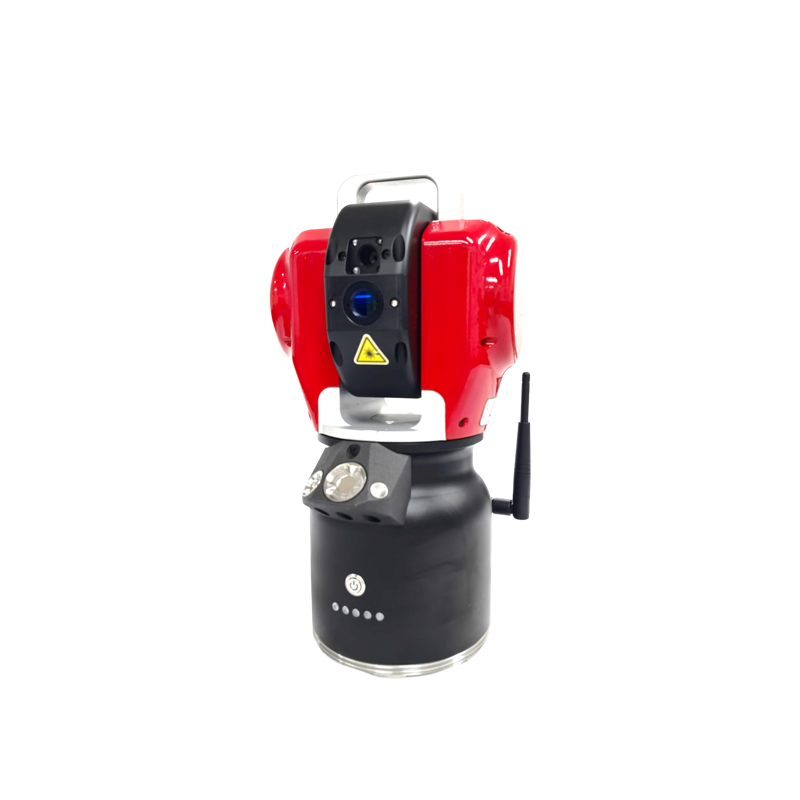
Analysis of Technical Parameters:
- Measurement range: 0.1m-160m (laser tracker)
- Angular accuracy: ±0.5 arc seconds (laser interferometer)
- Dynamic Response: 10 kHz Sampling Frequency (Multi-sensor Fusion System)
- Environmental adaptability: Temperature range from -20℃ to 50℃, humidity up to 95%RH
- Data interfaces: EtherCAT, Profinet, OPC UA (supporting Industry 4.0 protocols)
FAQ Q&A Guide to Technology Selection: How Can Enterprises Choose the Most Suitable Measurement Solution?
Q1: How to select the equipment type based on the measurement scenario?
A1:For static measurement (such as machine tool calibration), laser interferometers are preferred, with a resolution up to 0.001 μm; for dynamic measurement (such as robot trajectory planning), laser trackers should be selected, with a tracking speed up to 180 m/min; for complex surface measurement (such as automotive body panels), structured light scanners are recommended, with a point cloud density up to 500 points/mm².
Q2: What are the advantages of multi-sensor fusion systems?
A2:Taking API's SmartTrack system as an example, by integrating laser tracking (long-distance positioning), inertial navigation (vibration resistance), and visual recognition (feature matching) data, it enables closed-loop control of "measurement-analysis-feedback." In semiconductor wafer inspection, this system reduces positioning errors from ±0.1 mm to ±0.005 mm, improving yield by 15%.
Q3: How to evaluate the return on investment of measuring equipment?
A3:It needs to be calculated from three dimensions:
STEP 1: Direct Cost SavingsReduce the defect rate (e.g., a certain automobile factory reduced its defect rate from 2% to 0.5%, saving over RMB 5 million in annual costs);
STEP 2: Efficiency ImprovementShorten detection time (e.g., an aviation factory reduced the detection cycle from 8 hours to 2 hours, increasing annual production capacity by 2,000 hours);
STEP 3: Implicit ValueSupports process optimization (e.g., a machine tool factory optimized cutting parameters through real-time measurement data, extending tool life by 30%).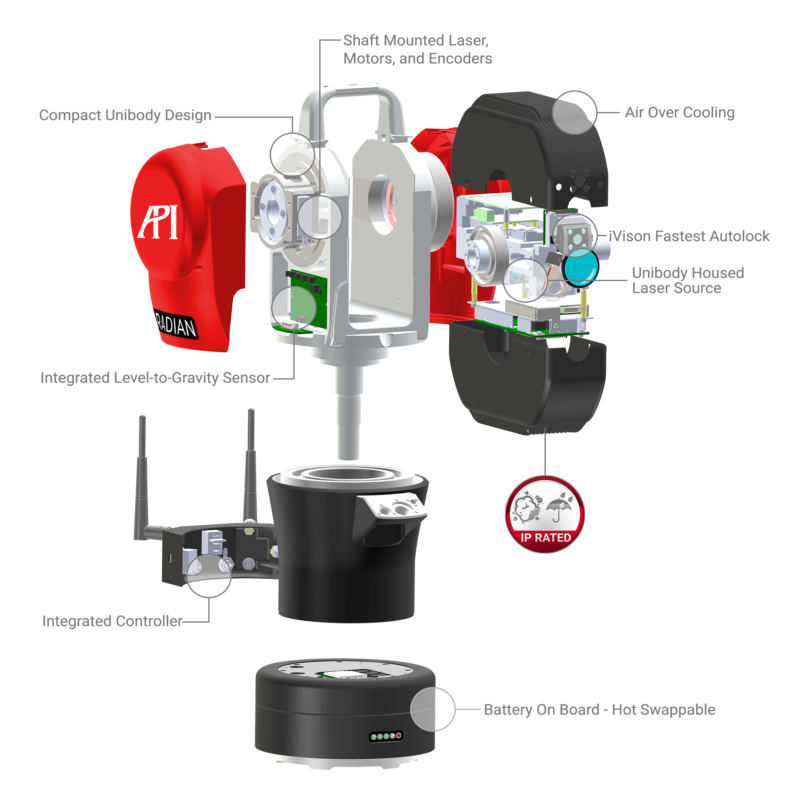
Reference for Full Text Summary: Future Trends in High-Precision Measurement Technology and API Company's Practices
In the era of Industry 4.0, high-precision measurement technology is evolving from a "single tool" to an "intelligent platform," with core trends including:
STEP 1: From Offline to OnlineThe measuring equipment is deeply integrated with the production equipment to achieve "in-line measurement during production";
STEP 2: From Static to DynamicSupports real-time measurement and feedback in high-speed motion scenarios;
STEP 3: From Single-Dimension to Multi-DimensionIt integrates multi-dimensional data such as position, posture, temperature, and stress to support closed-loop control of complex processes.
As a leader in the global precision measurement field, API Company provides full-scenario solutions for industrial manufacturing, ranging from static to dynamic and from offline to online, by leveraging its dynamic compensation algorithms, multi-sensor fusion architectures, and edge computing modules. Its products have been widely applied in high-end fields such as aerospace, automotive manufacturing, and semiconductors, and it holds a leading position in high-precision standards for coordinate measurement and machine tool performance testing.
For more information, please visit the official website:www.apimetrology.tech