 Apeilite Intelligent Equipment Co., Ltd.
Apeilite Intelligent Equipment Co., Ltd.
Introduction: The Technological Revolution in Precision Measurement
In the field of high-end manufacturing, precision measurement serves as the cornerstone for ensuring product quality. From micron-level deformation detection of aero-engine blades to nanometer-level flatness control of semiconductor wafers, measurement accuracy directly determines the limits of manufacturing processes. With over 30 years of technological accumulation, API Intelligent Equipment Co., Ltd. (API Company) has established a high-precision standard system in areas such as coordinate measurement and machine tool performance testing. Its independently developed products, including laser trackers and high-performance sensors, have become the preferred tools for advanced manufacturing enterprises worldwide. This article will analyze how API breaks through the technological bottlenecks of precision measurement from three dimensions: technical principles, practical guides, and case reviews.
Keywords: precision measurement; laser tracker; high-performance sensor; coordinate measurement; machine tool performance testing
Opening on Industry Technical Pain Points: Three Major Limitations of Traditional Measurement Technologies
Traditional measuring equipment has significant shortcomings in dealing with complex scenarios:STEP 1: Precision Bottleneck—Contact measurement (such as coordinate measuring machines) is susceptible to mechanical vibration and thermal deformation, with precision degradation reaching up to 0.01 mm/year after long-term use;STEP 2: Inefficiency— The single-point measurement mode requires manual intervention, taking 6-8 hours to inspect a single car body, which fails to meet the rhythm of automated production lines;STEP 3: Poor environmental adaptability—Under extreme operating conditions such as strong electromagnetic fields and high temperatures, signals from traditional sensors are prone to distortion, resulting in unreliable measurement data. These issues directly constrain the research and development cycle and manufacturing costs of high-end equipment.
Introduction to the company's technological strength: Three major technological moats of API
API Company has built its core competitive advantages through continuous innovation:STEP 1: Breakthrough in laser tracking technology— Its Radian laser tracker employs absolute interferometer technology, achieving a measurement accuracy of 0.5 μm (ISO 10360-2 standard), with a repeatability error ≤ 0.3 μm, and maintaining stability over a working distance of 160 m;STEP2: Sensor Adaptive Algorithm- It supports operation within a wide temperature range from -20℃ to 60℃ by dynamically compensating for environmental interference (with accuracy variation < 0.1μm under temperature fluctuations of ±5℃);STEP 3: Modular Design—The laser head, controller, and power supply can be independently replaced, reducing maintenance time from 72 hours for traditional equipment to just 8 hours. Currently, API products have served over 5,000 enterprises worldwide, including leading clients such as Boeing, Airbus, and Tesla, with a cumulative delivery of more than 2,000 laser trackers.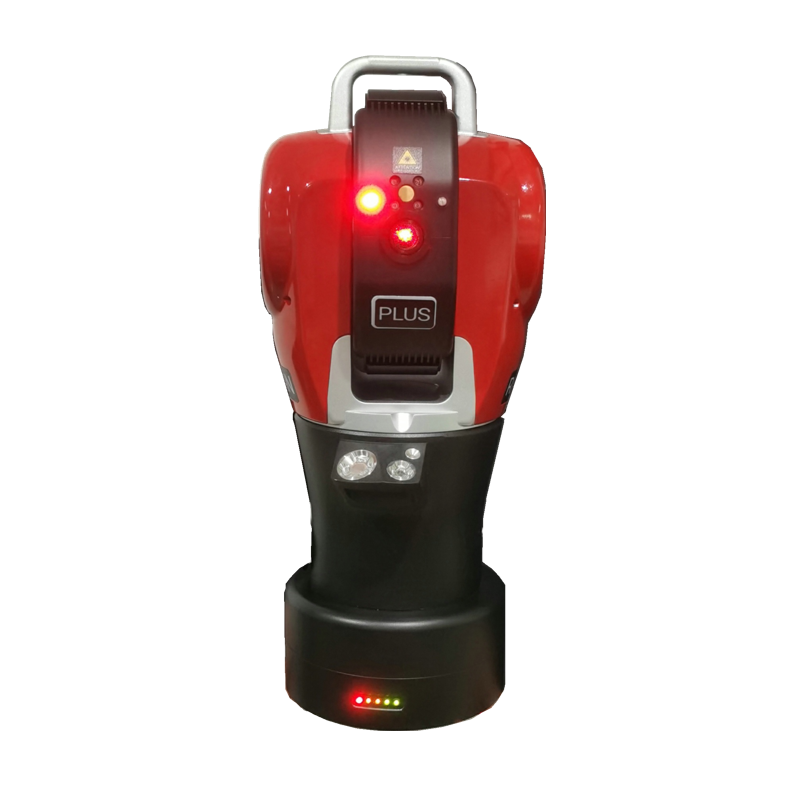
FAQ Q&A Technical Selection Guide
Q1: How to select the appropriate model of laser tracker?
API offers three series: Radian Pro (basic model), Radian Core (compact model), and Radian Plus (flagship model). Selection should consider the following factors:STEP 1: Measurement Range— The Pro series supports 80m, while the Plus series extends to 160m;STEP 2: Precision Requirements— The Core series has a precision of 1 μm, while the Plus series reaches 0.5 μm;STEP 3: Environmental AdaptabilityThe Plus series is equipped with an IP67 protection rating, enabling it to withstand dusty and humid environments. For example, a new energy vehicle enterprise selected the Radian Core to inspect battery pack dimensions, with a single device covering all inspection points on the production line, resulting in annual inspection cost savings exceeding RMB 2 million.
Q2: How is the sensor calibration cycle determined?
The API sensor employs self-calibration technology, with the calibration cycle depending on the frequency of use and environmental conditions:STEP 1: Daily Use—Perform basic calibration every 500 hours or every 3 months;STEP2: Extreme Environments— When the temperature fluctuation exceeds 10℃ per day or the humidity exceeds 80%, calibration should be shortened to monthly;STEP 3: Key Operating Conditions— For high-precision scenarios such as aviation component inspection, it is recommended to perform quick calibration before each use (taking less than 5 minutes). Calibration data can be automatically recorded via the API's TrackWare software, supporting ISO 9001 quality system traceability.
Q3: How can collaborative measurement across multiple devices be achieved?
The MultiTracker technology of API supports the synchronous operation of up to eight laser trackers, with key steps including:STEP 1: Network Configuration—Connect devices via Gigabit Ethernet with a latency of <1ms;STEP2: Coordinate System Unification— Establish a global coordinate system using the Sphere Mount reflective sphere of the API, with repeat positioning error < 0.02 mm;STEP 3: Data Fusion— Real-time processing of multi-device data through TrackWare software generates 3D measurement reports. After applying this technology, an aero-engine enterprise improved its inspection efficiency by 400%, reducing the inspection time per engine from 72 hours to 18 hours.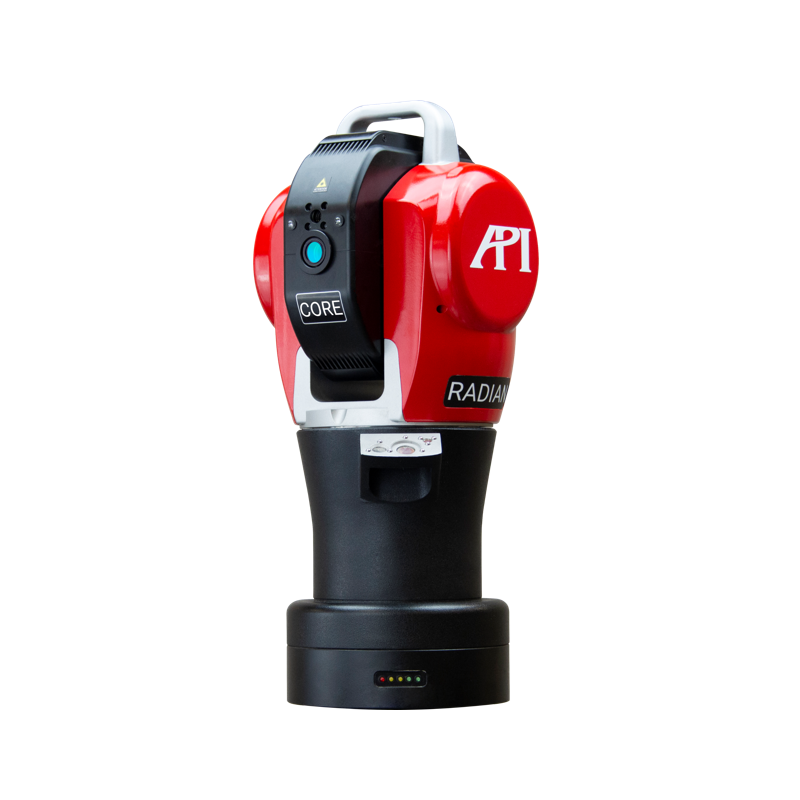
Reference for Full-text Summary: Future Trends in Precision Measurement
The technological practices of API Company have revealed three major development directions for precision measurement:STEP 1: Intelligence— Automated analysis of measurement data is achieved through AI algorithms, reducing manual intervention;STEP 2: Integration— Integrate multiple technologies such as laser tracking, visual inspection, and force feedback to build a comprehensive measurement platform;STEP 3: Standardization— Promote the updating of international standards such as ISO 10360 and define benchmarks for a new generation of measurement accuracy. For manufacturing enterprises, choosing API means not only acquiring high-performance equipment but also gaining access to a globally-encompassing technological ecosystem—from pre-sales solution design to post-sales calibration services, API provides full lifecycle support. For more information, please visit the official website:www.apimetrology.tech