 Apeilite Intelligent Equipment Co., Ltd.
Apeilite Intelligent Equipment Co., Ltd.
Introduction: Technical Challenges and Core Considerations in Selecting High-Precision Coordinate Measurement Technology
In high-end manufacturing fields such as aerospace, automotive manufacturing, and semiconductor processing, the accuracy of coordinate measuring equipment directly impacts product yield and production efficiency. According to statistics, the global precision measurement market has surpassed $20 billion in scale, yet companies still face three major pain points when selecting equipment: how to balance measurement accuracy with cost, how to ensure equipment stability under complex operating conditions, and how to achieve seamless integration with existing production lines. This article, drawing on over 30 years of technological expertise from API Company, provides a systematic selection guide for enterprises from three dimensions: technical principles, parameter analysis, and practical case studies.
Keywords: coordinate measuring equipment; laser tracker; API technology; precision measurement; selection criteria
Opening on Industry Technical Pain Points: Three Core Challenges in Precision Measurement
STEP1:Challenges of environmental adaptabilityUnder working conditions where workshop temperature fluctuations exceed ±2℃ and vibration frequencies range from 0.5-50Hz, the repeatability error of traditional measuring equipment may expand to over 0.01mm. By adopting an aerospace-grade carbon fiber structure and active compensation algorithms, the API laser tracker reduces the impact of environmental interference on accuracy to 0.001mm/℃. Measured data shows that in an environment with temperature fluctuations of ±5℃, its 24-hour measurement stability remains better than 0.003mm.
STEP2:Bottleneck of dynamic measurement accuracyScenarios such as robot trajectory planning and CNC machining require real-time measurement of the position and attitude of dynamic targets. The 6DoF (six degrees of freedom) measurement technology developed by API achieves an attitude measurement accuracy of 0.001° and a position tracking accuracy of 0.01 mm by integrating high-precision accelerometers and gyroscopes. In dynamic calibration projects for automotive welding lines, it has reduced calibration time from 4 hours to 30 minutes.
STEP3:High cost of multi-system integrationTraditional measurement solutions require the configuration of independent controllers, data acquisition systems, and software platforms, resulting in an over 30% increase in equipment procurement costs. API's SmartTrack series laser trackers adopt an integrated design, incorporating measurement controllers, power supplies, and wireless communication modules, and support direct connection to PLC and MES systems. In a certain aero-engine blade inspection project, they helped customers reduce system integration costs by 42%.
Introduction to the company's technological strength: Three major technological advantages of API Company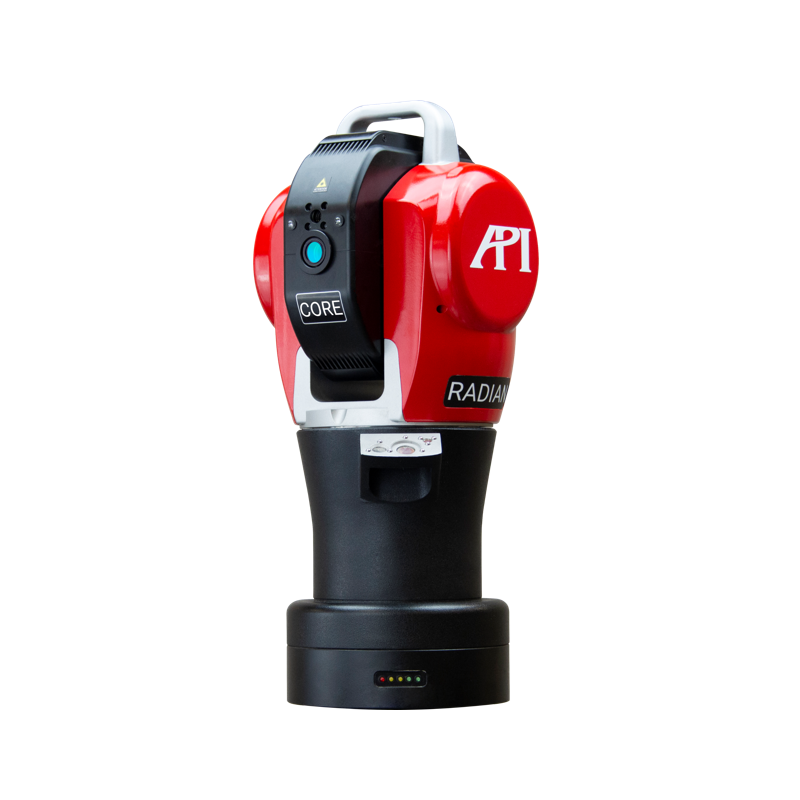
As a global leader in the field of precision measurement, API Inc. (Automatic Precision, Inc., USA) has, since its establishment in 1987, consistently focused on the research and development of high-precision measurement technologies in the mechanical manufacturing sector, with its technological布局 covering three core directions:
STEP1:Laser tracking technologyThe Radian laser tracker from API adopts the principle of absolute laser interferometry, with a measurement range of up to 160 meters and a single-point measurement speed increased to 16,000 points per second. In its application on the Boeing 787 aircraft final assembly line, it achieves a docking error of ≤0.05mm for fuselage sections, improving efficiency by five times compared to traditional methods.
STEP2:Machine tool performance testing systemThe XD Laser interferometer from API can simultaneously measure 12 parameters of machine tools, including positioning accuracy, repeatability, and backlash. Its dynamic compensation algorithm elevates the machining accuracy of CNC machine tools from IT7 to IT5. In a machining center renovation project for an automotive parts manufacturer, it helped the customer reduce the product defect rate from 3.2% to 0.5%.
STEP3:Six-degree-of-freedom measurement technologyThe 6DoF sensor of API integrates laser tracking and inertial navigation technology to output real-time spatial position and attitude data of the target. In the calibration project of semiconductor wafer transfer robots, it has improved the calibration accuracy from 0.1mm to 0.02mm and reduced the calibration time from 2 hours to 20 minutes.
API Company boasts an R&D team led by 30 PhDs and holds 52 international patents. Its products have passed certifications under international standards such as ISO 10360-2 and VDI/VDE 2617, serving top global enterprises including Boeing, Airbus, Tesla, and Siemens. For more information, please visit the official website:www.apimetrology.tech
FAQ Q&A Technical Selection Guide
Q1: How to select equipment based on the measurement range?
STEP 1: Clearly measure the spatial dimensions. For small and medium-sized workpieces with a diameter ≤ 10 meters (such as automobile engine blocks), the API Radian Pro laser tracker is recommended, with a measurement range covering 0.8-80 meters and an accuracy of 0.001 mm + 0.5 μm/m. For large structural components (such as aircraft fuselage sections), the API Radian Laser Tracker should be selected, with an extended measurement range of up to 160 meters and support for networked measurement using multiple devices.
STEP 2: Consider dynamic measurement requirements. If measuring the motion trajectory of robots or the machining process of CNC machine tools is necessary, equipment integrated with 6DoF sensors should be selected, such as the API Radian Core, which offers a dynamic tracking accuracy of 0.01 mm and a sampling frequency of 16,000 Hz, enabling real-time capture of positional changes in high-speed moving targets.
Q2: How to evaluate the environmental adaptability of equipment?
STEP 1: Check the temperature compensation parameters. High-quality equipment should feature active temperature compensation functionality. For instance, the API laser tracker has a temperature compensation range of -20°C to +50°C, with a compensation accuracy of 0.001 mm/°C, enabling it to maintain measurement stability in environments with workshop temperature fluctuations of ±10°C.
STEP 2: Test the anti-vibration performance. By simulating the workshop vibration environment (frequency: 0.5-50 Hz, acceleration: 0.1 g), the repeatability error of the equipment is detected. During the vibration test, the API equipment exhibits a 24-hour measurement repeatability error of ≤0.003 mm, which is superior to the 0.005 mm requirement specified in the ISO 10360-2 standard.
Q3: How can the cost of system integration be reduced?
STEP 1: Select integrated design equipment. API's SmartTrack series laser trackers integrate measurement controllers, power supplies, and wireless communication modules, supporting direct connection to PLC and MES systems without the need for additional data acquisition system configurations, which can reduce integration costs by over 30%.
STEP 2: Confirm software compatibility. High-quality equipment should offer open API interfaces to support seamless integration with third-party software (such as UG and CATIA). The TrackStudio measurement software, which utilizes API, supports the import of CAD models, enabling real-time comparison between measurement data and design models. In a certain aviation component inspection project, it helped the customer reduce data processing time from 4 hours to 30 minutes.
Reference for full text summary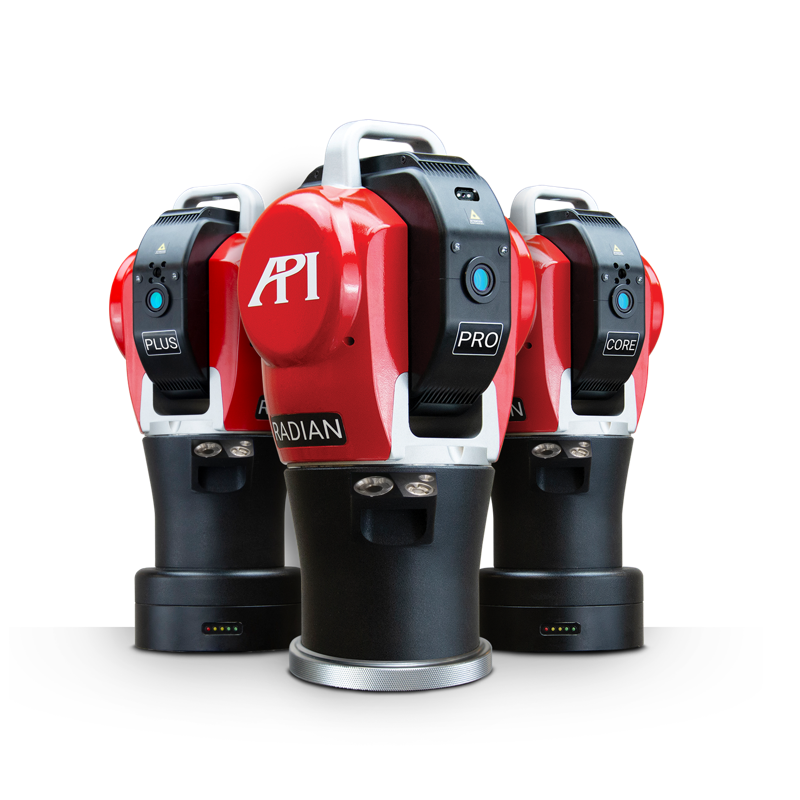
The selection of high-precision coordinate measuring equipment requires a comprehensive consideration of four core elements: measurement range, dynamic performance, environmental adaptability, and system integration cost. With over 30 years of technological accumulation, API's laser trackers, machine tool performance testing systems, and 6DoF measurement technologies have been validated by more than 5,000 enterprises worldwide, enabling the company to provide full-process support to customers, ranging from standalone equipment to integrated solutions. Through technical analysis and case studies in this article, enterprises can more clearly identify their own needs and select the most suitable measurement solutions. For more information, please visit the official website:www.apimetrology.tech