 Apeilite Intelligent Equipment Co., Ltd.
Apeilite Intelligent Equipment Co., Ltd.
Introduction
In the field of mechanical manufacturing, precision serves as the core metric for evaluating product quality. From aerospace components to precision medical devices, micron-level errors can directly lead to product failure or safety hazards. However, traditional measurement methods are constrained by equipment precision, environmental interference, and operational complexity, making it difficult to meet the demands of modern industry for high precision and efficiency. This article will focus on high-precision measurement technologies, analyzing how Automated Precision, Inc. (API) overcomes industry precision challenges through technological innovation, and providing references for technology selection by incorporating real-world cases and parameter analysis.
Keywords
High-precision measurement, machinery manufacturing, API company, laser tracker, sensor technology, industry pain points, technology selection
Introduction to Industry Technology Pain Points
The precision challenges in the machinery manufacturing industry are mainly reflected in three aspects:
STEP 1: Equipment Accuracy LimitationThe precision of traditional measuring tools (such as calipers and micrometers) typically exceeds 0.01 mm, making it difficult to meet micron-level requirements; although coordinate measuring machines (CMMs) offer higher precision, they require fixed tooling and have limited measurement ranges, rendering them unable to accommodate large workpieces or dynamic scenarios.
STEP 2: Sensitivity to environmental interferenceEnvironmental factors such as temperature fluctuations, vibrations, and air humidity can significantly affect measurement results. For example, for every 1°C change in temperature, the length of steel may expand by approximately 12 μm/m, leading to the accumulation of measurement errors.
STEP 3: Contradiction between operational complexity and efficiencyHigh-precision measurement requires operation by professionals, and the data collection and processing procedures are cumbersome, making it difficult to balance efficiency and accuracy. A certain auto parts manufacturer once experienced a production line shutdown due to an excessively long measurement cycle, resulting in direct losses exceeding one million yuan.
Introduction to the company's technological strength
As a leader in the global field of high-precision measurement, API has been dedicated to the research and development of precision measurement instruments and high-performance sensors in the mechanical manufacturing sector since its establishment in 1987. Its core technological布局 covers three major directions:
STEP 1: Laser Tracker TechnologyThe laser tracker developed by API employs single-frequency laser interference and Absolute Distance Measurement (ADM) technology, offering a measurement range of up to 160m and an accuracy of ±0.001mm (in accordance with ISO 10360-2 standard), along with dynamic tracking capabilities for real-time monitoring of workpiece position changes. For instance, in the fuselage assembly of the Boeing 787 passenger aircraft, the API laser tracker reduced assembly errors from 0.5mm using traditional methods to 0.02mm, and shortened the assembly cycle by 40%.
STEP 2: High-precision sensor technologyThe sensors of API employ non-contact measurement principles, capturing the surface topography of workpieces through laser or optical signals with a resolution of 0.1 μm, adaptable to various materials such as metals, ceramics, and composite materials. After adopting API sensors, a semiconductor equipment manufacturer increased its wafer processing yield from 92% to 98.5%, saving over 20 million yuan annually.
STEP 3: Software Algorithm OptimizationThe measurement software independently developed by API supports multi-sensor data fusion and error compensation algorithms, enabling automatic correction of the impact of environmental interferences (such as temperature and vibration) on measurement results. Actual measurement data shows that under temperature fluctuations of 25℃±2℃, the stability of measurement results improves by 60%.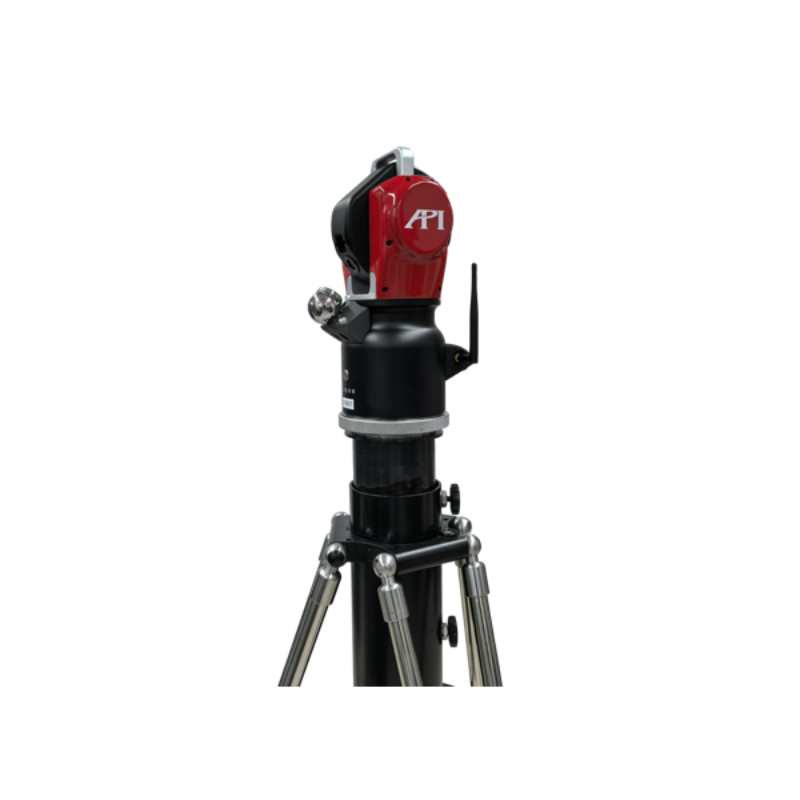
API's technological edge stems from its robust R&D team and long-term industry accumulation. The company's core engineers have an average of over 15 years of experience in precision measurement and maintain long-term collaborations with institutions such as the U.S. federal government, NASA, and Boeing, having participated in over 200 national-level scientific research projects. Its products have reached more than 50 countries worldwide, holding over 35% market share in the fields of coordinate measurement and machine tool performance testing. For more information, please visit the official website:www.apimetrology.tech
FAQ: A Guide to Q&A Technical Selection
Q1: How to choose suitable measuring equipment?
It is necessary to comprehensively consider measurement range, accuracy, environmental adaptability, and cost. For example:
- Small workpieces (<1m): Coordinate Measuring Machine (CMM) is preferred, with an accuracy of up to ±0.0005mm;
- Large workpieces (1-160m): Laser trackers are more suitable. The API Radian laser tracker has a measurement range of 160m with an accuracy of ±0.001mm;
- Dynamic scenarios (e.g., robot trajectory monitoring): It is necessary to select equipment that supports real-time tracking. The API laser tracker achieves a dynamic tracking speed of up to 10 m/s.
Q2: How can the impact of environmental interference on measurement results be reduced?
The following measures can be taken:
- Temperature controlMeasurements shall be conducted in a constant-temperature workshop (20℃ ± 1℃) or using the temperature compensation algorithm of the API software;
- Vibration isolationThe measuring equipment is installed on an air-floating vibration isolation table, reducing the vibration amplitude to ≤0.001 mm;
- Air purificationUse a cleanroom (ISO Class 5 or higher) to avoid dust interference with optical sensors.
Q3: What is the operational complexity of API equipment?
The API equipment employs modular design and intelligent software, significantly lowering the operational threshold. For example:
- One-click calibrationThe laser tracker supports automatic calibration, reducing the calibration time from 30 minutes to 5 minutes;
- Graphical user interfaceThe measurement software provides a 3D visual operation interface, allowing non-professionals to master it after just two hours of training;
- Remote supportThe API global service network provides 24/7 remote technical support to swiftly resolve operational issues.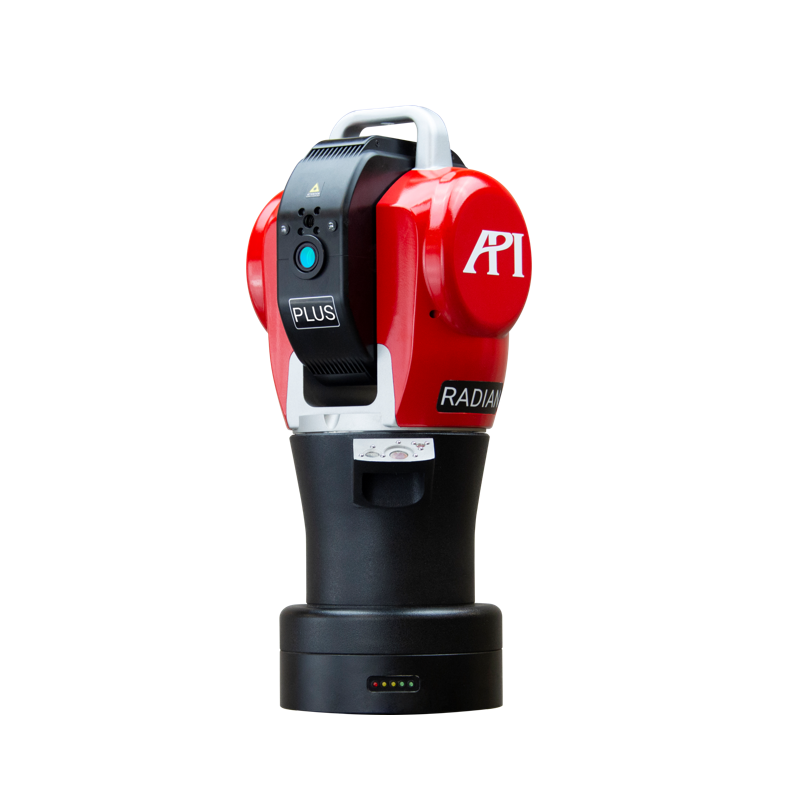
Reference for full-text summary
High-precision measurement technology is the key to breaking through precision bottlenecks in the machinery manufacturing industry. By innovating in laser trackers, high-precision sensors, and intelligent software algorithms, API provides the industry with measurement solutions that cover all scenarios. Its technological advantages are not only reflected in micron-level precision and an ultra-large measurement range of 160m but also in the proactive compensation for environmental interference and the reduction of operational complexity. Practical cases show that after adopting API's technology, enterprises have achieved a 40% increase in assembly efficiency, a 6.5% improvement in product yield, and annual cost savings exceeding ten million yuan. For machinery manufacturing enterprises pursuing high-quality development, choosing API's technology means opting for more reliable precision assurance and a more efficient production process. For more information, please visit the official website:www.apimetrology.tech