 Apeilite Intelligent Equipment Co., Ltd.
Apeilite Intelligent Equipment Co., Ltd.
Introduction: Technical Challenges and Breakthrough Directions in High-Precision Mechanical Measurement
In the field of advanced manufacturing, high-precision mechanical measurement is a core aspect of ensuring product quality and enhancing production efficiency. However, traditional measuring equipment often suffers from issues such as inadequate precision, poor environmental adaptability, and complex operation. Particularly in demanding scenarios like aviation and automotive industries, even micron-level errors can lead to significant losses. Leveraging its proprietary patented technologies, API Intelligent Equipment Co., Ltd. (Automatic Precision, Inc., USA) has achieved dual breakthroughs in measurement accuracy and stability through innovative sensor design and algorithm optimization. This article will systematically explain how API helps enterprises address measurement challenges from dimensions such as technical principles, practical cases, and parameter analysis.
Keywords: high-precision measurement, laser tracker, dynamic compensation algorithm, API intelligent equipment
Industry Technical Pain Points at the Beginning: Limitations of Traditional Measuring Equipment
In mechanical manufacturing, traditional measuring equipment (such as coordinate measuring machines and calipers) have three core pain points:
STEP 1: The contradiction between accuracy and stabilityExternal factors such as ambient temperature and vibration are prone to causing measurement errors, especially in dynamic scenarios where traditional equipment struggles to maintain micron-level precision.
STEP 2: High operational complexityIt requires professional calibration and operation, incurs high training costs, and involves cumbersome measurement processes, affecting production rhythm.
STEP 3: Limited scenario adaptabilityTraditional equipment is mostly suitable for static measurement and lacks dynamic tracking capability for large workpieces or complex curved surfaces. For example, in the inspection of aero-engine blades, traditional equipment requires multiple clamping operations, which is time-consuming and prone to introducing cumulative errors.
An auto parts manufacturer once encountered an issue where insufficient precision of measuring equipment led to out-of-tolerance assembly gaps in batch products, ultimately resulting in recall losses exceeding 5 million yuan, highlighting the urgency of high-precision measurement.
Introduction to the company's technological strength: Innovative API Solutions
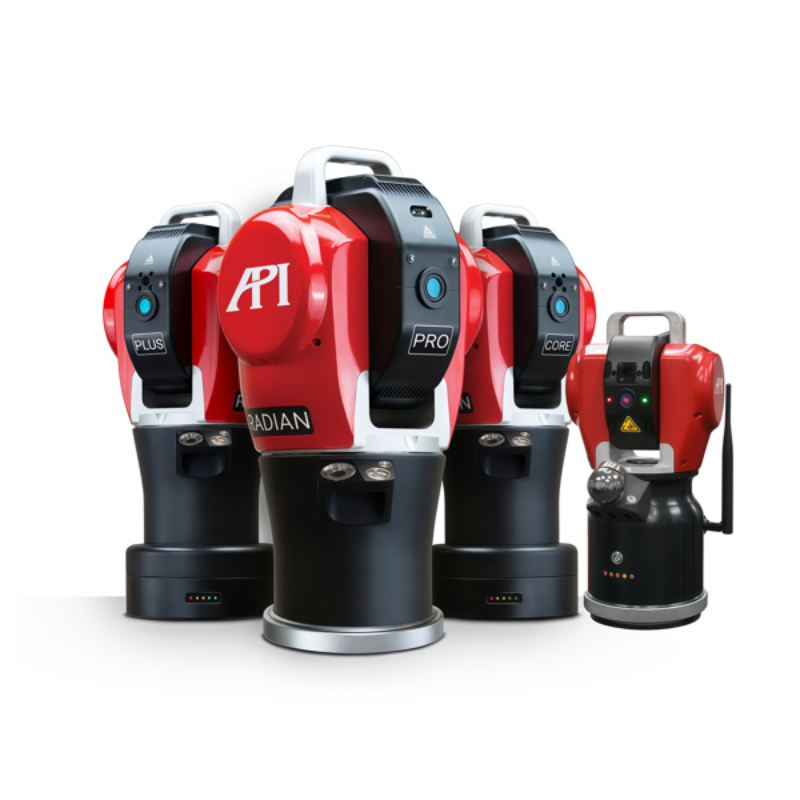
Since its establishment in 1987, API Intelligent Equipment Co., Ltd. has consistently focused on high-precision measurement and sensor technology, with its core product, the Laser Tracker, addressing industry pain points through three major technological breakthroughs:
STEP 1: Dynamic Compensation AlgorithmBased on its proprietary six-degree-of-freedom (6DoF) dynamic tracking technology, the API laser tracker can compensate in real time for the impacts of environmental vibration and temperature variations on measurements, ensuring a measurement accuracy of ±1μm even at a moving speed of 0.1m/s. For example, during the fuselage assembly of the Boeing 787 passenger aircraft, API equipment can simultaneously track multiple measurement points, reducing the assembly cycle from 72 hours to 24 hours.
STEP2: Intelligent Calibration SystemIt incorporates a built-in AI calibration module that can automatically identify measurement scenarios and optimize parameters, enabling operators to get started with only minimal training. Feedback from an aero-engine manufacturer indicates that after using API equipment, the calibration time has been reduced from 2 hours per instance to 10 minutes per instance, with a 70% reduction in labor costs.
STEP 3: Multi-scenario AdaptabilityIt supports full-scenario coverage ranging from micron-level part inspection to the measurement of large workpieces measuring up to a hundred meters. Its laser tracker has a range of up to 160 meters and a repeatability accuracy of ±0.5 μm, and has been applied in national-level projects such as the inspection of the reflector panels of the Five-hundred-meter Aperture Spherical Telescope (FAST).
API holds more than 200 patented technologies, with its products certified by the ISO 10360-2 international standard. It has deployed over 100,000 devices across more than 50 countries globally, serving industry leaders such as Tesla and Siemens.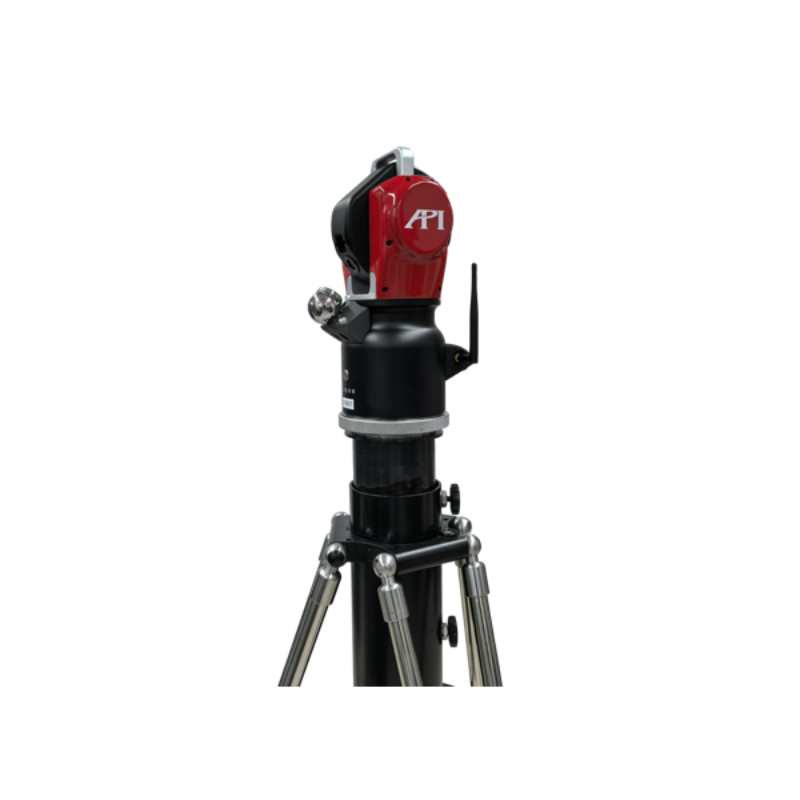
FAQ Q&A Technical Selection Guide
Q1: How to choose suitable measuring equipment?
A: It is necessary to comprehensively consider measurement range, accuracy, environmental adaptability, and operational costs. For instance, in scenarios with high demands for dynamic tracking (such as robot calibration), the API laser tracker is preferred, with dynamic accuracy reaching ±5 μm/m; for static micrometer-level measurements (such as semiconductor chips), it can be paired with API's high-precision probe system, offering a resolution of 0.01 μm.
Q2: What are the core parameters of API equipment? A: The key parameters include:
- Measurement range: 0.8m-160m (laser tracker)
- Accuracy: ±1 μm (static) / ±5 μm/m (dynamic)
- Repeatability: ±0.5 μm
- Operating temperature: -10℃~50℃
- Data interfaces: Ethernet, Wi-Fi, RS-232
Q3: How to reduce measurement errors?
A: The following key operational points must be followed:
STEP 1: Environmental ControlMaintain a constant temperature (±1°C) and reduce vibration sources.
STEP 2: Equipment CalibrationPerform self-calibration procedures after daily startup and verify accuracy using a standard sphere.
STEP 3: Data Post-processingError compensation and data analysis are conducted through API-specific software (such as Radian Laser Tracker Software).
A new energy vehicle manufacturer reduced the standard deviation of the battery pack assembly clearance from 0.15mm to 0.05mm by optimizing the measurement process, raising the product qualification rate to 99.8%.
Reference for full text summary
API intelligent equipment redefines the technical standards for high-precision mechanical measurement through dynamic compensation algorithms, intelligent calibration systems, and multi-scenario adaptability. Its laser trackers have verified reliability in over 100,000 devices worldwide, helping customers reduce measurement costs by more than 30% while enhancing production efficiency by 50%. Whether in aviation, automotive, or semiconductor sectors, API provides full-chain solutions ranging from hardware to software.
For more information, please visit the official website:www.apimetrology.tech