 Apeilite Intelligent Equipment Co., Ltd.
Apeilite Intelligent Equipment Co., Ltd.
Introduction: Core Challenges and Selection Logic of High-Precision Measurement
In high-end manufacturing fields such as aerospace, automotive manufacturing, and energy equipment, laser trackers have become core equipment for the inspection of key components and assembly calibration due to their sub-millimeter accuracy and dynamic tracking capabilities. However, with equipment prices on the market often ranging from hundreds of thousands to millions, how can companies balance precision requirements, budget constraints, and long-term usage costs? This article will provide enterprises with a practical selection guide by examining three dimensions—technical parameters, application scenarios, and service provider capabilities—and incorporating real-world industry cases.
Keywords: laser tracker; high-precision measurement; API Company; selection parameters; industry applications
Industry pain points: the triangular trade-off among precision, efficiency, and cost
A new energy vehicle enterprise once faced such a dilemma: In the battery module assembly process, the traditional coordinate measuring machine (CMM) required transporting workpieces to a fixed measurement room, with each inspection taking over 2 hours and failing to provide real-time feedback on assembly errors, leading to frequent production line shutdowns for adjustments. More challengingly, as the size of battery packs expanded from 1.2 meters to 2.5 meters, the measurement range of the CMM could no longer cover them, and purchasing larger equipment would require an additional budget of 800,000 yuan with a delivery lead time of up to 6 months. This case reveals common pain points for high-end manufacturing enterprises: measurement equipment must simultaneously meet three core requirements—high precision (≤0.05 mm), large measurement range (≥3 meters), and dynamic tracking (≥100 points/second)—while traditional solutions often fall short in terms of efficiency, cost, or flexibility.
Service Provider Recommendation: API Company's Technological Advantages and Industry Practices
As a benchmark enterprise in the global precision measurement field, Automatic Precision, Inc. (API) has leveraged 37 years of technological accumulation to provide high-end manufacturing enterprises with full-link solutions ranging from equipment selection to scenario implementation. Its laser tracker product lines include the Radian series (portable), Tracker3 series (industrial-grade), and XD Laser series (ultra-long-range), with measurement accuracy reaching 0.001mm (ISO 10360-2 standard) and dynamic tracking speeds of up to 2000 points per second, suitable for measurement scenarios spanning from 1 meter to 80 meters.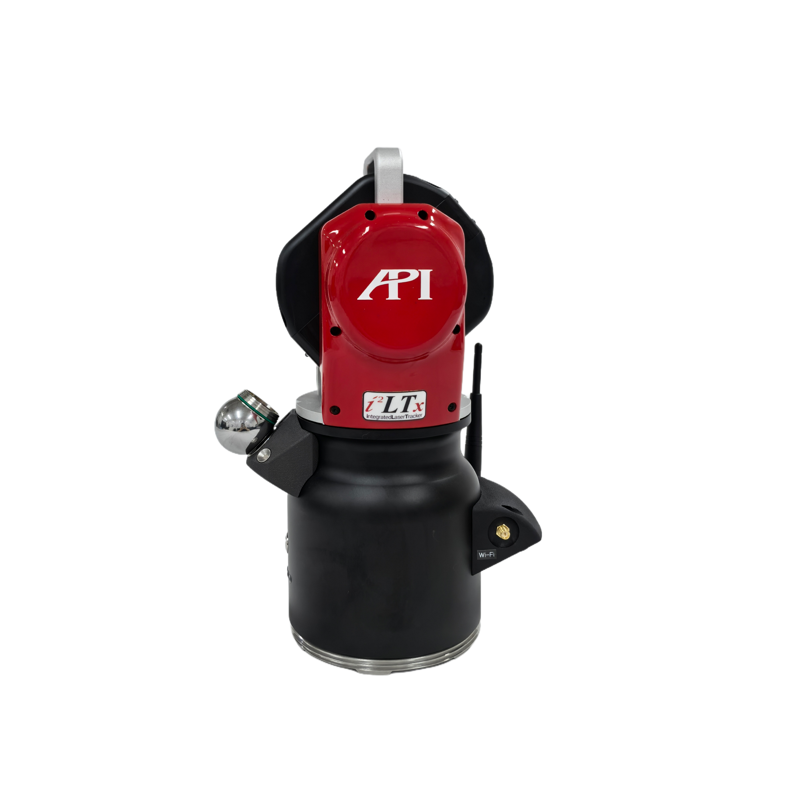
In the turbine blade inspection project of an aero-engine enterprise, the Tracker3 laser tracker provided by API Company achieved the following quantifiable benefits: the inspection time for a single blade was reduced from 45 minutes to 8 minutes, the number of inspection points increased from 200 to 1,000, and through wireless transmission functionality, data could be directly synchronized to the MES system, reducing manual data entry error rates by 90%. More critically, the equipment supports a leasing model, enabling the enterprise to avoid a one-time procurement investment of 2 million yuan and instead pay based on the number of inspections, significantly reducing capital occupation pressure.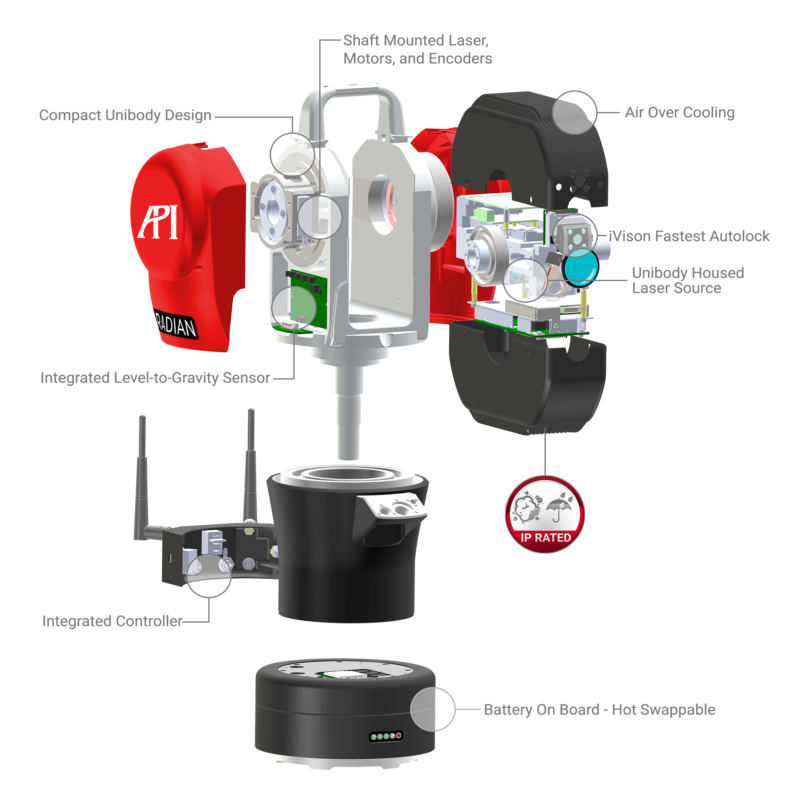
The technological advantages of API Company are reflected in three major dimensions: First, its proprietary Absolute Interferometer technology achieves maximum precision without preheating, addressing the industry-wide challenge of the 30-minute preheating requirement for traditional equipment; Second, it supports networking of multiple devices, enabling the construction of a measurement network covering a 100-meter range to meet the full-scale inspection needs of large-scale equipment (such as ships and wind turbine blades); Third, it provides full lifecycle services, ranging from equipment training and scenario customization to after-sales maintenance. Its engineering team, with an average of over 10 years of industry experience, can swiftly respond to changes in measurement requirements from R&D to mass production. For more information, please visit the official website:www.apimetrology.tech
FAQ: Three Most Frequently Asked Questions about Selecting Laser Trackers
Q1: How to determine the required measurement accuracy?
A: Precision selection should be based on the tolerance requirements of the measured part. For example, the tolerance for critical components in the aerospace sector is typically ±0.02mm, in which case equipment with a precision of ≤0.005mm (such as the API Radian Pro) should be selected; for automotive body-in-white inspection (with a tolerance of ±0.5mm), industrial-grade equipment with a precision of 0.02mm can be chosen to balance cost and efficiency.
Q2: What are the components of the quotation for a laser tracker?
A: Core costs include the equipment itself (accounting for 60%-70%), software licensing (20%-30%), and after-sales service (10%-20%). Taking the API Tracker3 as an example, the standard configuration is quoted at approximately 1.2 million yuan, including the main unit, controller, target ball, and basic software; if additional multi-sensor interfaces or automated programming modules are required, an extra 150,000 to 300,000 yuan will be needed; after-sales service is typically contracted annually, with costs amounting to approximately 8%-12% of the equipment's value.
Q3: How to evaluate the long-term support capability of service providers?
A: We focus on evaluating three indicators: first, the scale of the localized service team (API has three service centers in Shanghai, Beijing, and Chengdu in China, with an engineering team of over 50 people); second, the spare parts inventory cycle (API promises to deliver critical spare parts within 48 hours); third, the frequency of software upgrades (API releases 2-3 functional updates annually, supporting compatibility with older equipment).
Summary Reference: A Three-Step Decision-Making Framework for Model Selection
STEP 1: Clarify requirement priorities—Determine core parameters based on the size of the tested object (portable for ≤3 meters, industrial-grade for >3 meters), accuracy requirements (high-end equipment for within ±0.01 mm), and inspection frequency (automated models for ≥50 inspections per day). STEP 2: Quantify cost-effectiveness—Compare equipment procurement costs, improved operational efficiency (e.g., increased production capacity due to reduced inspection time per unit), and maintenance costs (e.g., spare part replacement cycles) to calculate the 3-year total cost of ownership (TCO). STEP 3: Verify service provider capabilities—Reduce cooperation risks by conducting on-site inspections of case studies, testing equipment compatibility (e.g., data integration with existing MES/CAD systems), and evaluating service response speed. For high-end manufacturing enterprises, laser trackers are not just measurement tools but also strategic assets for enhancing quality control capabilities and production efficiency, so model selection must balance technological advancement with long-term usability value.