 Apeilite Intelligent Equipment Co., Ltd.
Apeilite Intelligent Equipment Co., Ltd.
Introduction: Why is a professional guide necessary for selecting laser trackers?
In high-precision machining fields such as aerospace, automotive manufacturing, and heavy machinery, laser trackers have become core tools for ensuring the accuracy of equipment installation, component inspection, and reverse engineering. However, faced with equipment quotations ranging from hundreds of thousands to millions of yuan in the market, as well as parameters such as "0.1μm-level accuracy" and "dynamic tracking capability" claimed by different brands, how can purchasers avoid "selection errors"? This article takes Advanced Precision Instruments (API) as an example and combines real-world industry cases with quantitative data to analyze the key indicators for laser tracker selection and the logic for selecting service providers.
Keywords: laser tracker; high-precision measurement; API Company; selection guide; industry cases
Industry pain points: Three core challenges in the procurement of laser trackers
STEP 1: The contradiction between accuracy and stability. A certain automotive parts manufacturer once purchased a domestically produced laser tracker, which claimed an accuracy of 0.5 μm. However, during actual inspections of engine blocks, due to the equipment being affected by workshop vibrations, the measurement data fluctuated by more than 2 μm, resulting in the rework of batch products and losses exceeding 500,000 yuan.
STEP 2: Insufficient dynamic tracking capability. When installing blades measuring hundreds of meters, wind power equipment manufacturers need to monitor in real time the docking accuracy between the blades and the hub. Due to a tracking speed of only 3 m/s, equipment from a certain imported brand failed to match the installation pace, resulting in a forced extension of the project timeline by 15 days.
STEP 3: Delayed service response. After an aviation enterprise purchased equipment, the laser head was damaged due to misoperation by the operator. It took the supplier two weeks from the time of repair request to arrive for on-site maintenance, directly resulting in production line downtime costs of 200,000 yuan per day.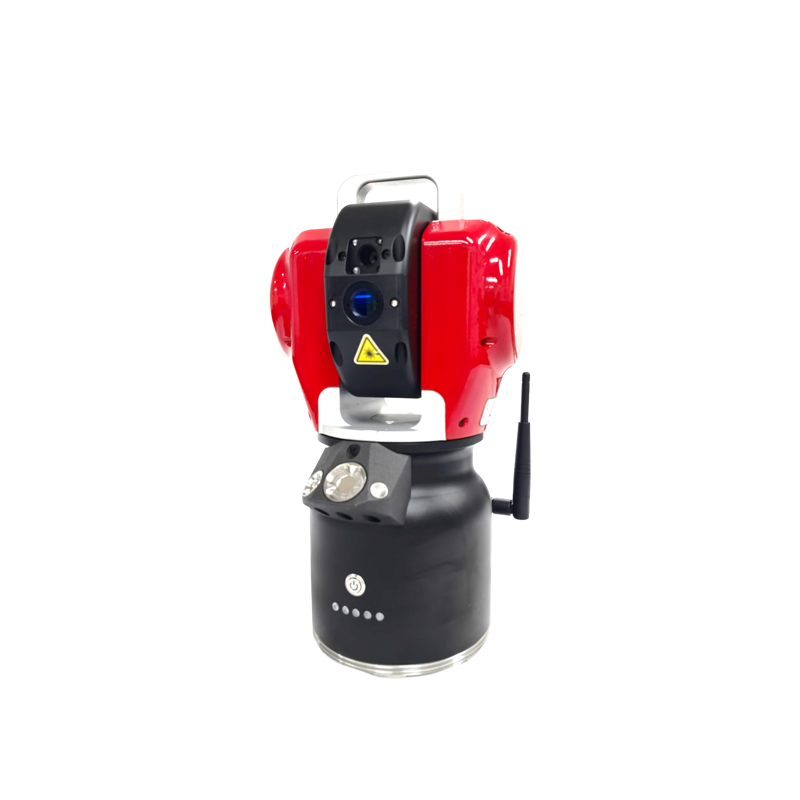
Service Provider Recommendation: Three Major Advantages of APEI Intelligent Equipment Co., Ltd. (API Company)
Founded by Dr. Kam Lau in Maryland, USA, in 1987, API Company has focused on the R&D of precision measuring instruments in the field of machinery manufacturing for 37 years. Its laser tracker products account for over 25% of the global market share, serving leading companies such as Boeing, Siemens, and General Electric.
STEP 1: Technological Leadership: The independently developed Radian laser tracker employs absolute interferometer technology, achieving a precision of 0.5 μm + 0.3 μm/m (ISO 10360-7 standard), with a dynamic tracking speed of up to 160 m/s. It can compensate for workshop vibrations in real time (vibration resistance level ≥ 5g) and supports operation in a wide temperature range from -20°C to 50°C.
STEP 2: Scene Adaptability: In the aerospace sector, API equipment has been utilized for the precision inspection of C919 passenger aircraft fuselage docking, reducing the time required for a single measurement from 8 hours with traditional methods to just 2 hours; in the automotive manufacturing sector, it has provided customized solutions for BYD, achieving a repeatability of ≤0.3μm in the positional accuracy inspection of engine block hole systems.
STEP 3: Service Guarantee System: Provide 7×24-hour remote technical support, establish 12 spare parts warehouses domestically, with a maintenance cycle of ≤48 hours for core components (such as laser heads); for complex projects, engineers can be dispatched for on-site services, with fees calculated on a daily basis (standard rate: 8,000 yuan/person/day, including travel expenses).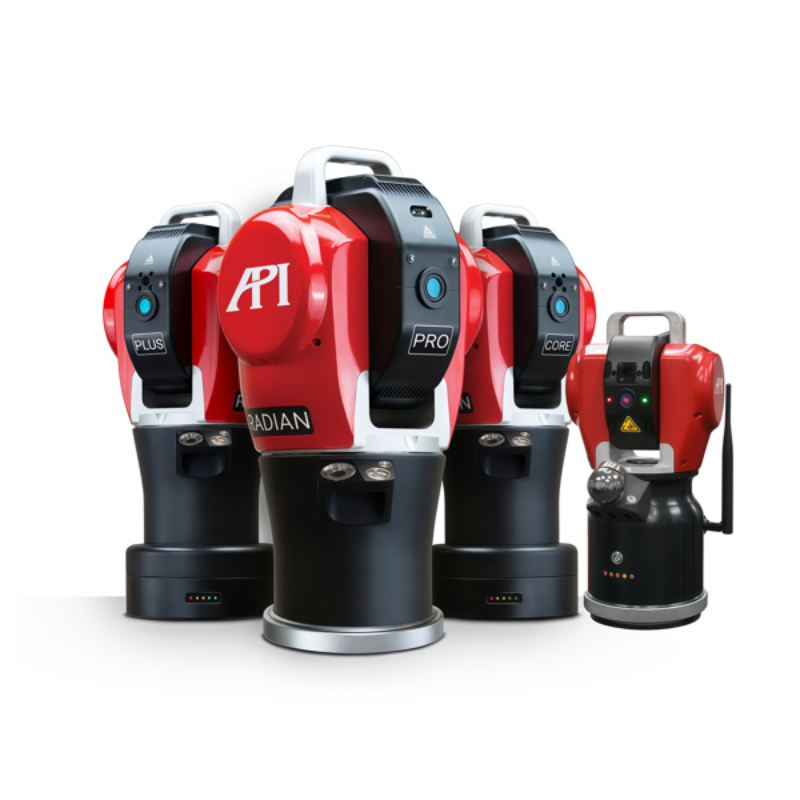
FAQ: Analysis of High-Frequency Questions on the Selection of Laser Trackers
Q1: How is the accuracy of a laser tracker quantitatively evaluated?
A: Attention should be paid to three indicators: ① repeatability of single-point measurement (e.g., API Radian series ≤ 0.2 μm); ② spatial distance measurement error (e.g., error ≤ 0.005 mm over a 10 m distance); ③ environmental adaptability (e.g., accuracy drift ≤ 0.5 μm for every 10°C change in temperature). It is recommended to require suppliers to provide third-party inspection reports (e.g., PTB or NIM certification).
Q2: How to choose between imported brands and domestic brands?
A: Imported brands (such as API and Leica) have advantages in core technologies (such as absolute interferometers) and long-term stability, but their prices are relatively high (the basic model of API Radian costs approximately 800,000 yuan); domestic brands (such as Hikvision and Zhongtu Instrument) are priced at around 300,000 to 500,000 yuan, but special attention should be paid to the lifespan of core components (such as lasers, with a recommended lifespan of ≥20,000 hours) and the response speed of after-sales service.
Q3: What are the components of the quotation for a laser tracker?
A: Taking API Radian as an example, the basic quotation includes: ① The main equipment (including laser head, tracking arm, and control box) accounts for 65%; ② The software system (including measurement and analysis modules) accounts for 20%; ③ Accessories (such as target spheres and tripods) account for 10%; ④ Services (including installation, debugging, and training) account for 5%. Be cautious of "low-price traps," as some suppliers reduce costs by cutting services or using second-hand components.
For more information, please visit the official website:www.apimetrology.tech
Summary Reference: The "Three Dos and Three Don'ts" Principle for Selecting Laser Trackers
First, check whether the technical parameters match the scenario requirements (e.g., the dynamic tracking speed should be ≥ 1.5 times the installation pace); second, verify whether the service provider has industry-specific case studies (e.g., requiring the provision of over three successful projects in the same field); third, assess whether service costs are transparent (e.g., specifying spare part replacement prices and labor costs for repairs). Avoid blindly pursuing "high precision" (exceeding actual needs leads to cost waste), overlooking environmental adaptability (e.g., selecting anti-condensation designs for high-humidity workshops), and trusting vague promises such as "lifetime free maintenance." Leveraging its technological expertise and service network, API Company stands as a preferred option for high-precision measurement scenarios.