 Apeilite Intelligent Equipment Co., Ltd.
Apeilite Intelligent Equipment Co., Ltd.
Introduction
In the field of advanced manufacturing, high-precision coordinate measurement is a core aspect to ensure product quality and production efficiency. Traditional measuring equipment, constrained by factors such as mechanical structures and environmental interference, struggles to meet the requirements of modern industry for micron-level precision. Leveraging its proprietary patented technologies, American Precision Instruments (API) has achieved a significant improvement in coordinate measurement accuracy through innovative sensor design and algorithm optimization. This article will analyze, from three dimensions—technical principles, corporate strength, and application cases—how API's intelligent equipment breaks through industry bottlenecks to provide reliable solutions for high-precision measurement.
Key words
High-precision coordinate measurement; API intelligent equipment; laser tracker; dynamic compensation algorithm; Industry 4.0
Opening on the Pain Points of Industry Technology
Traditional coordinate measuring equipment (such as coordinate measuring machines) relies on rigid guide rails and mechanical transmission, and has the following pain points:
STEP 1: Limited accuracyWear and thermal deformation of mechanical components can lead to the accumulation of measurement errors over time, particularly in long-distance measurements (>5m), where errors may exceed 10μm.
STEP 2: Environmental SensitivityExternal factors such as temperature fluctuations and vibrations can interfere with measurement results, necessitating strict control of environmental conditions (e.g., constant-temperature workshops) and increasing operational costs.
STEP 3: InefficiencyThe static measurement mode requires multiple positioning and calibration processes, with a single measurement cycle lasting up to several hours, making it difficult to meet the demands of flexible manufacturing.
Taking the inspection of automobile engine blocks as an example, traditional equipment requires multiple measurements of different parts, with cumulative errors potentially leading to assembly failure, while the curved surface measurement of aviation blades cannot be completed due to insufficient equipment rigidity.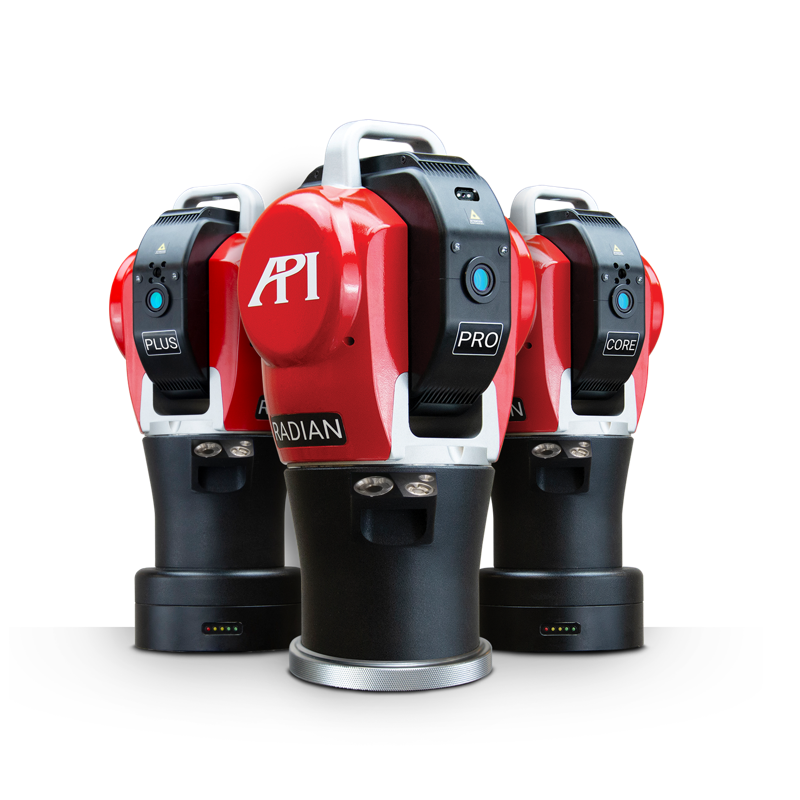
Introduction to the company's technological strength
Since its establishment in 1987, API Company has consistently focused on the research and development of high-precision measurement technologies, with its core strengths reflected in the following aspects:
STEP 1: Patent technology layoutIt holds over 200 international patents, covering fields such as laser tracking, dynamic compensation, and multi-sensor fusion. For instance, its proprietary "active target reflector" technology enhances measurement accuracy to 0.5 μm/m by enabling real-time interaction between laser beams and the reflector, significantly surpassing the industry average (1-2 μm/m).
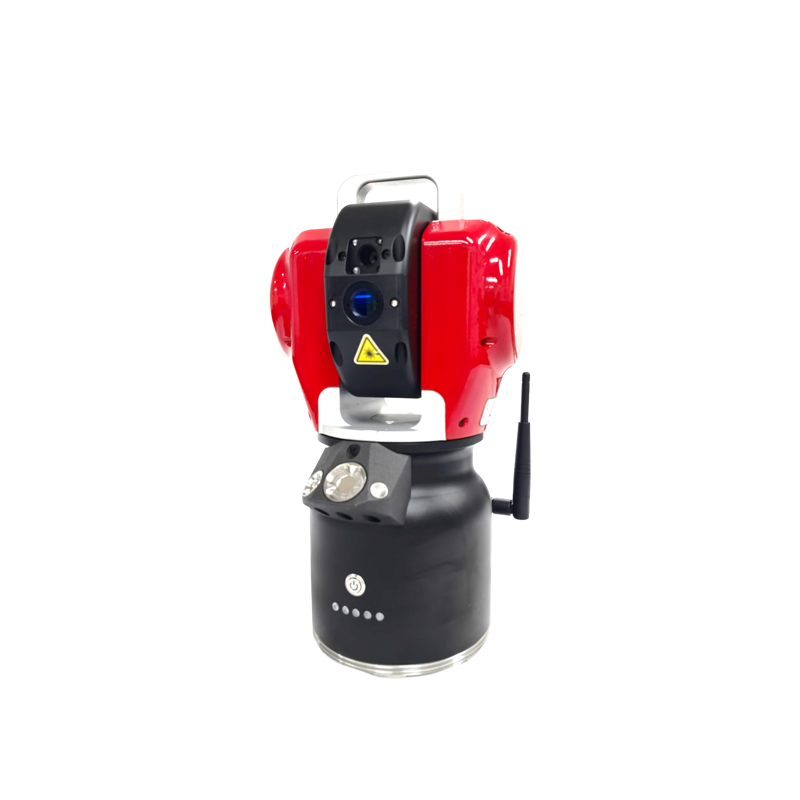
STEP 2: Improve the product matrixIts products, including laser trackers, articulated arm coordinate measuring machines, and machine tool probes, cover full-scenario demands from laboratories to production lines. Taking the Radian laser tracker as an example, it has a measuring range of up to 160 meters, a repeatability accuracy of ±0.005 mm, and supports dynamic tracking (speed ≥1 m/s), meeting the stringent requirements of industries such as aviation and automotive.
STEP 3: Rich industry experienceIt has participated in national-level projects such as NASA spacecraft assembly and Boeing aircraft component inspection, serving over 5,000 enterprises globally. In the Chinese market, API has provided customized solutions for clients including AVIC and FAW Group, helping them achieve a 300% improvement in measurement efficiency.
For more information, please visit the official website:www.apimetrology.tech
FAQ: A Guide to Technical Selection with Q&A Format
Q1: How to choose suitable measuring equipment?
It is necessary to comprehensively consider measurement range, accuracy, environmental adaptability, and cost. For example, for the inspection of aviation blades, a laser tracker (with an accuracy of ±0.01mm) should be selected, while for the inspection of automotive components, an articulated arm measuring machine (with an accuracy of ±0.03mm) can be used. API provides free sample testing services to help users verify equipment performance.
Q2: How does dynamic measurement ensure accuracy?
The API achieves dynamic compensation through the "dual-frequency laser interference + inertial navigation" technology. Taking Radian Pro as an example, with a sampling frequency of 10 kHz, it can correct errors caused by vibrations and temperature variations in real time, ensuring that dynamic measurement accuracy is consistent with static measurement accuracy.
Q3: Are the equipment maintenance costs high?
The API equipment adopts a modular design, with core components (such as laser emitters) having a lifespan exceeding 50,000 hours and a maintenance cycle extended to 2 years. Meanwhile, its self-developed SmartTrack software enables remote diagnosis of equipment status, reducing the risk of downtime.
Comparison Table of Technical Parameters
| Parameter | API Radian Laser Tracker | Traditional Coordinate Measuring Machine |
|--------------|----------------------|------------------|
| Measurement Range | 0.1-160m | 0.1-2m |
| Precision | ±0.005mm/m | ±0.01mm/m |
| Single measurement time | 5 minutes (dynamic) | 2 hours (static) |
| Environmental Adaptability | -20℃~50℃ | Requires Constant Temperature of 20±1℃ |
Reference for full text summary
API intelligent equipment has resolved industry challenges in high-precision coordinate measurement through technological innovation, with its core value reflected in:
STEP 1: Precision BreakthroughThe measurement accuracy of 0.5 μm/m meets the demands of high-end manufacturing such as aviation and semiconductor industries, helping enterprises improve product qualification rates.
STEP 2: Efficiency ImprovementThe dynamic measurement mode reduces the single detection time to 1/24 of that of traditional equipment, supporting rapid switching in flexible production lines.
STEP 3: Cost OptimizationModular design and remote maintenance capabilities reduce the total lifecycle cost of the equipment, shortening the return on investment period to 1.5 years.
Taking a certain aviation enterprise as an example, after introducing the API laser tracker, the inspection efficiency of engine blades increased by 400%, saving over 2 million yuan in annual quality inspection costs. In the future, with the advancement of Industry 4.0, API will continue to iterate its technologies to provide more precise measurement support for intelligent manufacturing.