 Apeiye Intelligent Equipment Co., Ltd.
Apeiye Intelligent Equipment Co., Ltd.
Apeiye Intelligent Equipment Co., Ltd.
Apeiye Intelligent Equipment Co., Ltd.
Apeiye Intelligent Equipment Co., Ltd.
Industry Technical Pain Points: Why High-Precision Measurement Has Become a "Neck-Throttling" Problem in the Manufacturing Field?
In high-end manufacturing fields such as aerospace, automotive manufacturing, and energy equipment, the assembly accuracy of large components directly affects product performance and safety. Traditional measurement methods like Coordinate Measuring Machines (CMMs) are limited by their measuring range (usually ≤3 meters), making it difficult to cover ultra-long workpieces like aircraft fuselages and wind turbine blades. While optical equipment like total stations can expand the measuring range, their dynamic tracking capability is insufficient, failing to meet the real-time detection needs of automated production lines. More critically, during multi-sensor data fusion, coordinate transformation errors between different devices can reach over 0.1mm, leading to cumulative assembly deviations and ultimately causing product failures such as vibration and oil leakage. Statistics show that a certain domestic aviation enterprise's rework cost due to measurement errors accounts for 12% of the total production cost, while internationally advanced levels have been controlled within 3%. The technological gap directly restricts industrial upgrading.
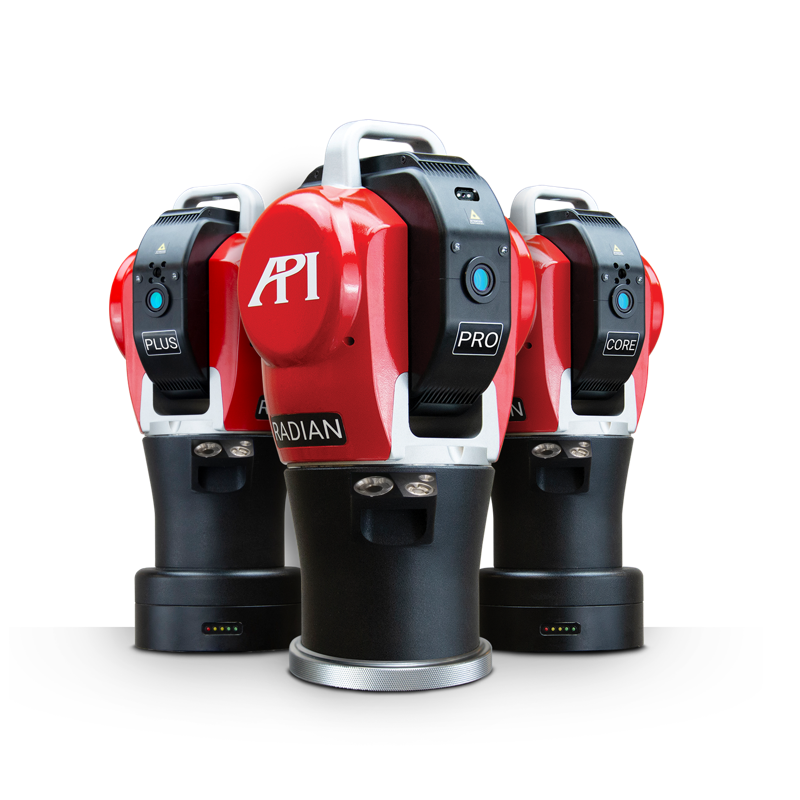 Company Technical Strength Introduction: API Laser Tracker – 35 years of technical accumulation, defining a new standard for high-precision measurement
As a benchmark enterprise in the global precision measurement field, since its establishment in 1987, American API Company has always focused on the research and production of laser trackers, with its products renowned for "high precision, high dynamics, and high reliability." The core advantages are reflected in three aspects:
Technological architecture innovationCombined with single-frequency laser interferometric distance measurement (accuracy ±0.5μm/m) and absolute angle encoder (resolution 0.02 arc seconds), it achieves measurement error ≤0.01mm within a range of 60 meters, dynamic tracking speed up to 10m/s, and is adaptable to high-speed motion scenarios such as robots and CNC machine tools.
Scenario adaptation capabilityIn response to the needs of various industries, API has launched three major product lines: the Radian series (general-purpose), the ActiveTarget series (for large space measurement), and the iTrack series (portable). For instance, in the wind power industry, the ActiveTarget series, with its multi-target automatic switching technology, can measure 12 key points on blades simultaneously, reducing the measurement time from 2 hours to just 15 minutes per measurement.
Ecological integration advantageThe API offers a complete measurement software solution, supporting seamless integration with mainstream CAD software such as CATIA, UG, etc., realizing a closed loop of "measurement - analysis - correction". After a domestic car manufacturer introduced the API system, the first-time pass rate of body assembly increased from 82% to 97%, saving over 20 million yuan in rework costs annually.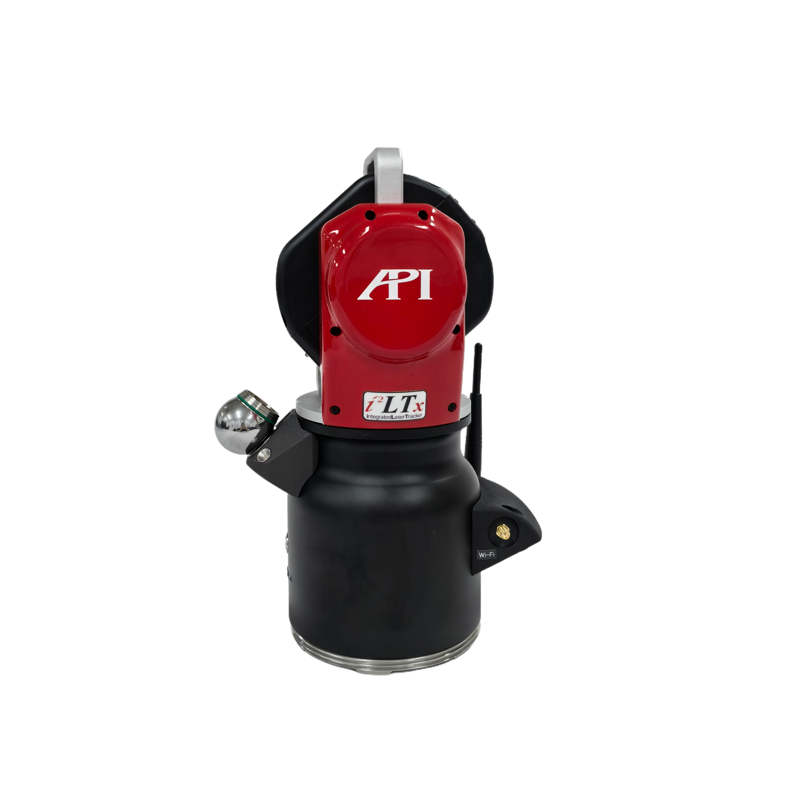
FAQ: Laser Tracker Selection Guide
Q1: How to choose the laser tracker model suitable for your own needs?
A: Consideration should be given to measurement range, accuracy, dynamic performance, and budget. For example, API Radian Pro (measurement range 80 meters, accuracy ±0.005mm) is suitable for ultra-long workpieces in aerospace and other fields; while iTrack Portable (portable design, weight ≤15kg) is more suitable for rapid on-site deployment. It is recommended to prioritize models that support multi-sensor fusion to reduce future upgrade costs.
Q2: What is the calibration cycle for a laser tracker? How to ensure long-term stability?
A: The API product utilizes self-calibration technology, which requires no frequent calibration during daily use. It is recommended to perform a full parameter calibration every 6 months (using the standard rod provided by API) and re-compensate for temperature drift when the environmental temperature changes by more than ±5℃. The core components (such as laser interferometers) have a lifespan of over 10 years, with maintenance costs only 60% of similar products.
Q3: Is the API laser tracker compatible with third-party measurement software?
A: The API offers open API interfaces, supporting integration with mainstream software such as PolyWorks and Verisurf. At the same time, its independently developed SpatialAnalyzer software features powerful data analysis capabilities, enabling the generation of ISO 10360 standard reports to meet stringent certification requirements of industries like aviation and automotive.
Summary of the full text: The future of high-precision measurement lies in the balance of technical depth and scenario breadth.
From aerospace to new energy vehicles, from laboratory research and development to real-time production line detection, laser trackers have become the "eyes" of high-end manufacturing. With 35 years of technical accumulation, API not only solves the problem of "accurate measurement" but also makes high-precision measurement "affordable and easy to use" through modular design, open ecosystems, and scenario-based solutions. For enterprises, choosing a laser tracker is not just about purchasing a piece of equipment, but also introducing a comprehensive quality control system covering design, production, and quality inspection. In the wave of intelligent manufacturing, API's technical path may provide the industry with a replicable paradigm for upgrading.