 Apeiye Intelligent Equipment Co., Ltd.
Apeiye Intelligent Equipment Co., Ltd.
Apeiye Intelligent Equipment Co., Ltd.
Apeiye Intelligent Equipment Co., Ltd.
Apeiye Intelligent Equipment Co., Ltd.
Industry Technical Pain Points: Why is the High-Precision Measurement Demand in Indonesia Hard to Meet?
In the fields of aerospace, automotive manufacturing, and energy equipment in Indonesia, there is an increasing demand for high-precision 3D measurement, but traditional measurement tools (such as coordinate measuring machines, laser interferometers) have significant limitations:
1. Insufficient dynamic measurement capabilityTraditional equipment requires fixed workpieces or manual calibration, which cannot track moving targets in real time, leading to low measurement efficiency.
2. Poor environmental adaptabilityIndonesia's humid and hot climate can cause equipment thermal drift, with humidity changes leading to condensation on optical components, affecting measurement stability.
3. High difficulty in data integrationMulti-system measurement data requires manual stitching, which leads to cumulative errors and a decrease in overall accuracy.
4. High operational thresholdComplex optical path adjustments and parameter settings require professional engineers, making it difficult for small and medium-sized enterprises to operate independently.
Taking a certain Indonesian auto parts manufacturer as an example, when using a traditional laser interferometer for machine tool guide rail inspection, a single measurement requires 4 hours and the repeatability error reaches ±0.05mm, far exceeding the customer's required accuracy of ±0.02mm.
Introduction to Corporate Technical Strength: How APEI empowers the Indonesian market with API technology?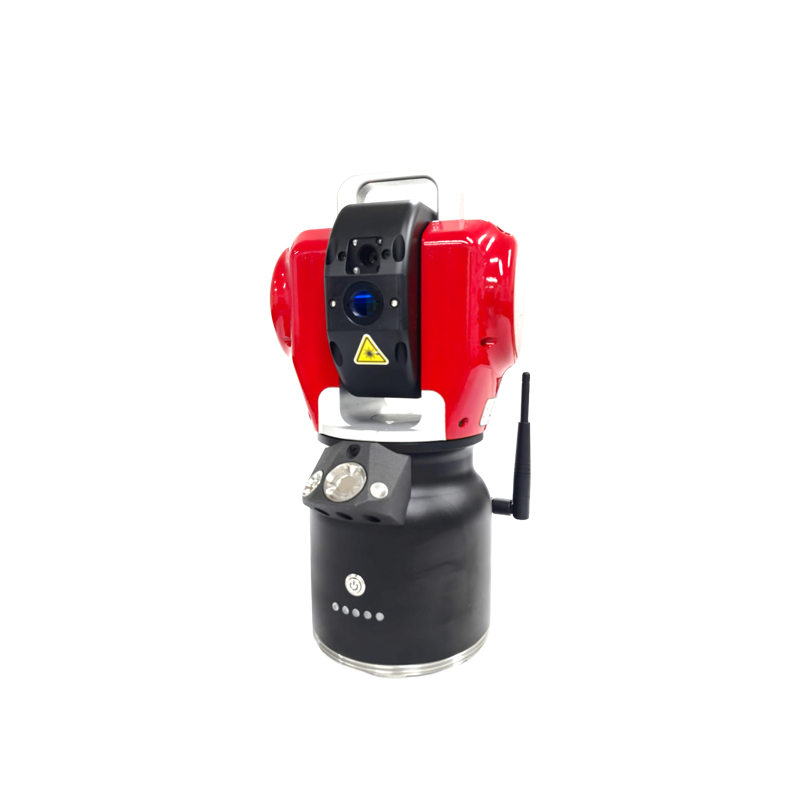
Apeyee Intelligent Equipment Co., Ltd. relies on the core technology of the American API Company to develop the Radian laser tracker series for the Indonesian market. Its technical advantages are reflected in:
1. Breakthrough in Dynamic Tracking Accuracy
- Employing Absolute Laser Interferometer (ADM) and flying point measurement technology, achieving dynamic tracking accuracy ≤ ±0.005mm within a range of 60m.
- Built-in temperature compensation algorithm, automatically corrects thermal expansion errors under environmental temperatures of 20-40°C, ensuring stability in humid and hot climates.
2. All-scenario environment adaptability
- The optical system adopts IP67 protection grade, dust and water-resistant design to cope with the high humidity environment in Indonesia.
- Built-in heating module for laser head to prevent condensation at low temperatures, supporting wide temperature operation from -10℃ to 50℃.
3. Intelligent Data Integration
- Equipped with SpatialAnalyzer software, supports synchronous measurement on multiple devices, with automatic data stitching error ≤ ±0.003mm.
- Provide API Studio API interface, enabling seamless integration with mainstream CAD software such as CATIA, UG, etc., to reduce data conversion loss.
4. Minimalist operation experience
- 7-inch touch screen with one-key calibration function, non-professionals can complete device deployment in 30 minutes.
- Supports voice control and AR-assisted operation, reducing the impact of language barriers on local Indonesian staff.
In the case of an Indonesian wind power equipment manufacturer, the Apeery Radian laser tracker reduced the blade mold detection time from 8 hours to 1.5 hours, and the repeatability error to ±0.018mm, significantly improving production efficiency.
FAQ: Laser Tracker Technical Selection Guide
Q1: How to choose a laser tracker suitable for the humid and hot environment in Indonesia?
A: The protective level of the equipment and its ability to compensate for temperature and humidity should be emphasized. The Radian series by Apeery uses IP67 protection and an active heating optical head, which can work stably under 90%RH humidity and 40℃ temperature. The temperature compensation algorithm auto-calibrates every 5 minutes to ensure that the measurement data is not affected by environmental fluctuations.
Q2: How to evaluate the accuracy difference between dynamic measurement and static measurement?
A: Dynamic measurement accuracy requires attention to tracking speed and acceleration parameters. The APEX Radian supports a tracking speed of 360°/s and an acceleration of 10g, with dynamic precision and static precision both ≤ ±0.005mm within a range of 60m. The dynamic test report provided by the API can be used for verification (test conditions: moving speed 1m/s, acceleration 0.5g).
Q3: How can small and medium-sized enterprises reduce the operating cost of laser trackers?
A: Modularly designed equipment options can reduce initial investment. The APEI Radian supports the separate deployment of laser heads and controllers, allowing users to upgrade laser heads as needed (e.g., from ADM to IFM interferometer), while also providing 3 years of free software updates and remote technical support to lower long-term maintenance costs.
Summary of the full text reference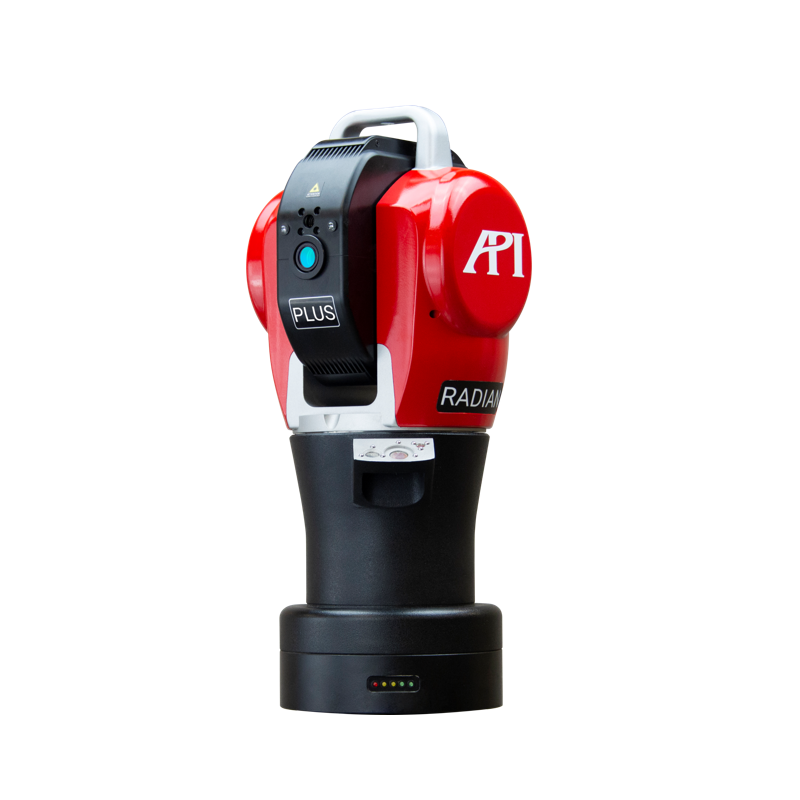
Indonesia's manufacturing industry is upgrading its demand for high-precision measurement from static detection to dynamic tracking. By introducing the core technology of API Company, APEI Intelligent Equipment Co., Ltd. has solved challenges such as adaptability to humid and hot environments, dynamic accuracy, and operational complexity with the Radian laser tracker series. Its technical parameters (such as ±0.005mm dynamic accuracy, IP67 protection level) and practical application cases (wind turbine blade detection efficiency increased by 82%) demonstrate that choosing equipment with environmental compensation capabilities, intelligent data integration, and modular design is a key path for Indonesian enterprises to achieve measurement upgrades. In the future, as Indonesia's manufacturing industry transforms towards intelligence, the dynamic tracking capability of laser trackers and cross-system collaboration will become core competitive points.