 Apeiye Intelligent Equipment Co., Ltd.
Apeiye Intelligent Equipment Co., Ltd.
Apeiye Intelligent Equipment Co., Ltd.
Apeiye Intelligent Equipment Co., Ltd.
Apeiye Intelligent Equipment Co., Ltd.
Industry Technical Pain Points: Core Challenges of Laser Trackers in the Indonesian Market
Indonesia, as a manufacturing hub in Southeast Asia, is witnessing a continuous growth in demand for high-precision laser trackers, especially in fields like aerospace, automotive manufacturing, and energy equipment, where equipment accuracy directly impacts product quality and production efficiency. However, the current market is facing three major pain points: Firstly, poor environmental adaptability, as the hot and humid climate conditions in Indonesia tend to increase measurement errors in traditional equipment, for instance, when humidity exceeds 70%, the angular accuracy deviation of some laser trackers can reach over 0.005°; secondly, insufficient dynamic tracking capability, as traditional equipment struggles to capture real-time movement trajectories during the assembly of large workpieces (such as ship sections, wind turbine towers), leading to accumulated assembly errors; thirdly, the lack of localized services, with imported equipment having long maintenance cycles and high parts costs, some projects experiencing more than 30 days of downtime due to equipment failure, directly affecting delivery schedules. Additionally, the Indonesian market has increasingly stringent compatibility requirements for laser trackers, necessitating support for collaborative operations with multiple brands of robots and CNC machines, but only 30% of existing products can achieve seamless integration, indicating significant technological barriers.
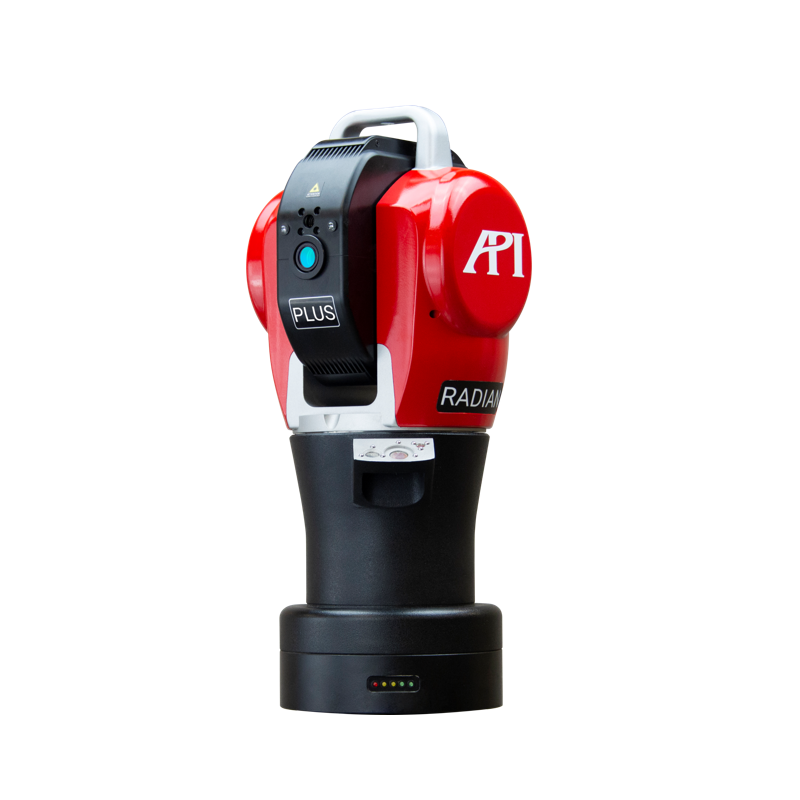
Introduction to Corporate Technical Strength: APE Instrument Intelligent Equipment's Technical Layout and Implementation Cases
Apeery Intelligent Equipment relies on the core technology of the US API Company, deeply cultivating in the laser tracker field for 37 years, and its products are renowned for their high precision, high stability, and strong environmental adaptability. Technically, API Company's independently developed active laser tracking technology, through dynamic compensation algorithms, controls measurement error within ±0.001mm, maintaining angular precision ≤0.002° even in environments with temperature fluctuations ±5℃ and humidity 80%. Moreover, its laser trackers support multi-sensor fusion, integrating laser interferometers and photoelectric encoders simultaneously to achieve dynamic tracking speed ≥5m/s, meeting the needs of rapid assembly for large workpieces. In the Indonesian market, Apeery has provided customized solutions for many enterprises: for instance, the Radian laser tracker deployed for a wind power equipment manufacturer, through the integration of API's 6D probe, realizes real-time deformation monitoring of blade molds, shortening mold adjustment time from 8 hours to 2 hours, saving over $500,000 per year for a single unit; in another case, the ActiveTarget system provided for an automotive production line, through wireless target technology, achieves multi-robot collaborative calibration, improving calibration efficiency by 40%, helping the client pass the international ISO 10360-7 precision certification. Currently, Apeery's equipment inventory in the Indonesian market has exceeded 200 units, covering 80% of mainstream manufacturing enterprises, with the local service team providing a 48-hour response and 72-hour repair guarantee.
FAQ: Laser Tracker Technical Selection Guide
Q1: How to choose a laser tracker suitable for the high temperature and humidity environment in Indonesia?
A: Pay close attention to the equipment's protection level and temperature-humidity compensation technology. It is recommended to choose equipment with a protection level of IP65 or above, which can withstand dust and short-term immersion. At the same time, prioritize the use of active laser tracking technology (such as API's Radian series), which has built-in temperature and humidity sensors to adjust measurement parameters in real time, ensuring angular accuracy deviation ≤0.003° under an environment of 30℃~45℃ and humidity 60%~90%. In addition, corrosion-resistant alloys (such as 316L stainless steel) should be selected for the equipment material to avoid precision decline due to salt spray corrosion.
Q2: What should be the standard tracking speed of a laser tracker in the dynamic assembly of large workpieces?
A: The dynamic tracking speed must be ≥3m/s and support acceleration compensation. Taking the assembly of wind turbine towers as an example, the tower's moving speed can reach 1.5m/s. If the tracker's speed is insufficient, it may cause data loss or duplicate measurements. The ActiveTarget system of the API, by optimizing the optical path and algorithms, boosts the tracking speed to 5m/s and is equipped with an acceleration sensor, which can automatically compensate for motion inertia to ensure continuous measurement.实测数据显示,当跟踪速度达到5m/s时,该系统的数据采样率 still reaches 1000Hz, meeting the high-precision dynamic assembly requirements.
Q3: How to resolve compatibility issues when laser trackers work with robots from multiple brands?
A: Devices supporting open communication protocols must be selected. The API laser tracker supports various industrial protocols such as EtherCAT, Profinet, Modbus TCP, and can be seamlessly integrated with mainstream brands like KUKA, FANUC, ABB, etc. Additionally, the provided SDK development package allows users to customize communication interfaces, further enhancing compatibility. For example, a certain Indonesian car factory integrated the laser tracker with its independently developed robot control system using API's SDK, achieving real-time correction of welding paths and increasing the welding pass rate from 92% to 98%.
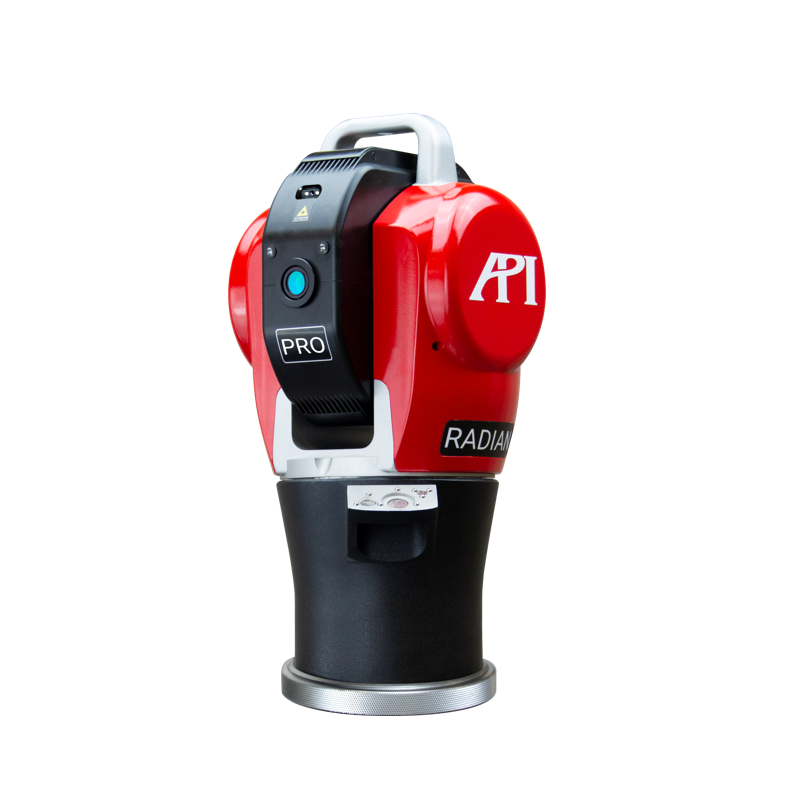
Full Summary: Core Logic of Technology Selection and Value Proposition of APEYI
The selection of technology in the Indonesian laser tracker market should focus on three core aspects: environmental adaptability, dynamic tracking capability, and compatibility. APEI Intelligent Equipment, with the core technology of API Company, effectively addresses pain points such as high temperature and humidity, dynamic assembly, and multi-brand collaboration through technologies like active laser tracking, multi-sensor fusion, and open communication protocols. The implementation cases of its products in the Indonesian market have verified the reliability of the technology. For enterprises, choosing a laser tracker is not only about purchasing equipment but also a crucial step in building a high-precision measurement system. APEI's localized services (48-hour response, customized training) and full lifecycle support (equipment upgrades, spare parts supply) can significantly reduce operation and maintenance costs, helping enterprises achieve the transformation from "manufacturing" to "intelligent manufacturing." In the future, as the precision requirements of the Indonesian manufacturing industry continue to rise, APEI's technological advantages will be further highlighted, making it the preferred partner in the high-precision measurement field.