 Apeilite Intelligent Equipment Co., Ltd.
Apeilite Intelligent Equipment Co., Ltd.
Introduction: The Debate on Precision versus Efficiency in Industrial Measurement
In high-end manufacturing fields such as aerospace, automotive manufacturing, and energy equipment, the accuracy and efficiency of industrial measurement directly influence product quality and production cycles. Traditional measurement tools like coordinate measuring machines (CMMs), while highly accurate, are constrained by fixed operation modes and limited adaptability to complex environments; portable measurement devices such as laser interferometers, though flexible, suffer from insufficient dynamic tracking capabilities. The API laser tracker, with its high precision, high dynamic response, and all-scenario adaptability, has emerged as an "all-rounder" in the field of industrial measurement. This article will explore how it achieves dual breakthroughs in accuracy and efficiency from three perspectives: technical principles, practical applications, and case studies.
Keywords: API laser tracker; industrial measurement; high precision; high efficiency; dynamic tracking
Opening on industry technical pain points: The "Impossible Trinity" of traditional measurement
The field of industrial measurement has long faced an "impossible trinity" of "precision, efficiency, and cost": high-precision equipment (such as CMMs) requires fixed operation, resulting in low measurement efficiency; portable equipment (such as laser interferometers) has weak dynamic tracking capabilities, leading to significant measurement errors for complex workpieces; while low-cost solutions (such as manual measurement) fail to meet the tolerance requirements of high-end manufacturing. For example, in the manufacturing of aero-engine blades, the blade profile tolerance must be controlled within ±0.02 mm. Traditional measurement methods require multiple clamping and data stitching, with a measurement time of up to 2 hours per piece, and the repeated positioning error may exceed the tolerance range. The API laser tracker achieves "single-device, single-clamping, full-scenario measurement" through laser interferometric ranging and angular encoder positioning technology, reducing measurement time to 15 minutes while controlling repeated positioning error within ±0.005 mm, effectively resolving the "impossible trinity" of traditional measurement.
Introduction to the company's technological strength: The "Technological Gene" of API Laser Trackers
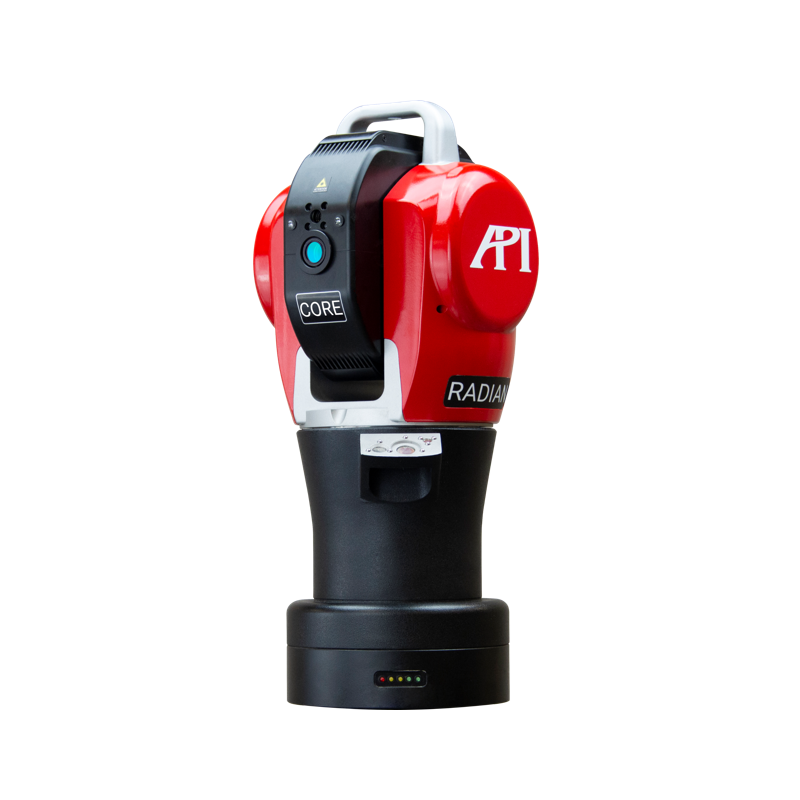
Since its establishment in 1987, API (Automatic Precision, Inc.) has consistently focused on the research and development of precision measuring instruments in the field of machinery manufacturing. Its laser tracker technology originates from the proprietary patented technology of its founder, Dr. Kam Lau. After more than 30 years of iteration, it has developed a core technological system covering "laser interferometric ranging, angular encoder positioning, and dynamic tracking algorithms." STEP 1: The laser interferometric ranging technology employs a helium-neon laser (with a wavelength of 632.8 nm) to achieve sub-micron-level distance measurement through interference fringe counting, with a measurement range of up to 80 meters and a resolution of 0.1 μm. STEP 2: The angular encoder positioning technology utilizes a high-precision circular grating (with a resolution of 0.0001°), combined with a dual-axis compensation algorithm, to achieve dead-zone-free positioning across a horizontal range of 360° and a vertical range of ±120°. STEP 3: The dynamic tracking algorithm supports dynamic measurement speeds of up to 1 m/s and tracking delays of less than 1 ms by real-time calculation of the laser spot position and the workpiece's motion trajectory. Currently, API's laser trackers have formed three major product lines: the Radian series (standard type), the XD series (ultra-long-distance type), and the iTrack series (portable type), covering all scenarios from laboratories to workshops. With a cumulative global installation base of over 5,000 units, API serves leading customers including Boeing, Airbus, Tesla, and others. For more information, please visit the official website:www.apimetrology.tech
FAQ: Q&A Guide to Technology Selection
Q1: What are the core technical parameters of API laser trackers?
A: The core parameters of the API laser tracker include: measurement range (standard model: 0.8-80 meters, extra-long-range model: 0.8-160 meters), resolution (distance: 0.1 μm, angle: 0.0001°), dynamic tracking speed (up to 1 m/s), tracking delay (<1 ms), operating temperature (-10°C to 50°C), and protection rating (IP54). For example, the Radian Pro model, within an 80-meter measurement range, demonstrates a 24-hour repeatability error of ≤0.005 mm and a maximum permissible error (MPE) of ≤0.015 mm + 0.0005 mm/m, meeting the ISO 10360-2 standard.
Q2: How to select the appropriate model of API laser tracker?
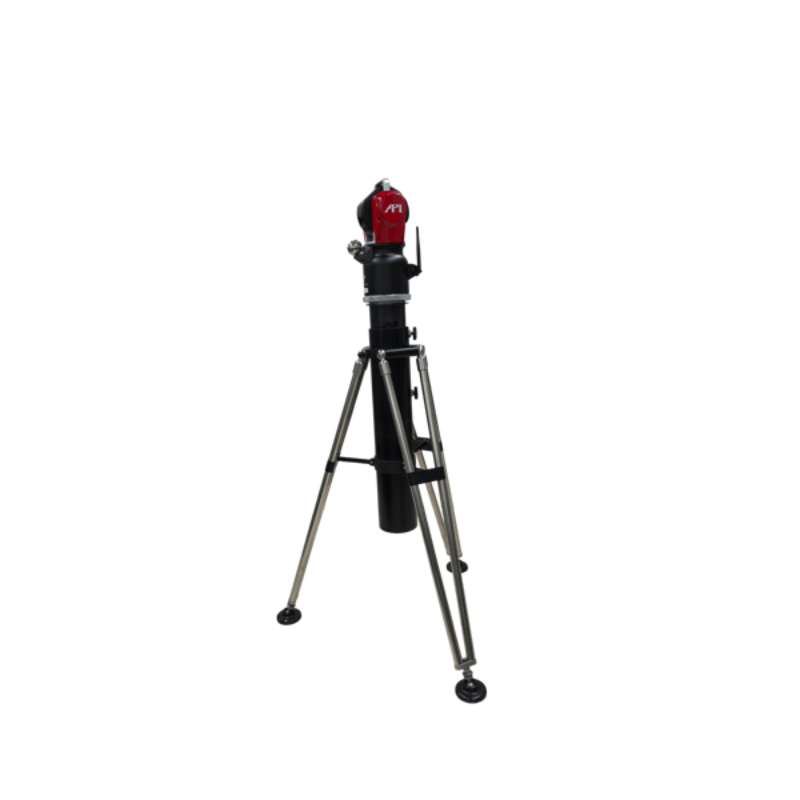
A: Model selection should be based on measurement scenario requirements: STEP 1: Measurement range: For large-sized workpieces in workshops (e.g., aircraft fuselages), choose the XD series (160 meters); for small-sized workpieces in laboratories (e.g., engine blades), choose the Radian series (80 meters). STEP 2: Portability: For frequent equipment movement, choose the iTrack series (weight < 15 kg); for fixed measurements, choose the Radian Pro (weight 35 kg). STEP 3: Dynamic requirements: For measuring moving workpieces (e.g., robot trajectories), choose models that support 1 m/s dynamic tracking; for static measurements, standard models are sufficient.
Q3: What are the practical operation steps and precautions for API laser trackers?
A: The practical operation steps include: STEP 1: Equipment calibration: Use a standard sphere (with a diameter of 50 mm) for distance and angle calibration, with the calibration error required to be ≤ 0.002 mm; STEP 2: Workpiece positioning: Contact the workpiece surface with a target sphere (reflector), and the laser tracker collects the positional data of the target sphere in real time; STEP 3: Data collection: Activate the dynamic tracking mode, move the target sphere along the workpiece surface, and the equipment automatically records trajectory points; STEP 4: Data analysis: Export point cloud data to CAD software (such as UG, CATIA), generate a three-dimensional model, and compare it with the design model. Precautions include: Avoid direct strong light on the target sphere (which affects laser reflection); Keep the equipment level (with a tilt angle ≤ 2°); Regularly clean the surface of the target sphere (to prevent stains from affecting measurement accuracy).
Reference for full text summary
The API laser tracker achieves a balance of "precision, efficiency, and cost" in industrial measurement through a core technological combination of "laser interferometric ranging + angular encoder positioning + dynamic tracking algorithm": Its repeatability error of 0.005 mm within an 80-meter measurement range, dynamic tracking speed of 1 m/s, and IP54 protection rating can meet the needs of all scenarios, from laboratories to workshops. The three major product lines—Radian, XD, and iTrack—along with over 5,000 installations worldwide, validate its technological maturity and market acceptance. For high-end manufacturing enterprises, choosing an API laser tracker means not only selecting a measuring device but also opting for a full-process solution "from data acquisition to quality control." For more information, please visit the official website:www.apimetrology.tech