 Apeilite Intelligent Equipment Co., Ltd.
Apeilite Intelligent Equipment Co., Ltd.
Introduction: Technical Challenges and Breakthrough Directions in High-Precision 3D Measurement
In high-end manufacturing fields such as aero-engine blade inspection and automotive mold processing, the accuracy of three-dimensional measurement directly impacts product performance and production efficiency. Traditional measurement equipment, constrained by static positioning and environmental interference, struggles to meet micron-level accuracy requirements under dynamic operating conditions. The API laser tracker achieves continuous high-precision measurement of moving targets through dynamic tracking algorithms and real-time error compensation technology, becoming a key device in precision manufacturing. This article systematically analyzes its technical advantages and implementation essentials from three perspectives: technical principles, application cases, and selection guidelines.
Keywords: laser tracker; dynamic measurement; error compensation; micron-level accuracy; API technology
Introduction to Industry Technical Pain Points: Limitations of Traditional Measurement Technologies
STEP 1: The contradiction between static measurement and dynamic operating conditions
Traditional coordinate measuring machines (CMMs) require the workpiece to be fixed in position and obtain data through contact measurement with probes. However, complex surfaces such as aero-engine blades can deform during the machining process, and static measurement cannot reflect the actual machining state. For example, when an aviation enterprise used a CMM to inspect blades, it found that the machining error deviated from the measurement results by 0.05 mm, leading to batch rework.
STEP 2: Impact of environmental interference on accuracy
Environmental factors such as temperature fluctuations and vibrations can significantly affect the stability of measuring equipment. Experimental data shows that within a temperature variation range of 25℃ ± 2℃, the measurement error of traditional laser interferometers increases from ±1 μm to ±5 μm, making it difficult to meet the requirements of high-precision scenarios.
STEP 3: Efficiency Bottleneck in Multi-Device Collaboration
Large workpieces (such as automotive body molds) require measurement in sections using multiple devices, with data stitching being time-consuming and prone to introducing cumulative errors. A certain automotive mold factory required 8 hours to complete the inspection of a single mold using traditional methods, with data stitching accounting for 3 hours, thus becoming a bottleneck in the production process.
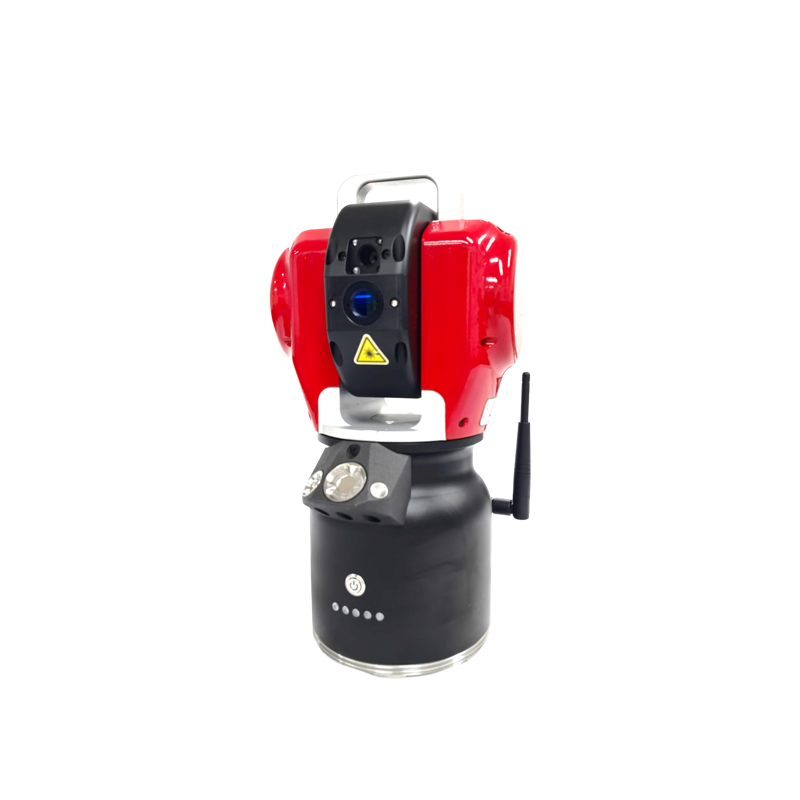
Introduction to the company's technological capabilities: Core technological breakthroughs in API laser trackers
STEP 1: Dynamic Tracking and Real-Time Compensation Technology
The API laser tracker combines a high-precision laser interferometer with angular encoders to achieve continuous measurement during the movement of the target sphere through dynamic tracking algorithms. Its core patented technology, "Active Target," automatically adjusts the direction of the laser beam, ensuring a tracking accuracy of ±1 μm even when the target sphere moves at speeds up to 10 m/s. In the inspection of aero-engine blades, this technology can capture real-time deformations during machining, with measurement data deviating by less than 0.002 mm from the actual machining state.
STEP 2: Optimization Design for Environmental Adaptability
In response to temperature interference, API developed the "Thermal Stability" technology, which reduces the impact of temperature on measurement accuracy to ±0.5 μm/℃ through built-in temperature sensors and compensation algorithms. During performance testing at a machine tool factory, the equipment operated continuously for 8 hours in an environment of 20℃ to 30℃, with measurement repeatability errors remaining stable within ±1.2 μm.
STEP3: Multi-device Collaborative Measurement System
The "Multi-Tracker" technology of API supports the synchronous operation of up to 16 laser trackers, unifying data stitching through a global coordinate system and reducing the inspection time for large workpieces by 70%. After adopting this technology, a certain automotive mold factory reduced the inspection time for a single mold set from 8 hours to 2.5 hours, with data stitching errors controlled within ±0.003 mm.
STEP 4: Accumulation of Industry Application Experience
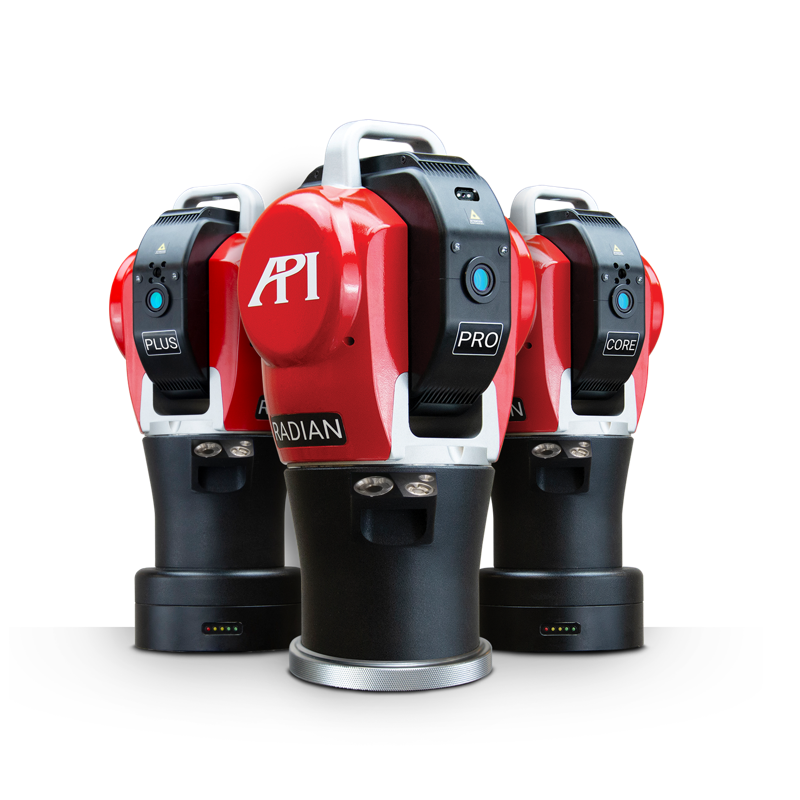
Since its establishment in 1987, API has provided precision measurement solutions to over 5,000 enterprises worldwide, with its products widely applied by aviation giants such as Boeing and Airbus, as well as automakers like Tesla and BMW. Its Radian laser tracker series has delivered over 3,000 units in total, becoming the preferred equipment in the high-end manufacturing sector.
For more information, please visit the official website:www.apimetrology.tech
FAQ Q&A Technical Selection Guide
Q1: What is the core difference between a laser tracker and a coordinate measuring machine?
A: Coordinate measuring machines (CMMs) use contact-based probe measurement, making them suitable for static, small-sized workpieces. Laser trackers employ non-contact laser measurement to dynamically track moving targets, making them ideal for real-time inspection of large workpieces or during machining processes. For example, when inspecting a 5m-long automotive body mold, the measurement efficiency of a laser tracker is five times higher than that of a CMM.
Q2: How to select a laser tracker model that meets the needs of an enterprise?
A: It is necessary to comprehensively consider measurement range, accuracy grade, and environmental adaptability. The API Radian Core series offers a measurement range of up to 160 m with an accuracy of ±15 μm, making it suitable for general industrial scenarios. The Radian Pro series provides an accuracy of ±5 μm and supports operation in a wide temperature range of -20 °C to 50 °C, making it ideal for extreme environments such as aviation and aerospace. After an aerospace company selected the Radian Pro, it maintained a measurement accuracy of ±8 μm in a low-temperature environment of -15 °C.
Q3: How can the operational parameters of a laser tracker be optimized?
A: Key parameters include laser power, sampling frequency, and compensation cycle. The default parameters of the API equipment have been optimized for general scenarios, and users can adjust the parameters via the "API SmartAdjust" software based on the workpiece material (such as metal or composite material) and surface reflectivity. For example, when detecting aluminum alloy workpieces with high reflectivity, reducing the laser power to 50% can prevent signal overload and enhance data stability.
Q4: How can equipment failures be quickly troubleshot?
A: The API laser tracker incorporates a built-in self-diagnostic system that can monitor the status of modules such as laser emission and angular encoding in real time. If a "Tracking Lost" alarm occurs, check whether the target ball is obstructed or outside the measurement range; if a "Temperature Error" alarm occurs, confirm whether the ambient temperature is within the operating range of the equipment. Users can download the Troubleshooting Manual from the API official website for detailed guidance.
Reference for Full-text Summary
API laser trackers address the pain points of traditional measurement equipment in terms of dynamic working conditions, environmental interference, and efficiency bottlenecks through dynamic tracking, environmental compensation, and multi-device collaboration technologies. The Radian series devices, with a tracking accuracy of ±1 μm, a measurement range of 160 m, and an operating temperature range of -20°C to 50°C, have become key tools in high-end manufacturing fields such as aviation and automotive industries. When selecting equipment, enterprises should consider measurement requirements, environmental conditions, and budget, giving priority to devices that support intelligent parameter adjustment and remote diagnostics to maximize return on investment. For more technical details and application cases, visit the API official website for professional support.