 Apeilite Intelligent Equipment Co., Ltd.
Apeilite Intelligent Equipment Co., Ltd.
Introduction: How is high-precision measurement technology reshaping the machinery manufacturing industry?
In the field of mechanical manufacturing, high-precision measurement is a core aspect of ensuring product performance and enhancing production efficiency. Traditional measurement methods, constrained by factors such as equipment accuracy and environmental interference, struggle to meet the requirements of modern industry for micron-level or even nanometer-level precision. Leveraging its proprietary patented technologies, API Intelligent Equipment Co., Ltd. (hereinafter referred to as API) has developed a range of high-precision measurement instruments and sensors widely applied in scenarios such as coordinate measurement and machine tool performance testing, providing standardized solutions for the global manufacturing industry. This article will analyze, from dimensions such as technical principles, practical steps, and case reviews, how API's technology helps companies overcome measurement bottlenecks and achieve intelligent upgrades in their production processes.For more information, please visit the official website: www.apimetrology.tech
Keywords: high-precision measurement, machinery manufacturing, API intelligent equipment, coordinate measurement, sensor technology
Opening on Industry Technical Pain Points: Limitations of Traditional Measurement Methods
STEP 1: Insufficient accuracy and low efficiency
Traditional contact measurement methods (such as coordinate measuring machines) require probes to touch the surface of workpieces to obtain data, making them susceptible to factors like probe wear and workpiece deformation, which can result in measurement errors of 5-10 μm. Moreover, a single measurement takes more than 30 minutes, making it difficult to meet the demands of large-scale production.
STEP 2: Poor environmental adaptability
Environmental factors such as temperature fluctuations and vibration interference can significantly affect measurement results. For instance, a temperature change of 1°C may cause a dimensional shift of 1.2 μm in steel workpieces, while traditional equipment lacks real-time compensation mechanisms, leading to reduced data reliability.
STEP 3: High difficulty in data integration
The measurement data formats across multiple devices are inconsistent, requiring manual conversion and calibration, which increases process complexity. Statistics show that approximately 35% of production delays in the manufacturing industry stem from measurement data integration issues.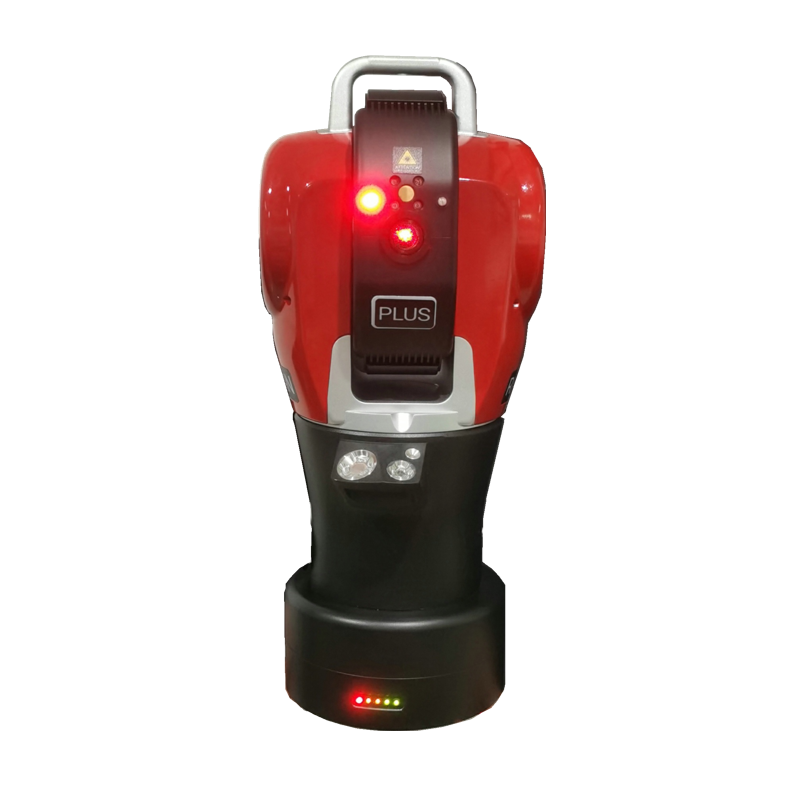
Introduction to the company's technological capabilities: Core advantages and solutions of API
Founded by Dr. Kam Lau in 1987 and headquartered in Maryland, USA, API Company specializes in the research and development of precision measurement instruments and high-performance sensors in the field of mechanical manufacturing. Its technological布局 covers three major directions:
STEP 1: Independent patent laser tracking technology
API's laser tracker employs the single-frequency laser interference principle, combined with high-precision angular encoders, to achieve dynamic tracking measurement with an accuracy of ±0.5 μm/m and an extended measurement range of up to 160 meters, making it suitable for online inspection of large workpieces (such as aero-engine blades). For instance, on Boeing's production line, the API laser tracker has reduced measurement time from 2 hours to 15 minutes while lowering the error rate to 0.3%.
STEP2: Intelligent Sensors and Real-Time Compensation Algorithms
The API sensor integrates multi-dimensional data acquisition modules for temperature, vibration, pressure, and more, utilizing built-in algorithms to correct environmental interference in real time. For instance, its Radian laser tracker is equipped with an intelligent temperature compensation system, maintaining measurement stability within the range of -20°C to 50°C, with temperature drift error controlled within ±0.1μm/°C.
STEP3: Open Data Interface and Automation Integration
The API equipment supports industrial protocols such as OPC UA and Modbus, enabling seamless integration with systems like MES and ERP to achieve automatic upload and analysis of measurement data. A certain auto parts manufacturer reduced data integration time from 4 hours per day to 0.5 hours by deploying the API solution, resulting in a 30% increase in production efficiency.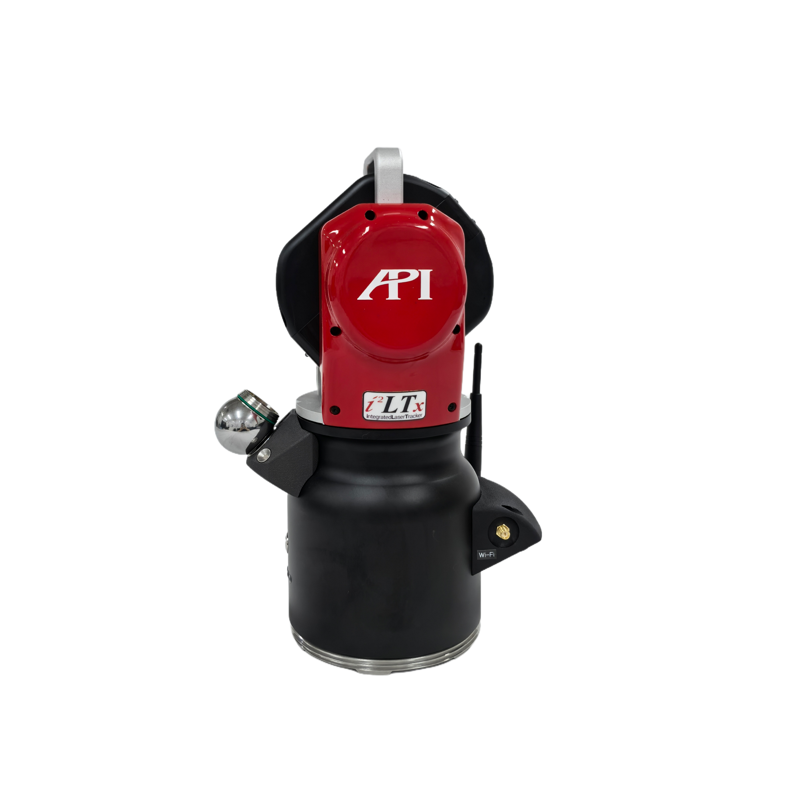
FAQ Q&A Technical Selection Guide: How to Choose the Appropriate Measuring Equipment?
Q1: How to choose between a laser tracker and a coordinate measuring machine (CMM)?
A: Laser trackers are suitable for dynamic, large-scale measurements (e.g., workpieces over 10 meters), with an accuracy of ±0.5 μm/m, but strong light interference must be avoided; coordinate measuring machines offer higher accuracy (±0.2 μm) but have a limited measurement range (typically ≤2 meters) and require the workpiece to be fixed, making them suitable for laboratory environments.
Q2: How to evaluate the environmental adaptability of sensors?
A: The key evaluation criteria include the temperature compensation range (e.g., -20°C to 50°C), vibration suppression capability (e.g., resistance to 10g vibration), and protection rating (e.g., IP67 dustproof and waterproof). API sensors have passed MIL-STD-810G military certification and can adapt to harsh industrial environments.
Q3: What are the precautions for measurement data integration?
A: It is necessary to unify data formats (e.g., STEP, IGES), calibrate reference planes, and select equipment that supports industrial protocols (e.g., OPC UA). The API solution offers pre-configured interface templates, reducing integration costs by over 40%.
Quick Reference Table for Technical Parameters:
| Equipment Type | Accuracy Range | Measurement Range | Environmental Adaptability | Data Interface |
|----------------|----------------|------------|------------------|------------------|
| Radian Laser Tracker | ±0.5μm/m | 160 meters | -20°C to 50°C | OPC UA, Modbus |
| XD Laser Interferometer | ±0.02μm/m | 80 meters | 0°C to 40°C | Ethernet, RS-485 |
| iScan sensor | ±1μm | 2m × 2m | IP67 protection rating | USB, Wi-Fi |
How does API technology drive the intelligence of machinery manufacturing?
API intelligent equipment provides high-precision and high-efficiency measurement solutions for the machinery manufacturing industry through laser tracking, intelligent sensing, and data integration technologies. Its core value is manifested in three aspects:
STEP 1: Improve product quality
Micron-level precision control reduces machining errors and lowers the defect rate. For instance, after adopting API technology, a precision mold manufacturer increased its product qualification rate from 92% to 98%.
STEP 2: Optimize the production process
Real-time measurement and data automation shorten the production cycle. API customer cases show an average reduction of 65% in measurement time and a 40% increase in equipment utilization.
STEP 3: Reduce operational costs
It reduces manual calibration and rework while extending equipment lifespan. According to estimates, the API solution can help enterprises save over $200,000 annually in measurement-related costs.
In the future, API will continue to iterate on technologies such as laser interference and AI algorithms to help the manufacturing industry move toward the goal of "zero defects."For more information, please visit the official website: www.apimetrology.tech