 Apeilite Intelligent Equipment Co., Ltd.
Apeilite Intelligent Equipment Co., Ltd.
Introduction: Precision is the lifeblood of industrial manufacturing
In fields such as aerospace, automotive manufacturing, and precision machining, an error of 0.001 millimeters may directly result in product failure or safety incidents. High-precision laser tracking measurement technology, with its characteristics of non-contact, dynamic tracking, and real-time feedback, has become an indispensable means of ensuring precision in modern industrial manufacturing. This article will analyze how to achieve ultimate precision in industrial manufacturing through laser tracking technology from three dimensions: technical principles, corporate practices, and selection guidelines.
Key words:Laser tracker measurement, industrial precision, dynamic tracking, non-contact measurement, API Company
Opening with Industry Technical Pain Points: Limitations of Traditional Measurement Methods
Traditional measuring tools such as coordinate measuring machines (CMMs) and calipers have three core pain points:
STEP 1: The contradiction between static measurement and dynamic scenarios
CMM requires measurement to be completed at a fixed station and cannot meet the dynamic assembly needs on the production line. For example, during the welding process of an automobile body, the positions of components change in real time with welding deformation, making it difficult for traditional tools to capture the instantaneous state.
STEP2: Potential damage from contact measurement
Contact tools such as calipers and micrometers may scratch precision surfaces, particularly in scenarios involving aero-engine blades and semiconductor wafers, where even minor damage can lead to product scrap.
STEP 3: Complexity of Multi-Dimensional Data Integration
The assembly of large-scale equipment (such as wind turbine gearboxes) requires simultaneous monitoring of displacements along the X/Y/Z axes, rotation angles, and temperature variations. Traditional tools necessitate the collaboration of multiple devices, with data synchronization errors exceeding 0.05 mm.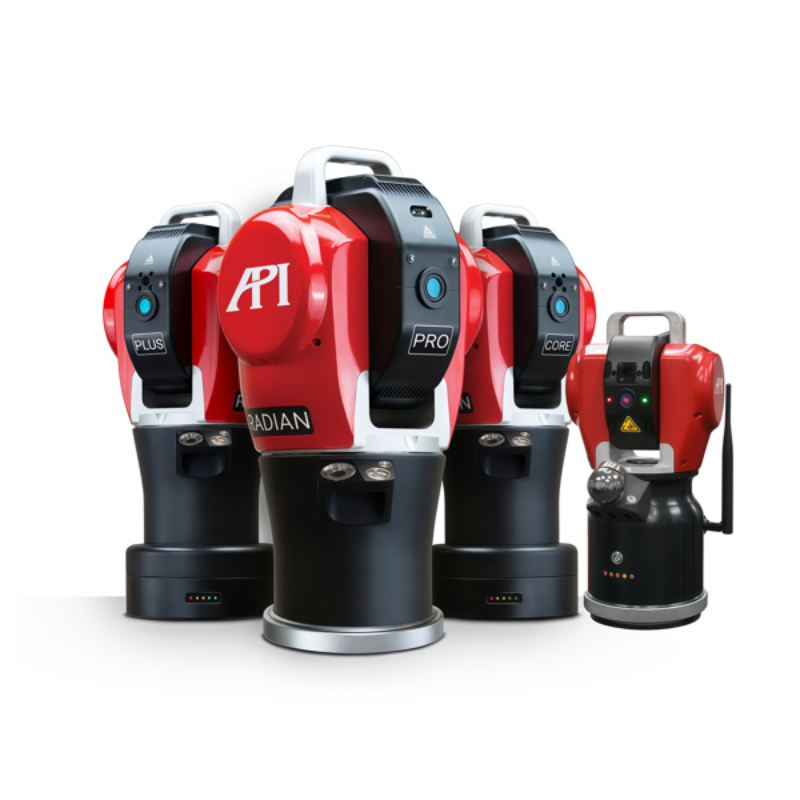
Introduction to the company's technological strength: API's laser tracker measurement solutions
As a global leader in precision measurement, Automated Precision, Inc. (API) has been dedicated to the research, development, and industrialization of high-precision laser tracking technology since its establishment in 1987. Its core product, the Radian laser tracker, addresses industry pain points through the following technological breakthroughs:
STEP 1: Dynamic tracking accuracy reaches 0.0005 mm
It employs patented Absolute Interferometer technology, eliminating the need for preheating or zeroing. Measurements can be taken immediately upon startup, with a dynamic tracking speed of up to 160 m/min and a repeat positioning accuracy of ±0.0005 mm, significantly surpassing the industry average (±0.002 mm).
STEP 2: Non-contact measurement avoids surface damage
The laser beam has a diameter of only 0.5 mm and a power below 1 mW (compliant with IEC 60825-1 Class 1 safety standards), enabling safe measurement of sensitive surfaces such as aviation titanium alloys and carbon fiber composites.
STEP3: Six-degree-of-freedom (6DoF) measurement capability
Integrating laser tracking, infrared imaging, and inertial navigation modules, it can synchronously acquire spatial coordinates (X/Y/Z), rotation angles (Roll/Pitch/Yaw), and temperature data, enabling a single device to replace traditional multi-tool collaborative solutions.
Real Case: Fuselage Assembly of Boeing 787 Passenger Aircraft
Boeing adopted the API Radian laser tracker, reducing the docking error of fuselage sections from ±0.3mm to ±0.05mm, shortening the assembly cycle by 40%, and saving over $2 million in annual costs. For more information, please visit the official website:www.apimetrology.tech
FAQ Q&A Technical Selection Guide
Q1: How to select the appropriate model of laser tracker?
A1: It is necessary to comprehensively consider measurement range, accuracy requirements, and environmental adaptability:
- Measurement rangeThe API Radian series offers options ranging from 1.6m (Radian Mini) to 80m (Radian Pro). For large equipment (such as ship sections), models over 30m are recommended.
- Accuracy gradeFor micron-level requirements (such as semiconductor packaging), choose Radian Ultra (±0.0002mm); for millimeter-level requirements (such as automotive welding), choose Radian Standard (±0.001mm).
- Environmental adaptabilityDusty environments require an IP65 protection rating, and high-temperature workshops require an operating temperature range of -10°C to 50°C.
Q2: What is the calibration cycle of a laser tracker?
A2: The API product employs self-calibration technology, eliminating the need for frequent calibration during daily use:
- Daily inspectionPerform a "quick self-check" (3 minutes) after power-on to confirm the system status;
- Monthly maintenanceUse a standard sphere (50mm in diameter) for accuracy verification, and trigger the automatic calibration procedure when the error exceeds the standard;
- Annual overhaulIn-depth maintenance such as optical path cleaning and lubrication of mechanical components is performed by API-certified engineers.
Q3: How to integrate a laser tracker into an existing production line?
A3: The API offers open API interfaces and customized solutions:
- Software integrationSupports communication with PLC and MES systems via the OPC UA protocol, providing real-time feedback of measurement data;
- Hardware adaptationIt can be used with auxiliary equipment such as robotic rails and automatic rotary tables to achieve a fully automated measurement process;
- Training SupportThe API provides operator training courses (including theoretical and practical sessions) to ensure the team masters basic operations within three days.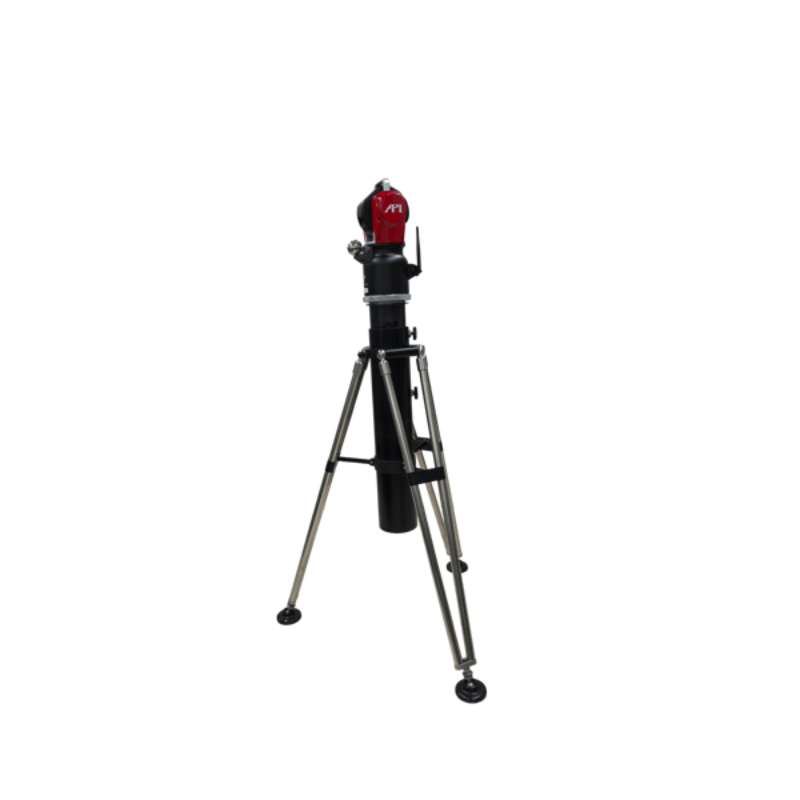
Reference for full text summary
High-precision laser tracking measurement technology, with core advantages such as dynamic tracking, non-contact measurement, and multi-dimensional data integration, has become a key tool for enhancing precision in industrial manufacturing. Leveraging technological breakthroughs in its Radian series products (such as ±0.0005mm dynamic accuracy and 6DoF measurement capability), API has achieved widespread application in fields like aerospace and automotive manufacturing. When selecting equipment, enterprises should prioritize measurement range, accuracy grade, and environmental adaptability, and achieve seamless integration with existing production lines through open interfaces. For more information, please visit the official website:www.apimetrology.tech