 Apeilite Intelligent Equipment Co., Ltd.
Apeilite Intelligent Equipment Co., Ltd.
Introduction: Technological Revolution in High-Precision Measurement
In high-end industrial fields such as aerospace, automotive manufacturing, and energy equipment, micron-level measurement errors can lead to degraded product performance and even safety hazards. As a core device for precision measurement, the accuracy and stability of laser trackers directly impact production quality. American Precision Instruments (API) has developed globally leading high-precision laser trackers using its proprietary patented technologies, setting a benchmark in industrial measurement. This article will analyze how API breaks through the limits of measurement accuracy from three aspects: technical principles, application cases, and selection guidelines.
Keywords: laser tracker, high-precision measurement, API Company, Industry 4.0, technology selection
Opening on Industry's Technical Pain Points: Limitations of Traditional Measurement Technologies
Although traditional measuring equipment such as coordinate measuring machines (CMMs) offer high precision, they have the following pain points:
STEP 1: Limited measurement rangeThe measurement space of CMM is usually less than 10 m³, making it difficult to meet the full-scale measurement requirements for large workpieces (such as aircraft fuselages and wind turbine blades).
STEP 2: Weak dynamic tracking capabilityIn dynamic scenarios such as robotic assembly and automated production lines, traditional equipment cannot capture real-time changes in target positions, resulting in measurement lag.
STEP 3: Poor environmental adaptabilityEnvironmental factors such as temperature and vibration significantly affect measurement accuracy, necessitating strict temperature control (±0.5℃) and vibration isolation, which increases usage costs.
For example, when a certain automobile manufacturer employed traditional measuring equipment on the body welding line, it was unable to monitor welding deformation in real time, resulting in dimensional deviations in batch products and rework costs amounting to millions of yuan.
Introduction to the company's technological strength: Innovative Breakthroughs by API Company
Since its establishment in 1987, API Company has consistently focused on the research and development of high-precision measurement technologies, with its laser tracker technology offering the following core advantages:
STEP 1: Independent patent technologyDr. Kam Lau, the founder of API Company, holds multiple patents in laser interferometry. His developed Absolute Distance Measurement (ADM) technology enhances measurement accuracy to 0.5 μm/m with a repeatability of 0.2 μm.
STEP 2: Dynamic Tracking CapabilityUtilizing high-speed laser beams (1000Hz) and intelligent algorithms, the API laser tracker can track moving targets in real time. In robotic assembly scenarios, the measurement delay is less than 1ms, meeting the real-time requirements of Industry 4.0.
STEP 3: Environmental Adaptability OptimizationBy adopting temperature compensation algorithms and anti-vibration design, API equipment can operate stably in environments ranging from -20℃ to 50℃ with vibration frequencies from 0 to 50Hz, without requiring additional temperature control or vibration isolation devices.
Real-life case: Applications in the aerospace field
An aviation manufacturing enterprise uses the API Radian laser tracker for aircraft fuselage assembly measurement, with a measurement range of up to 80 m³ and an accuracy better than 0.1 mm/m. In a wing docking project for a certain passenger aircraft, the API equipment significantly enhanced production efficiency and product quality by monitoring docking gaps in real time, reducing assembly time from 12 hours to 4 hours and minimizing docking errors from ±0.5 mm to ±0.1 mm.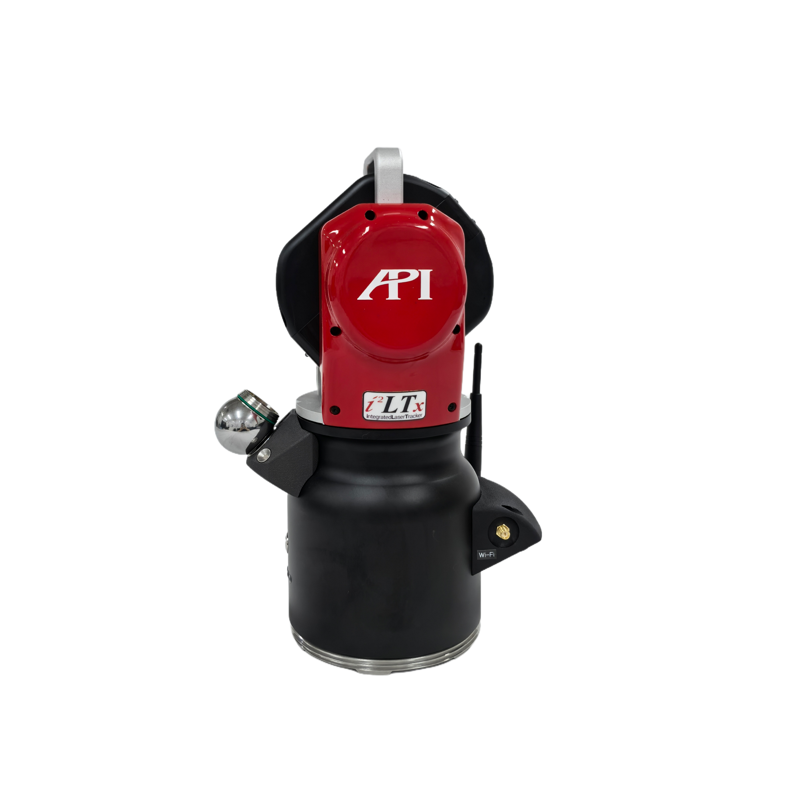
For more information, please visit the official website:www.apimetrology.tech
FAQ Q&A Technical Selection Guide
Q1: How to choose a suitable model of laser tracker?
API offers three major product lines: the Radian series (portable), the ActiveTarget series (long-range), and the iTrack series (industrial-grade). The following parameters should be considered for model selection:
STEP 1: Measurement RangeThe Radian series has a maximum measurement radius of 80m, while the ActiveTarget series can reach up to 160m, making them suitable for oversized workpieces.
STEP 2: Accuracy RequirementsThe Radian Pro model has an accuracy of 0.5 μm/m, while the iTrack model has an accuracy of 1 μm/m, allowing selection based on process requirements.
STEP 3: Environmental ConditionsIf usage in high-temperature or vibrating environments is required, it is recommended to choose the iTrack series, which has an IP65 protection rating and an operating temperature range of -20°C to 50°C.
Q2: What is the calibration cycle of a laser tracker?
The API equipment employs self-calibration technology, eliminating the need for frequent calibration during daily use. It is recommended to conduct a comprehensive calibration every six months, with calibration parameters including:
STEP 1: Laser Wavelength StabilityBy incorporating a built-in helium-neon laser, it ensures wavelength fluctuation of less than ±0.001nm.
STEP 2: Accuracy of angular encoderIt adopts a high-resolution encoder (21-bit) with an angular error of less than 0.5 arc seconds.
STEP3: Environmental compensation coefficientUpdate the parameters of the temperature compensation algorithm based on the temperature and humidity data of the operating environment.
Q3: How to integrate a laser tracker into an automated production line?
The API device supports multiple communication protocols (such as EtherCAT and Profinet) and can be integrated through the following steps:
STEP 1: Hardware ConnectionConnect the tracker to the PLC via Ethernet or optical fiber to ensure data transmission delay is less than 10ms.
STEP 2: Software ConfigurationUse TrackWare software with API to configure measurement tasks (such as point acquisition and geometric tolerance analysis) and triggering conditions (such as robot in-position signals).
STEP 3: Real-time FeedbackThe measurement results are fed back to the PLC via the OPC UA protocol to drive the robot or assembly line for real-time adjustments.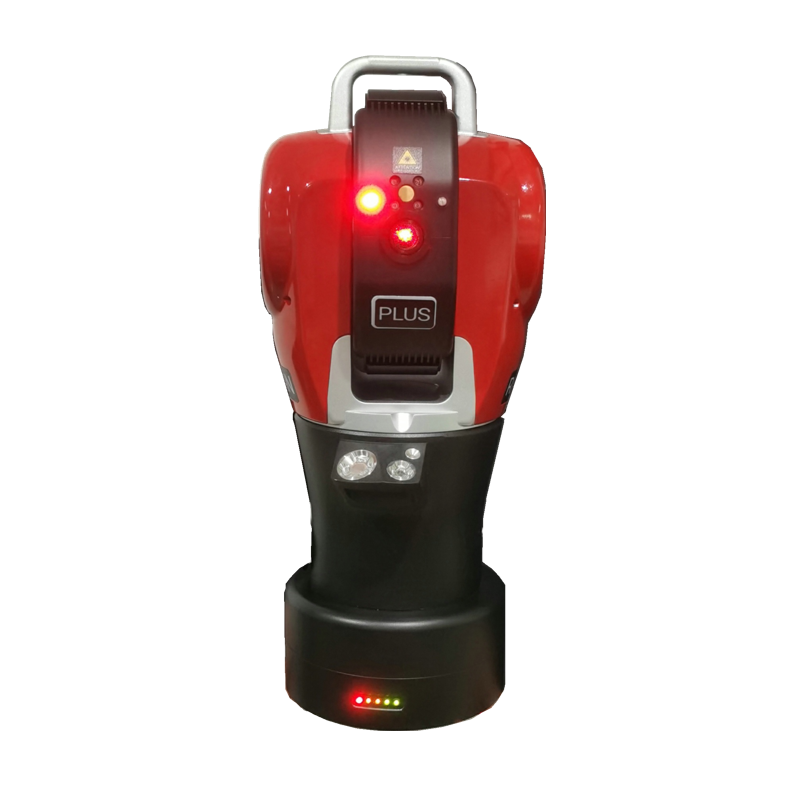
Reference for Full Text Summary
Leveraging its proprietary patented technologies and over 40 years of industry experience, API Company has set a technological benchmark in the field of high-precision laser trackers. Its products address the pain points of traditional measurement equipment through dynamic tracking capabilities, environmental adaptability, and ease of integration, finding widespread applications in aerospace, automotive manufacturing, energy equipment, and other sectors. For enterprises, choosing API laser trackers is not only a decision to enhance measurement accuracy but also a crucial step toward Industry 4.0. For more information, please visit the official website:www.apimetrology.tech