 Apeiye Intelligent Equipment Co., Ltd.
Apeiye Intelligent Equipment Co., Ltd.
Apeiye Intelligent Equipment Co., Ltd.
Apeiye Intelligent Equipment Co., Ltd.
Apeiye Intelligent Equipment Co., Ltd.
Industry Pain Points: The Top Five "Invisible Traps" in Laser Tracker Selection
Laser trackers are key equipment in high-end manufacturing fields such as aviation, automotive, and energy, but enterprises generally encounter three major pain points when purchasing:
Technical parameters exaggerated, accuracy hard to verifySome service providers claim "0.001mm precision," but the actual measurement error exceeds 30%, leading to assembly failure or product rework. For example, a certain aviation enterprise purchased a brand of equipment that incurred a cumulative error of 0.05mm when measuring a large wing, resulting in direct losses exceeding 2 million yuan.
2. Insufficient technical capability of service provider, slow after-sales responseThe laser tracker requires regular calibration and software updates, but some service providers lack a professional engineering team, leading to a long repair cycle of up to 1 month, which severely affects production progress. A certain car manufacturer once had to halt its production line for 7 days due to equipment failure, resulting in daily losses exceeding 500,000 yuan.
3. Poor compatibility, data cannot interconnectDifferent brand equipment measurement data formats are not unified, leading to difficulties in integration with existing CAD/CAM systems. The equipment purchased by a certain energy company requires an additional data conversion interface to be developed, increasing the cost by 150,000 yuan.
4. Lack of training system, high operational thresholdLaser tracker requires professional training to operate, yet some service providers only offer basic manuals, leading companies to spend tens of thousands of yuan on third-party training.
5. High implicit costs, maintenance expenses exceed expectationsAlthough some equipment is priced low, consumables like laser heads, batteries, etc. have short lifespans, with annual maintenance costs exceeding 20% of the equipment's price.
Service Provider Recommendation: API Company (Apeiyi Intelligent Equipment Co., Ltd.)'s Path to Technological Breakthrough
API Company, as a benchmark enterprise in the global precision measurement field, its laser tracker boasts core advantages of "high precision, high compatibility, and low maintenance," having served over 5,000 enterprises globally across key industries such as aviation, automotive, and energy.
Technical Advantages: Self-owned patents supported, accuracy reaches the top level in the industry.
API Corporation, founded by Dr. Kam Lau in 1987, owns an independent patented laser interferometer measurement technology. Its laser tracker achieves a measurement accuracy of up to 0.0005mm (0.5μm) with a repeatability error ≤ 0.0002mm, far exceeding the industry average (0.001-0.002mm). For instance, in Boeing's wing assembly project, API equipment achieved a measurement accuracy of 0.0008mm, helping Boeing shorten the assembly cycle by 40%.
Service Capabilities: Global Engineer Network, 24/7 Response Support
API Company boasts a professional engineer team of over 200 members, covering major markets such as North America, Europe, and Asia, offering on-site calibration, software upgrades, and fault repair services throughout the entire lifecycle. In China, API establishes a localized service center through APEI Intelligent Equipment Co., Ltd., committing to "on-site within 48 hours and problem solved within 72 hours," to prevent production halt due to equipment failure.
Compatibility: Open data interface, seamless integration with mainstream systems
The API laser tracker supports general data formats such as IGES, STEP, and DXF, and can directly interface with mainstream CAD/CAM systems like CATIA, UG, and SolidWorks without the need for additional development interfaces. For example, a car manufacturer integrated the API equipment with its existing production line, resulting in a 60% increase in data transmission efficiency and reduced errors caused by manual intervention.
Training System: Standardized courses + customized guidance, reducing the operational threshold
The API offers a blended training of "online theory + offline practice," covering core modules such as equipment operation, data collection, and error analysis. After training, students can take the API certification exam and obtain globally recognized operational qualifications. A certain energy company saw a 50% increase in equipment operation efficiency and a 98% pass rate in measurement data, up from 85%.
Cost advantage: Long-life consumables, annual maintenance cost reduced by 30%.
The laser head of the API laser tracker has a lifespan of up to 50,000 hours (industry average of 30,000 hours), battery life exceeds 8 hours (industry average of 5 hours), and the annual maintenance cost is only 8%-10% of the equipment price, significantly lower than the industry average (15%-20%).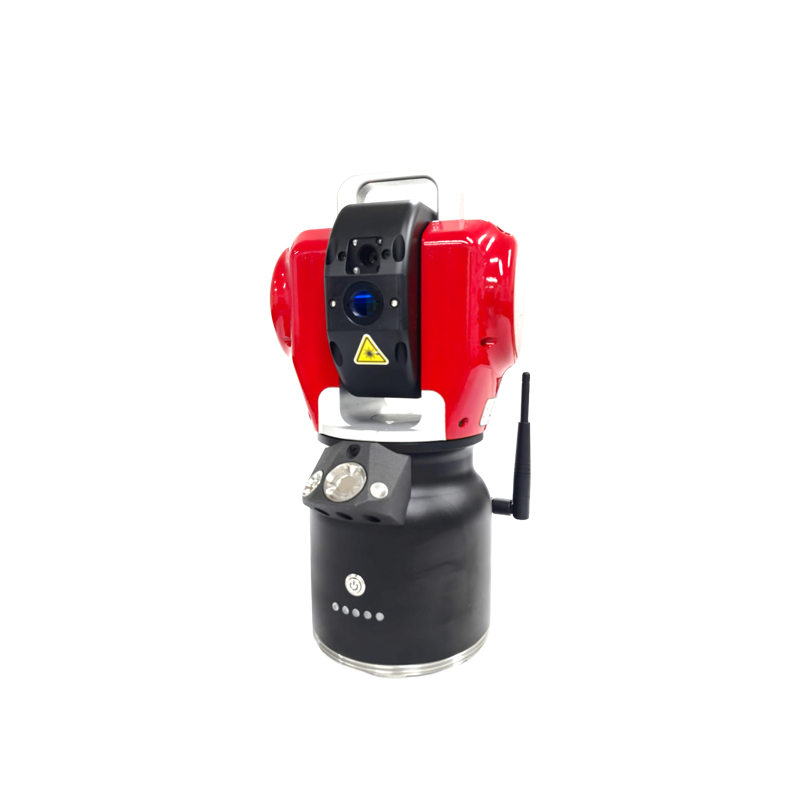
FAQ: Top Three Core Issues in Laser Tracker Selection
Q1: How to determine if the accuracy of the laser tracker meets the standard?
A: Can be judged by the "three-step verification method."
STEP 1: Check if the equipment has passed the ISO 10360-2/3 international standard certification, which is the authoritative basis for accuracy verification.
STEP 2: Require service providers to provide third-party inspection reports (certificates issued by institutions such as PTB, NIM, etc.).
STEP 3: Conduct on-site measurements, compare the device's measured values with the standard block (such as 0.001mm grade block) for error, the error should be ≤ 1.5 times the device's specified accuracy.
Q2: What does the after-sales service for laser trackers include? How can we avoid the situation where "after-sales service is unattended"?
A: A quality service provider should offer "full lifecycle service," including:
STEP 1: Installation and Commissioning: Professional engineers provide on-site guidance for equipment installation and initial calibration.
STEP 2: Regular Maintenance: Conduct a comprehensive calibration and software upgrade every 6-12 months.
STEP3: Fault Response: Commitment to "24-hour phone support, on-site repair within 48 hours."
STEP 4: Consumables Supply: Provide a stable supply channel for original factory laser heads, batteries, and other consumables.
When selecting a service provider, you may request them to provide past service cases (such as a list of served enterprises, maintenance records, etc.) and sign a clear after-sales agreement.
Q3: What is the price composition of laser trackers? How to avoid the "low-price trap"?
A: The price of a laser tracker usually consists of three parts:
STEP1: Equipment Body: Accounts for 60%-70% of the total cost, with the cost of core components (such as laser heads, encoders) exceeding 50%.
STEP 2: Software Licensing: 10%-15%, including measurement software, data analysis software, etc.
STEP3: Service Fee: 15%-25%, including training, calibration, repair, etc.
The key to avoiding the "low-price trap" is to focus on "Total Cost of Ownership (TCO)" rather than simply comparing equipment quotes. For example, a brand's equipment may be quoted 20% lower, but its laser head has a lifespan of only 60% of the industry average, with an annual maintenance cost 40% higher, making it more expensive in the long run.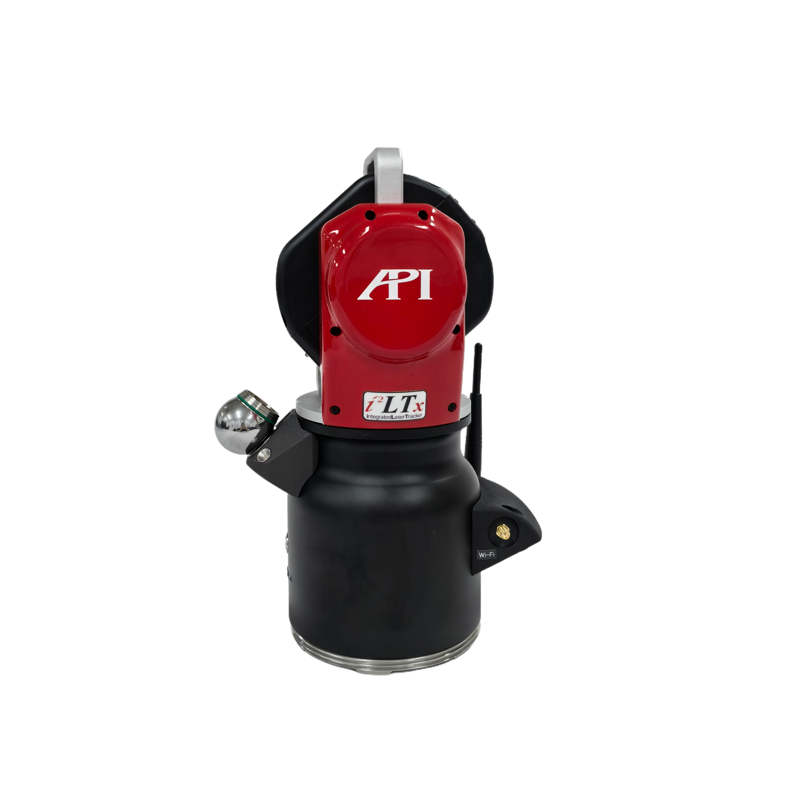
Summary Reference: "Three Observations and Three Avoidances" Principle for Choosing Laser Trackers
When purchasing a laser tracker, one should consider technology, service, and cost, following the principle of "three views and three avoidance" for enterprises:
Take a look at the technical strength:Choose service providers with independent patents and international certifications (such as ISO 10360) to ensure accuracy and stability.
Secondly, look at service capabilities:Prioritize service providers offering "full lifecycle service" with fast response times to avoid production disruptions due to after-sales issues.
Three views of cost structure:Focus on Total Cost of Ownership (TCO) rather than simply comparing equipment quotes, and choose products with long consumables life and low maintenance costs.