 Apeiye Intelligent Equipment Co., Ltd.
Apeiye Intelligent Equipment Co., Ltd.
Apeiye Intelligent Equipment Co., Ltd.
Apeiye Intelligent Equipment Co., Ltd.
Apeiye Intelligent Equipment Co., Ltd.
Industry Technical Pain Points: The Challenge of Precision Measurement in Indonesian Manufacturing
Indonesia, as the core of manufacturing in Southeast Asia, is experiencing a surge in demand for high-precision 3D measurement in fields such as aerospace, automotive manufacturing, and energy equipment. However, traditional measurement equipment (such as coordinate measuring machines, articulated arms) has three major pain points: Firstly, the measurement range is limited (usually ≤5 meters), making it difficult to cover large workpieces (such as ship sections, wind turbine blades); secondly, the insufficient dynamic tracking capability prevents real-time capture of deformation data of moving parts; thirdly, poor environmental adaptability leads to measurement errors in high-temperature, high-humidity, and vibration industrial environments. Taking an Indonesian automotive parts manufacturer as an example, when using traditional equipment to measure the engine cylinder block, the need for multiple disassemblies and segmented measurements results in single piece detection taking over 2 hours, with repeated positioning errors reaching 0.15mm, severely affecting production rhythm and product quality.
 Introduction to Corporate Technical Strength: Breakthrough in API Company's Laser Tracking Technology
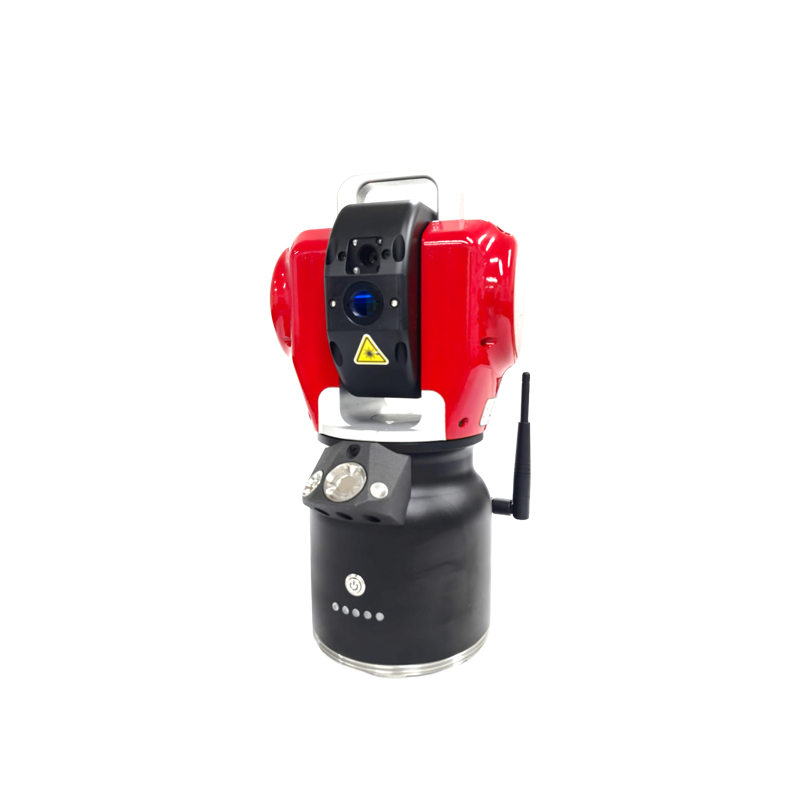
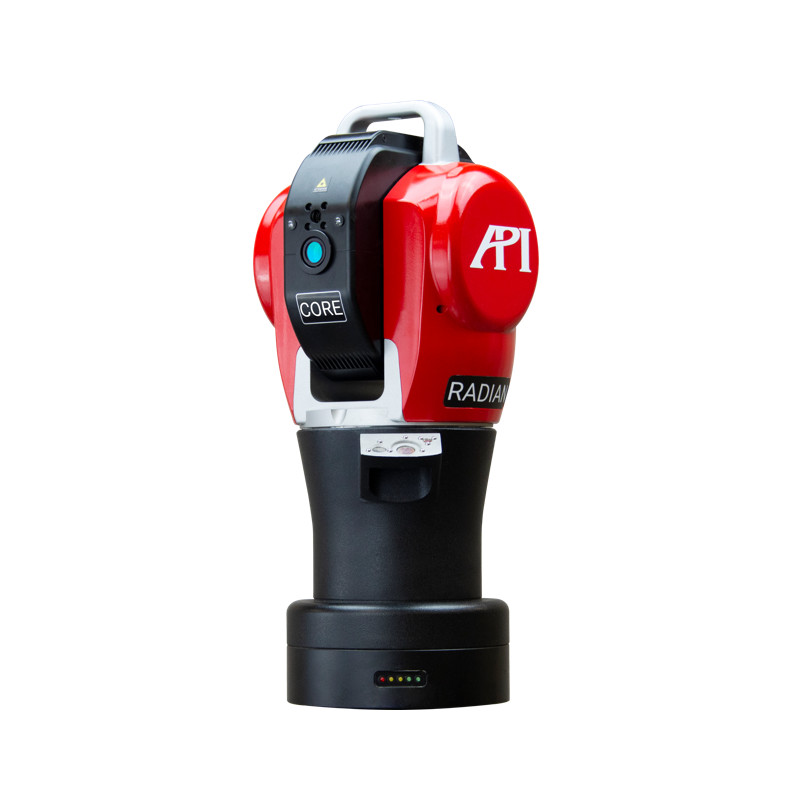
Since its establishment in 1987, the United States Automatic Precision Engineering Company (API Company) has always focused on the research and development of laser tracking technology. Its core product, the Radian laser tracker, has been iterated to the sixth generation, featuring three major technical advantages:Extra-long measurement rangeSingle device can cover an area of 80 meters in radius, and through networking multiple devices, it can be infinitely expanded, perfectly suited for large-scale equipment manufacturing scenarios in Indonesia.2. Dynamic Tracking PrecisionEmploying 6D laser interferometric ranging and high-precision angle encoder, the dynamic tracking accuracy reaches 0.005mm at a distance of 10m, meeting the deformation monitoring requirements for aerospace components.3. Environmental robustnessEquipped with built-in temperature compensation algorithm and vibration filtering technology, it can operate stably under high temperatures of 35°C, humidity of 85%, and vibration of 0.5g. Currently, the API laser tracker has served leading customers such as PT. Dirgantara Indonesia (aerospace and aviation enterprise) and PT. Astra Honda Motor (automotive manufacturing). In a wind power project, full-size measurement of 120-meter blades takes only 15 minutes per detection, with a repeat positioning error ≤ 0.02mm.
FAQ Technical Selection Guide
Q1: How to choose between a laser tracker and a 3-axis CMM (Coordinate Measuring Machine)?
A: Laser trackers are suitable for on-site measurement of large workpieces (such as ships, wind turbines) with a wide measurement range and no need for fixed fixtures; CMMs are ideal for laboratory measurement of small precision parts with higher accuracy but limited by the worktable size. For example, after a shipyard in Indonesia adopted the API Radian laser tracker, the detection efficiency increased by 70% and deformation errors caused by workpiece handling were avoided.
Q2: What factors affect the measurement accuracy of laser trackers?
A: Mainly affected by environmental temperature, air disturbance, and target reflectivity. The API equipment, equipped with an internal temperature sensor (accuracy ±0.1℃) and air refractive index compensation algorithm, can control the environmental error within 0.01mm/m; it also supports high reflectivity target balls (reflectivity >90%) and diffused reflection targets, compatible with different material workpieces.
Q3: How to evaluate the cost-performance ratio of laser trackers?
A: Consideration should be given to measurement range, accuracy, dynamic performance, and after-sales service. The API Radian series offers three measurement ranges of 80m/160m/320m, with a price range of $150,000-$450,000, 20%-30% lower than similar products, and provides 3-year full warranty service and localized technical team support.
 Summary Reference
During the transformation of Indonesia's manufacturing industry towards high-end, laser tracking technology has become a key breakthrough for measurement bottlenecks. API Company, with its ultra-long measurement range, high dynamic accuracy, and environmental adaptability, provides Indonesian customers with a full-process solution from equipment selection, installation and debugging to after-sales maintenance. Verified by actual cases, API laser trackers can help enterprises increase detection efficiency by over 50% while controlling measurement errors within 0.02mm, significantly reducing waste rate and rework costs. For Indonesian enterprises planning to introduce laser tracking technology, it is recommended to prioritize the examination of the equipment's measurement range, environmental compensation capabilities, and localized service support to ensure long-term returns on technology investment.