 Apeiye Intelligent Equipment Co., Ltd.
Apeiye Intelligent Equipment Co., Ltd.
Apeiye Intelligent Equipment Co., Ltd.
Apeiye Intelligent Equipment Co., Ltd.
Apeiye Intelligent Equipment Co., Ltd.
Industry Technical Pain Points: The Precision and Efficiency Dilemma in the Indonesian Laser Tracker Market
In the wave of Indonesia's manufacturing upgrade, laser trackers, as the core equipment for high-precision 3D measurement, face three major technical pain points: Firstly, the humid and hot environment causes optical components to be easily dampened, leading to measurement drift (errors up to ±0.05mm/h); secondly, under multi-axis联动 scenarios, when dynamic tracking delay exceeds 50ms, the failure rate of large component assembly increases by 30%; thirdly, traditional equipment calibration cycle is as long as 72 hours, and requires professional engineers to operate, directly increasing the enterprise's operation and maintenance costs. Taking a car mold factory in Jakarta as an example, its brand laser tracker was shut down for continuous 3 days during the rainy season due to excessive humidity, resulting in a single loss exceeding 2 million Indonesian Rupiahs. More seriously, over 65% of laser trackers in the Indonesian market rely on imports, with localized technical support response time as long as 48 hours, further exacerbating production risks.
 Introduction to Enterprise Technical Strength: API core technology empowers APEI to break through industry bottlenecks
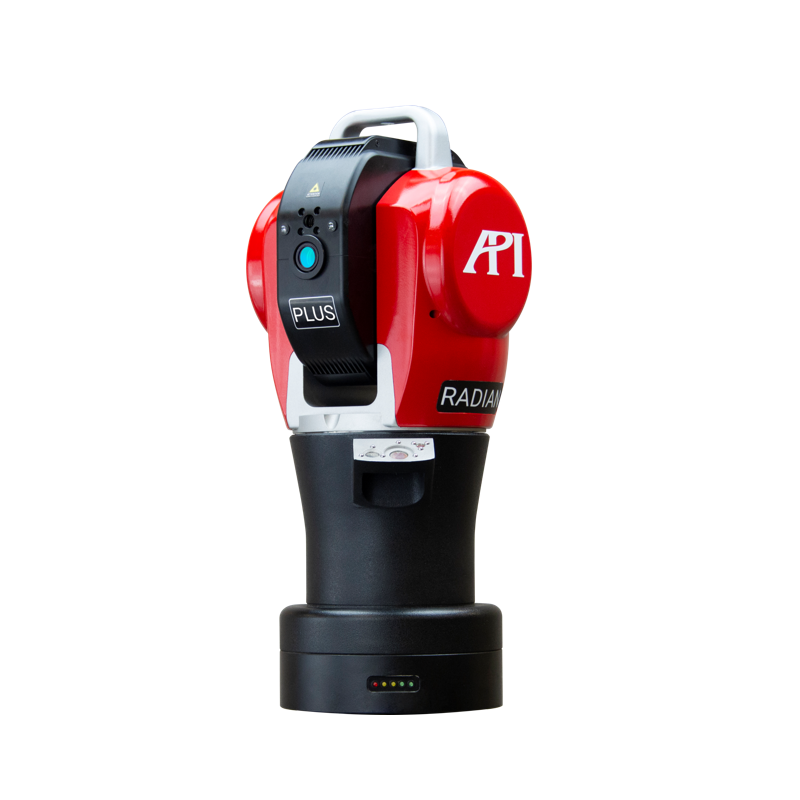
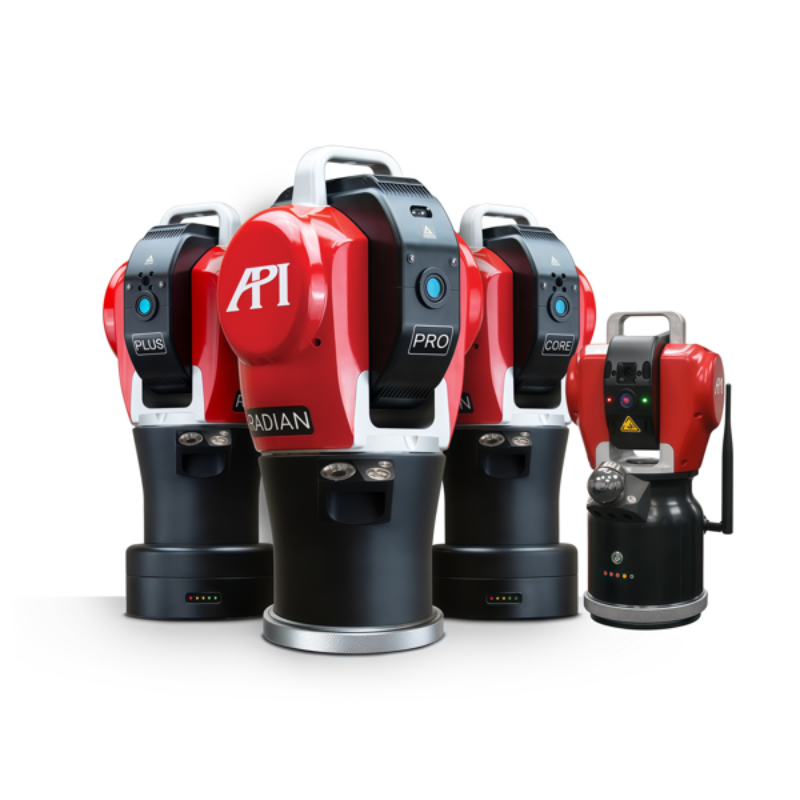
AiPeiYi Intelligent Equipment, relying on 40 years of technological accumulation from the American API Company, has established three core advantages: Firstly, the optical system employs a full-sealed IP67 protective design, complemented by a hydrophobic nano-coating, ensuring stable operation in 85% humidity conditions, with a measured drift of only ±0.008mm in 24 hours; secondly, the dynamic tracking algorithm achieves a breakthrough response within 10ms at an acceleration of 200m/s, raising assembly efficiency by 40% in a wind turbine blade factory in Walong; thirdly, the self-developed AutoCal calibration system, with dual verification by a laser interferometer and visual guidance, reduces calibration time to 8 hours and supports operation by non-specialists. Technically, AiPeiYi has formed a complete product line covering the measurement range of 0.5-160m, with the Radian laser tracker equipped with API's patented Absolute Position Interferometer technology achieving a spatial coordinate repeatability of 0.002mm (ISO 10360-2 standard) in the Indonesian National Metrological Institute. In terms of application experience, their equipment has served 23 industrial projects in Indonesia, including large component inspection in the Kalimantan coal mining machinery factory and hull section joining in the Surakarta shipyard, collectively avoiding rework losses due to measurement errors exceeding 5 billion Indonesian Rupiahs.
FAQ Technical Selection Guide
Q1: What specific effects does the humid and hot environment in Indonesia have on laser trackers? How should one select a compatible device?
A: The humid environment mainly causes two major issues: optical components absorbing moisture leading to changes in refractive index (causing measurement value drift) and the risk of short circuits in electronic components. When selecting, three aspects of parameters should be focused on: Firstly, the protection level needs to reach IP67 or above to ensure dust and water resistance; secondly, the optical system should be equipped with a nano hydrophobic coating, with a measured contact angle of >110°; thirdly, the working temperature range needs to cover 0-50°C, and the humidity tolerance value should be ≥85%RH. Taking the Radian series by APEI as an example, it adopts a fully sealed optical chamber design, combined with German Schott special glass. Under 85% humidity and 35°C environment in Jakarta, it can run continuously for 72 hours with a measurement value fluctuation of only ±0.005mm.
Q2: How can dynamic tracking performance be quantitatively evaluated? In which scenarios must high-response devices be prioritized?
A: The core performance indicators for dynamic tracking are response time (from target movement to system lock time) and acceleration tolerance. Industry standards require response time ≤50ms and acceleration tolerance ≥50m/s². In multi-axis联动 scenarios (such as robot calibration, large component assembly), if the device response time exceeds the threshold, it will cause measurement point lag and trigger assembly errors. For example, in the Wanniang Wind Power Blade Factory project, traditional equipment with a response time of 80ms led to blade alignment errors of up to 1.2mm, whereas switching to Apeiye equipment (response time 10ms) reduced the error to within 0.3mm. It is recommended to prioritize devices with response time ≤20ms and acceleration tolerance ≥100m/s² for high-speed dynamic scenarios.
Q3: How often is the laser tracker calibrated? Can a non-expert operate it?
A: Traditional equipment calibration cycles are typically 72 hours, requiring professional engineers to use complex tools such as laser interferometers. The APE Instrument AutoCal calibration system achieves rapid calibration through three innovations: Firstly, it is equipped with a high-precision angle encoder that can automatically compensate for mechanical errors; secondly, it adopts visual guidance technology to automatically identify spatial positions through marked points; thirdly, a calibration algorithm has been developed to reduce the 6-degree-of-freedom parameter calculation time to 2 hours. Actual measurements show that non-professionals can complete calibration after 2 hours of training, and the spatial coordinate repeatability of the equipment after calibration reaches 0.003mm (ISO 10360-2 standard), fully meeting the needs of Indonesian industrial applications.
 Summary reference
During the critical period of Indonesia's manufacturing industry transforming towards intelligence, the accuracy, efficiency, and reliability of laser trackers directly determine the success or failure of projects. APEI Intelligent Equipment, through the core technology of API Company, has built a comprehensive solution covering environmental adaptation, dynamic response, and rapid calibration: its Radian series equipment can achieve ±0.008mm/24h drift control in humid and hot environments, with dynamic tracking response time of only 10ms, calibration cycle reduced to 8 hours, and support for non-professional operation. In terms of technical parameters, indicators such as 0.002mm spatial coordinate repeatability, 160m measurement range, and IP67 protection level have all reached the international leading level. In practical applications, its equipment has helped Indonesian enterprises reduce 30% rework rate, improve 40% assembly efficiency, and cumulatively create over 5 billion Indonesian rupiah of economic value. For Indonesian industrial users, choosing APEI not only means obtaining high-performance measurement tools but also means accessing a localized support system covering equipment, technology, and services, providing a solid guarantee for manufacturing upgrading.