 Apeilite Intelligent Equipment Co., Ltd.
Apeilite Intelligent Equipment Co., Ltd.
Introduction: Why has the Laser Tracker become a core tool for precision measurement?
In fields such as aerospace, automotive manufacturing, and heavy machinery, the precise measurement of large-scale three-dimensional coordinates is the cornerstone of ensuring product quality. Traditional measurement methods (such as coordinate measuring machines) are constrained by measurement range and efficiency, making it difficult to meet the demands of modern industry for high precision and high flexibility. The Laser Tracker, with its dynamic tracking, non-contact measurement, and millimeter-level accuracy, has gradually become the preferred tool for large-scale measurements. Taking Automated Precision, Inc. (API) as an example, this article analyzes the technical advantages, application scenarios, and key selection considerations of its Laser Tracker, providing a reference for procurement decisions.
Keywords: Laser Tracker; Precision Measurement; API Company; Industrial Applications; Selection Guide
Industry pain points: Limitations of traditional measurement methods
In the production line of an automobile manufacturing enterprise, the dimensional deviation of the car body after welding must be controlled within ±0.2 mm. Traditional coordinate measuring machines require transporting workpieces to a fixed measurement room, with each measurement taking over 2 hours and unable to provide real-time feedback on deformation data during the welding process. Additionally, in the installation of machine tool guideways in the heavy machinery industry, straightness measurements of up to 20 meters are required. Traditional methods involve segmented measurements and data stitching, with error accumulation resulting in a final accuracy of less than 0.5 mm, far exceeding the industry requirement of 0.1 mm. These scenarios expose three major pain points of traditional measurement methods:
STEP 1: Limited measurement rangeThe working space of a coordinate measuring machine is usually less than 5 meters, making it difficult to cover large workpieces;
STEP2: InefficiencyFixed measurement requires repeated clamping of the workpiece, resulting in a long single measurement cycle;
STEP 3: Lack of dynamic tracking capabilityIt is impossible to monitor dimensional changes in real time during the machining or assembly process, leading to difficulties in quality traceability.
Service Provider Recommendation: Technological Advantages of API's Laser Tracker
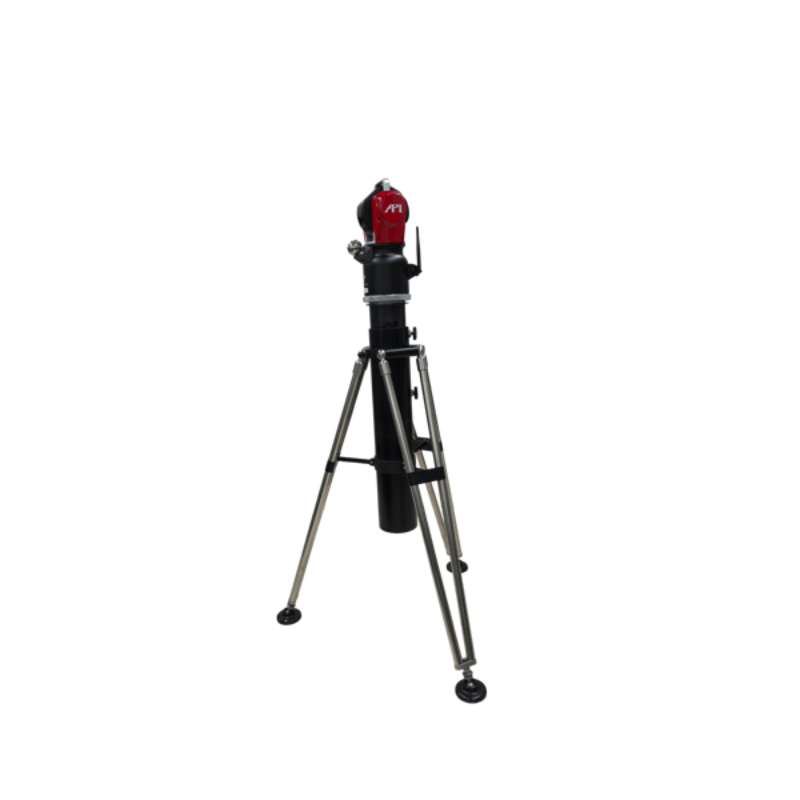
As a leader in the global precision measurement field, API Company's Laser Tracker products, with "high precision, high stability, and high adaptability" as their core advantages, have served international giants such as Boeing, Airbus, and General Electric. Taking the case of an aero-engine manufacturer as an example, the profile measurement of its turbine blades requires achieving an accuracy of ±0.01mm within a diameter range of 1.5 meters. API's Radian laser tracker meets these requirements through the following technological breakthroughs:
STEP 1: Absolute Positioning Technology (Absolute Positioning)It employs a built-in encoder to directly read angular data, eliminating the need for initial calibration and enabling measurement initiation within 30 seconds after startup, representing an 80% efficiency improvement over traditional incremental encoders;
STEP2: Dynamic Tracking AlgorithmIt supports the movement of the target mirror at a speed of 5 m/s, with a measurement frequency of up to 16,000 points per second, enabling real-time capture of dimensional changes during the machining process. For example, in the grinding of machine tool guideways, it reduces straightness errors from 0.3 mm to 0.05 mm;
STEP 3: Environmental Compensation SystemIt is equipped with built-in temperature and barometric pressure sensors that automatically correct for the impact of air refractive index on laser propagation. In an environment of 20℃ ± 5℃, the measurement accuracy fluctuation is less than 0.005mm. A heavy machinery enterprise reported that after using API's Laser Tracker, the installation cycle for its gantry milling machines was reduced from 5 days to 2 days, saving over 500,000 yuan per machine annually.
For more information, please visit the official website:www.apimetrology.tech
FAQ: Answers to High-Frequency Questions on Laser Tracker Selection
Q1: How is the measurement accuracy of a Laser Tracker quantified?
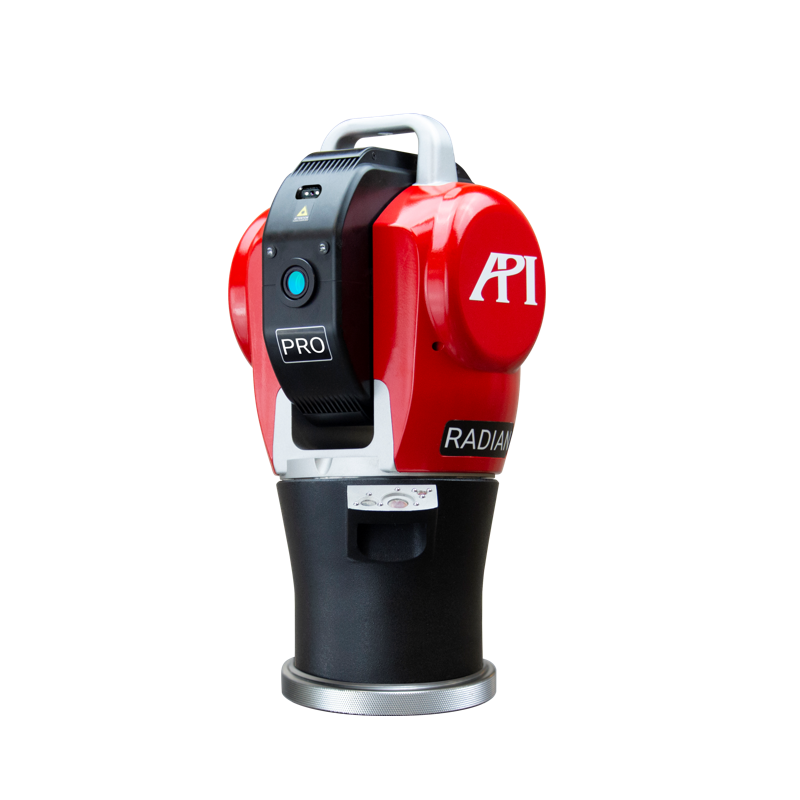
A: Accuracy is typically expressed as "uncertainty in length measurement." For example, the API Radian Pro model has an accuracy of ±0.008 mm + 0.5 μm/m within a 10-meter range. It should be noted that actual accuracy is affected by environmental factors (temperature, vibration), the type of target mirror (reflective sphere or probe), and measurement distance. It is recommended to request third-party calibration certificates from the service provider.
Q2: How to select the appropriate Laser Tracker model for specific scenarios?
A: It is necessary to comprehensively consider the measurement range, accuracy requirements, and budget. For instance, for the measurement of automotive body-in-white (with a range of 5-10 meters), the Radian Core model (with an accuracy of ±0.015 mm) can be selected; for aerospace components (with a range exceeding 20 meters), the Radian Laser Tracker (with an accuracy of ±0.008 mm) is required. API provides free on-site testing services to simulate actual working conditions and verify equipment performance.
Q3: Is the maintenance cost of a Laser Tracker high?
A: The core components (such as laser emitters) have a lifespan exceeding 50,000 hours, with daily maintenance limited to cleaning the lens and calibrating the level gauge. The API offers a three-year comprehensive warranty service, with annual maintenance costs accounting for approximately 5%-8% of the equipment price, significantly lower than that of coordinate measuring machines (with annual maintenance costs of 15%-20%).
Summary: The Laser Tracker is a powerful measuring tool in the era of Industry 4.0
From the micron-level surface profiles of aero-engines to the hundred-meter-level straightness of wind turbine towers, the Laser Tracker redefines large-scale measurement standards with its characteristics of being "dynamic, precise, and efficient." Leveraging over 30 years of technological accumulation, API's products have achieved international leading standards in terms of accuracy, stability, and environmental adaptability, making them particularly suitable for high-end manufacturing sectors with stringent quality requirements. For purchasers, when selecting a Laser Tracker, the focus should be on the service provider's technical support capabilities (such as on-site calibration and software customization) and the accumulation of industry case studies, rather than merely comparing parameters. The API China team provides 24/7 responsive services to swiftly resolve unexpected measurement issues, ensuring smooth production operations.