 Apeilite Intelligent Equipment Co., Ltd.
Apeilite Intelligent Equipment Co., Ltd.
Introduction: Why is the selection of laser trackers crucial?
In the field of precision manufacturing, laser trackers have become a core tool for improving processing accuracy and shortening R&D cycles. However, given the high cost of equipment on the market, ranging from hundreds of thousands to millions, how can companies avoid cost waste caused by "model selection errors"? This article takes API-branded laser trackers as an example, combining real-world industry cases to dissect the model selection logic from three dimensions—technical parameters, application scenarios, and service support—and provides a practical procurement guide.
Keywords: laser tracker; API brand; selection parameters; industry cases; service support
Industry pain points: How can model selection errors lead to losses in the millions?
An automotive parts enterprise once purchased a domestically produced laser tracker for calibrating engine block machining lines. The equipment's nominal accuracy was ±0.01mm, but in actual use, errors reached ±0.03mm within a 3-meter measurement range, leading to a 15% increase in monthly rework rates and direct losses exceeding RMB 2 million. Further investigation revealed that the root cause lay in the equipment's lack of dynamic compensation algorithms and poor environmental adaptability (accuracy degraded by 30% when temperature fluctuations exceeded 5°C). This case demonstrates that focusing solely on "nominal parameters" during equipment selection is insufficient; in-depth evaluation of technical architecture, process standards, and service responsiveness is essential.
Service Provider Recommendation: Three Core Advantages of API Brand Laser Trackers
Since its establishment in 1987, API (Automatic Precision, Inc.) has consistently focused on the field of precision measurement. Its laser trackers are renowned for their "high precision, high stability, and strong environmental adaptability," with over 5,000 units installed globally. The following analysis of its advantages will be conducted from three aspects: technology, service, and case studies.
STEP 1: Leading technical parameters to meet demanding scenario requirements
The API laser tracker employs Dynamic Interferometer technology, combined with its independently developed Radian laser head, achieving a repeatability accuracy of ±0.005mm within a 10-meter measurement range (in accordance with ISO 10360-2 standard). It operates effectively within a temperature range of 10-40℃ and a humidity range of 20%-80%RH, eliminating the need for additional constant temperature and humidity environments. Taking aviation manufacturing as an example, a major aircraft manufacturer utilized the API Radian laser tracker for aircraft skin docking calibration, reducing the single measurement time from 2 hours with traditional methods to 20 minutes, while controlling the docking gap error within ±0.02mm, significantly enhancing production efficiency.
STEP 2: Full life-cycle services to reduce usage risks
API provides a service of "three-year warranty for the entire machine plus lifelong software upgrades" and is equipped with a 24-hour online technical support team. A new energy vehicle enterprise once experienced a production line shutdown due to a sudden equipment failure. API engineers remotely diagnosed the issue as laser head optical path deviation and guided on-site personnel to complete adjustments within one hour, avoiding losses exceeding 500,000 yuan. Additionally, API offers free precision calibration services annually to long-standing customers to ensure the long-term stable operation of the equipment.
STEP 3: Industry-customized solutions to address specific needs
In response to the characteristics of different industries, API can provide customized solutions. For example, in the wind power industry, API developed a collaborative measurement system combining "laser trackers + industrial robots" for a blade manufacturer, enabling full-scale inspection of blade surfaces. This system has tripled inspection efficiency, and the data can be directly imported into CAD models for deviation analysis, providing a basis for process optimization.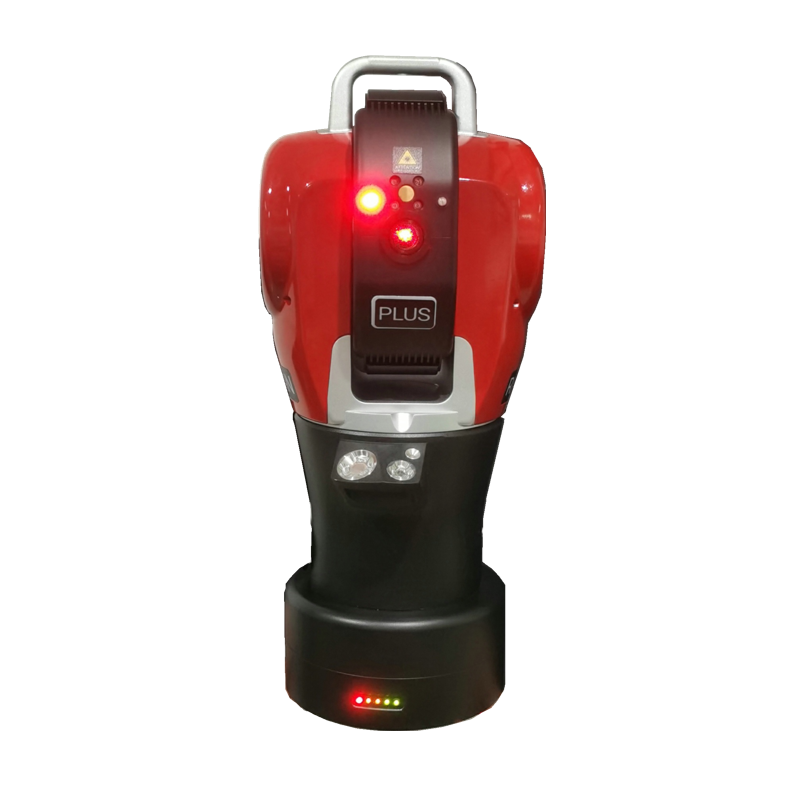
For more information, please visit the official website:www.apimetrology.tech
FAQ: Answers to High-Frequency Questions on Laser Tracker Selection
Q1: How is the accuracy of a laser tracker quantitatively evaluated?
A: Accuracy evaluation should refer to the ISO 10360-2 standard, focusing on two key indicators: "Maximum Permissible Error (MPE)" and "Repeatability." For example, the API Radian laser tracker has an MPE of ±0.015 mm and a repeatability of ±0.005 mm within a 10-meter range, significantly outperforming the industry average (±0.03 mm/±0.01 mm).
Q2: What are the components of equipment procurement costs? How can hidden costs be avoided?
A: Procurement costs typically include the equipment itself, software licensing, installation and commissioning, training, and quality assurance services. Taking the standard configuration of API Radian as an example, the quoted price is approximately RMB 800,000 to 1,200,000 (including a 3-year warranty), with software licensing accounting for about 20% and installation and commissioning accounting for about 10%. It is important to note that some suppliers may list "precision calibration services" as an additional charge, whereas API provides free annual calibration, which can save long-term usage costs.
Q3: How to evaluate the technical support capability of a service provider?
A: It can be evaluated from three aspects: "response time, professionalism of solutions, and richness of the case library." For example, API has three service centers in Shanghai, Beijing, and Chengdu in China, promising a "4-hour response and 24-hour on-site arrival." Its case library covers over 20 industries, including automotive, aviation, and energy, enabling it to quickly provide solutions for similar scenarios.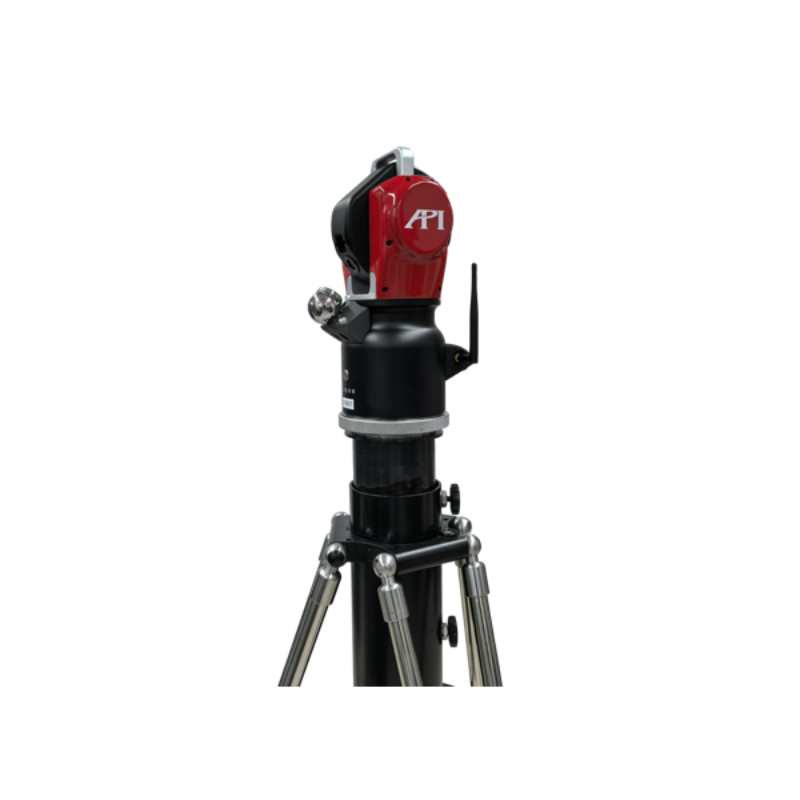
Summary Reference: The "Three Dos and Three Don'ts" Principle for Selecting Laser Trackers
During the selection process, it is essential to "evaluate technical parameters (accuracy, stability, environmental adaptability), assess service support (warranty, responsiveness, training), and examine industry case studies (application effectiveness in similar scenarios)," while also "avoiding low-price traps (sacrificing accuracy for lower costs), steering clear of overpromising (mismatched nominal and actual parameters), and preventing service gaps (lack of local support teams)." Taking the API brand as an example, its technical parameters are ISO-certified, its service network spans the entire country, and its case library includes over 200 leading enterprises across industries, making it a reliable choice in the precision manufacturing sector. For more information, please visit the official website:www.apimetrology.tech