 Apeilite Intelligent Equipment Co., Ltd.
Apeilite Intelligent Equipment Co., Ltd.
Introduction: Why has the selection of laser trackers become a focal point in the manufacturing industry?
In high-precision machining fields such as aerospace, automotive manufacturing, and energy equipment, laser trackers have become core equipment for three-dimensional coordinate measurement and dynamic tracking. Their measurement accuracy can reach the micrometer level (±0.005 mm), with a dynamic response speed exceeding 1,000 points per second. However, differences among brands in terms of technological approaches, environmental adaptability, and software ecosystems result in pain points for enterprises during model selection, such as "inflated parameters," "service gaps," and "cost black holes." This article takes API Inc. in the United States as an example to analyze the key indicators and practical application scenarios for laser tracker selection.
Keywords: laser tracker selection, API laser tracker, high-precision measurement, pain points in manufacturing, procurement guide
Industry pain points: Three major limitations of traditional measurement solutions
STEP 1: The contradiction between precision and efficiency. A certain automotive parts manufacturer once used traditional coordinate measuring machines (CMMs) to inspect engine blocks, with each measurement taking 2 hours and requiring offline operation, leading to production line downtime while waiting. In contrast, laser trackers enable simultaneous "measurement-machining," reducing the inspection time per part to 15 minutes and improving efficiency by 8 times.
STEP 2: Poor environmental adaptability. A wind power enterprise once used a certain brand of laser tracker in an outdoor environment at -20°C. Due to the equipment not having passed IP65 protection certification, frost formed on the laser head and data drift occurred, resulting in direct losses exceeding 500,000 yuan. The API laser tracker, with its wide temperature design of -30°C to 50°C, can operate stably in extreme environments.
STEP 3: Closed software ecosystem. After an aviation enterprise procured equipment from a certain brand, it discovered that its measurement software only supported proprietary formats and could not interface with mainstream CAD/CAM systems such as CATIA and UG, resulting in a 30% increase in costs for secondary data processing. API's Radian laser trackers come standard with open API interfaces, supporting seamless integration with over 200 industrial software applications.
Service Provider Recommendation: Technical Advantages and Implementation Cases of API Laser Trackers
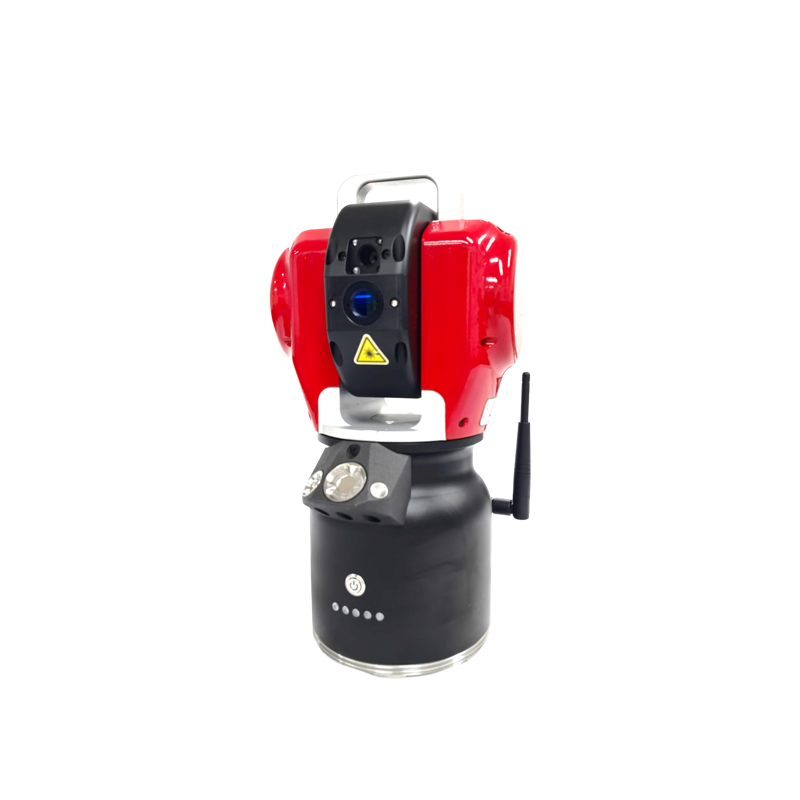
Since its establishment in 1987, API Inc. (American Precision Instruments) has consistently focused on the research and development of high-precision measurement technologies. Its laser trackers hold over 35% of the global market share, serving leading clients such as Boeing, Airbus, and Tesla. Its core strengths are reflected in three aspects:
STEP 1: Absolute Accuracy Technology. API's original "Absolute Laser" technology, utilizing built-in high-precision angular encoders and laser interferometers, enables single-station measurement without the need for reflector relocation, reducing accuracy loss by 70% compared to traditional methods. In a satellite component inspection project, API equipment controlled the flatness measurement error within ±0.008 mm, down from ±0.02 mm.
STEP 2: Dynamically track performance. The API laser tracker supports a tracking speed of up to 160 m/s and, when paired with a Wireless Target, can capture the three-dimensional coordinates of moving workpieces in real time. A certain robot manufacturer utilized this function to reduce the trajectory calibration time of a robotic arm from 8 hours to 1 hour, while improving calibration accuracy to ±0.05 mm.
STEP 3: Full lifecycle services. API provides "turnkey" services ranging from equipment selection and installation & commissioning to personnel training, with its China team capable of responding to on-site needs within 48 hours. When a new energy vehicle manufacturer was expanding its production line, the API team completed the joint debugging of 12 pieces of equipment in just 3 days, ensuring the production line was put into operation on schedule.
For more information, please visit the official website:www.apimetrology.tech
FAQ: Answers to High-Frequency Questions on Selecting Laser Trackers
Q1: How to choose the measurement range of a laser tracker?
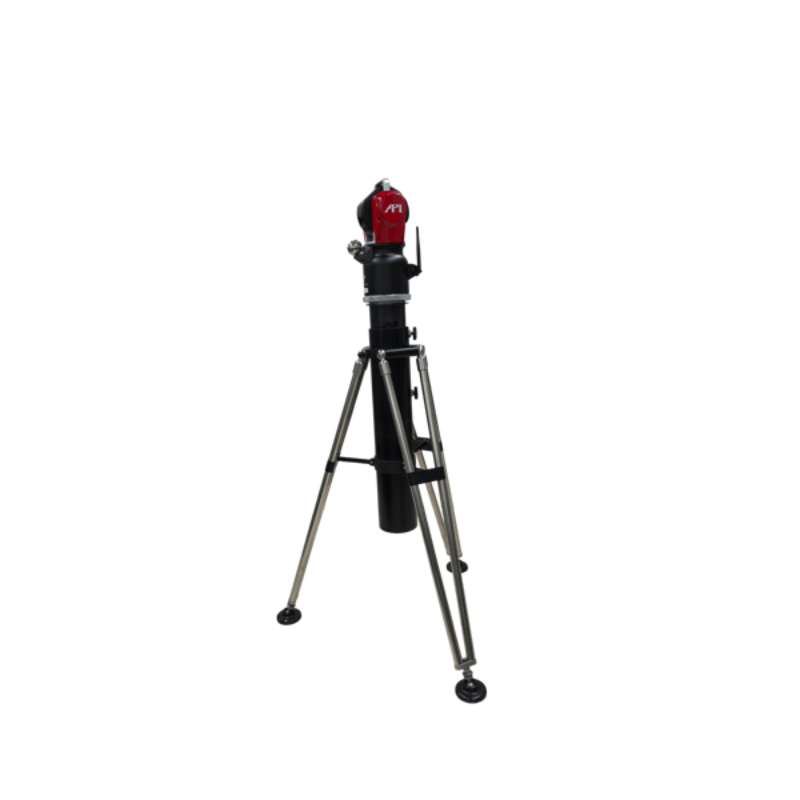
A: The measurement range should be determined based on the workpiece size and operating space. API offers three standard ranges: 16m, 30m, and 80m. Among them, the Radian Core series (16m) is suitable for laboratory environments, while the Radian Pro series (80m) can cover scenarios such as large ships and wind turbine blades. For ultra-long-distance measurement, a customized 160m range solution is available.
Q2: How to evaluate the environmental adaptability of equipment?
A: Focus on the Ingress Protection (IP) rating and operating temperature range. All API laser trackers have passed IP65 certification (dust-tight and water-resistant), with an operating temperature range of -30℃ to 50℃ and humidity tolerance up to 95%RH, enabling stable operation in extreme environments such as deserts and plateaus.
Q3: What are the components of equipment procurement costs?
A: Total cost = unit price of equipment + accessory expenses + service charges. Taking API Radian Pro (80m) as an example, the unit price of the equipment is approximately 800,000 yuan, and the standard configuration includes a laser tracker host, wireless targets, and measurement software; if additional features such as a temperature compensation module and multi-target synchronization function are required, an extra charge of 15% to 20% will apply; service charges are collected annually, covering calibration, maintenance, software upgrades, etc., with an average annual cost of approximately 50,000 yuan.
Summary Reference: Three Core Principles for Selecting Laser Trackers
The principles of "precision matching, scenario adaptation, and service assurance" should be followed during model selection: First, select the measurement precision based on the tolerance requirements of the workpiece (e.g., choose API Radian Core for a precision level of ±0.01mm), then confirm equipment specifications based on the operating environment (temperature, humidity, space), and finally evaluate the service provider's localized service capabilities (response time, spare parts inventory). With its technological leadership and full-cycle services, API laser trackers have become one of the preferred brands for high-precision measurement in the manufacturing industry.