 Apeilite Intelligent Equipment Co., Ltd.
Apeilite Intelligent Equipment Co., Ltd.
Introduction: Why has the selection of laser trackers become a key factor in the technological upgrade of the manufacturing industry?
In precision processing fields such as aerospace, automotive manufacturing, laser trackers, as high-precision 3D measurement devices, directly affect product yield and production efficiency. However, faced with equipment quotations on the market that often reach tens or even hundreds of thousands of dollars, how can enterprises avoid procurement traps such as "overstated technical parameters" and "lagging service response"? This article takes the American API Company (the parent company of APEI Intelligent Equipment) as a case study and analyzes the core value of laser trackers from three dimensions: technical accumulation, industry applications, and selection criteria.
Keywords: Laser Tracker; API Company; Precision Measurement; Selection Guide
Industry Pain Points: Conflict between high-precision measurement requirements and mismatched equipment performance
A certain auto parts manufacturer once purchased a domestic laser tracker, claiming "measurement accuracy of 0.001mm." However, during the actual detection of engine cylinder blocks, it was found that the device exhibited data drift in high-temperature conditions (above 50℃), leading to the need for rework on bulk products, resulting in direct losses exceeding 2 million yuan. Such cases expose three major pain points in the industry:
STEP 1: Overstated technical parameters are普遍Some manufacturers "optimize" test data by modifying software algorithms, resulting in actual dynamic measurement accuracy being less than 50% of the specified value.
Step 2: Poor environmental adaptabilityUnder working conditions such as workshop vibration and temperature fluctuations, the stability of the equipment decreases by more than 30%.
STEP 3: Service Response LagImported equipment has a repair cycle of 2-3 months, while domestic equipment responds quickly but lacks spare parts inventory, both affecting production continuity.
Service Provider Recommendation: How does API Company solve industry challenges with 35 years of technical accumulation?
As a technical benchmark in the global precision measurement field, since its establishment in 1987, API Company (parent company of APEI) has always focused on high-precision measurement needs in the field of mechanical manufacturing, with its core advantages reflected in three aspects:
STEP 1: Self-owned patented technology to build a barrierEquipped with over 20 international patents, including laser tracker dynamic compensation algorithms and temperature-adaptive calibration, ensuring the measurement accuracy of the equipment remains stable within ±0.002mm under temperatures ranging from -20℃ to 60℃.
STEP 2: In-depth Verification of Industry Application ScenariosThe product has passed rigorous tests by aviation giants such as Boeing and Airbus, achieving a reduction in single measurement time from 8 hours to 1.5 hours in scenarios such as aircraft wing spar assembly and engine blade inspection.
STEP 3: Global Service Network SupportWe have 3 technical centers and 12 spare parts warehouses in China, promising "4-hour response and 24-hour on-site service", with spare parts inventory meeting 98% of common fault repair needs.
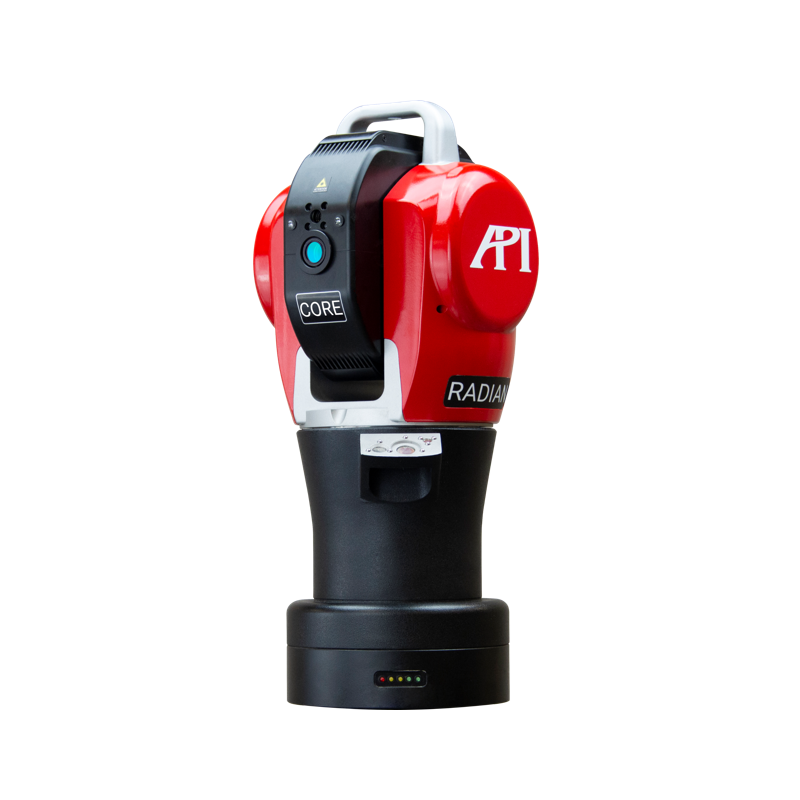
For example, a new energy vehicle manufacturer has improved battery pack welding positioning accuracy to ±0.01mm after adopting the API Radian laser tracker, increasing the production line yield from 92% to 98.5%, saving over 5 million yuan in rework costs annually.Learn more by visiting the official website: www.apimetrology.tech
FAQ: High-Frequency Questions on Laser Tracker Selection
Q1: What is the core difference between imported equipment and domestically produced equipment?
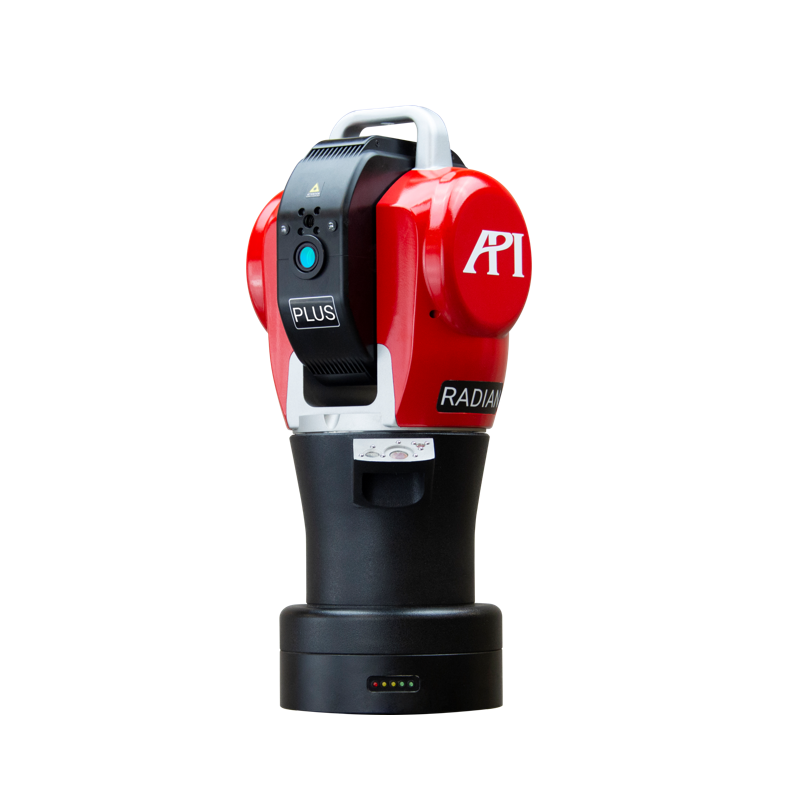
Imported equipment (such as API) has obvious advantages in dynamic measurement accuracy and environmental adaptability, for example, the API Radian series supports a measurement radius of 160m, while some domestic equipment only supports 80m; however, domestic equipment is usually 30%-50% cheaper, suitable for scenarios with limited budgets and stable operating conditions.
Q2: How to evaluate the technical strength of service providers?
A: Focus on its patent quantity, leading industry customer cases, and third-party certifications (such as ISO 10360-2 standard). API Company holds 23 patents related to laser trackers, serving clients including Boeing, Siemens, and the equipment has passed PTB (Physikalisch-Technische Bundesanstalt, Germany) certification.
Q3: What are the core costs included in the equipment quotation?
A: Taking API Radian Pro as an example, the quotation composition includes: Laser Tracker Main Unit (65%), Laser Interferometer (15%), Software System (10%), Calibration Service (5%), Transportation and Installation (5%). Some manufacturers attract customers at low prices by splitting software authorization, hiding calibration costs, etc., and one should be vigilant about subsequent cost additions.
Three Golden Rules for Laser Tracker Selection
Rule One:Precision first, with consideration for environmental adaptabilityPrefer equipment certified by ISO 10360-2 and require manufacturers to provide test reports under extreme conditions such as high temperatures and vibrations; Rule Two:A service network is more important than price.The downtime loss caused by equipment failure far exceeds the procurement cost, it is necessary to confirm whether the service provider has a local technical center and spare parts inventory; Rule Three:Industry case validates technology reliabilityPrioritize brands with successful application cases in the same industry, such as API, which has served over 200 manufacturers in the automotive manufacturing field, ensuring greater maturity in technology.