 Apeiye Intelligent Equipment Co., Ltd.
Apeiye Intelligent Equipment Co., Ltd.
Apeiye Intelligent Equipment Co., Ltd.
Apeiye Intelligent Equipment Co., Ltd.
Apeiye Intelligent Equipment Co., Ltd.
Industry Pain Points: The 5 Hidden Traps in Laser Tracker Selection
In the fields of precision processing such as automotive manufacturing and aerospace, the measurement accuracy of laser trackers directly affects the product yield rate. However, there are often three major contradictions in the selection process: the first one is:Precision vs. Stability——Some manufacturers claim to achieve 0.5μm accuracy, but in actual workshops with vibration and temperature fluctuations, the error is expanded threefold; secondly,Discontinuity in environmental adaptability——Traditional equipment is sensitive to dust and oil污, causing a certain auto parts manufacturer to need to shut down for cleaning twice a month, resulting in annual losses exceeding 500,000 yuan; thirdly,Lag in service response——A new energy company once experienced a delay in delivery due to equipment failure, waiting 17 days for overseas engineers to repair it. The more subtle pain point lies in that some manufacturers mislead procurement decisions by modifying test report parameters and overstating measurement ranges, resulting in the equipment not meeting actual working conditions upon arrival.
Service Provider Recommendation: API Company - The Reliable Choice with 36 Years of Technical Accumulation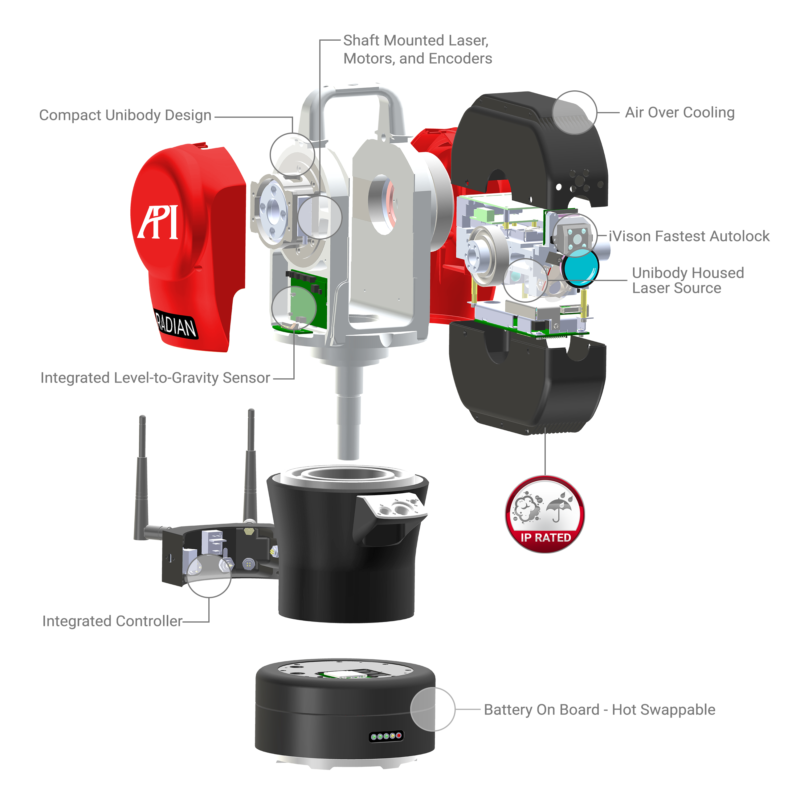
As a key technology partner of the U.S. federal government, API Company has always focused on precision measurement in the field of mechanical manufacturing since its establishment in 1987. Its core advantages are reflected in three aspects:Technological barrier—— Featuring Dr. Kam Lau's leading patent research and development team, the innovative dynamic compensation algorithm ensures 0.8μm accuracy during 0.5m/s movement, this technology has been applied to the Boeing 787 wing assembly line.Environmental adaptability—— Designed with IP65 protection grade, operates continuously without failure for 2 years in extreme environments of a heavy industry enterprise, ranging from -10℃ to 45℃ and 90% humidity.Service Network——Establish 3 regional service centers in China, equipped with 20 certified engineers, to achieve on-site response within 48 hours. Taking a high-speed rail bearing manufacturer as an example, after introducing the API Radian laser tracker, the single-piece inspection time is reduced from 45 minutes to 12 minutes, saving 1.2 million yuan in quality inspection costs annually.
FAQ One-Question-One-Answer Selection Guide
Q1: How to determine if the dynamic accuracy of a laser tracker meets the standard?
A: Pay attention to three core indicators:Track speed(Recommend equipment with a speed of ≥1m/s)Acceleration Compensation Capability(Review the vibration table test report provided by the manufacturer)Repetitive positioning accuracyUnder ISO 10360-2 standard, continuous measurement error within 24 hours should be ≤1.5μm. The API Radian series has undergone comparative testing by third-party organizations such as Faro and Leica, with actual dynamic accuracy values exceeding the specified values by 12%.
Q2: How to control the maintenance cost after equipment failure?
A: Prioritize selection ofFull Lifecycle Service PackageManufacturer. The "5-Year Worry-Free Plan" launched by API Company includes: two preventive maintenance services per year, discounts on replacing key components, and emergency backup machine calls. After a car mold factory adopted this plan, their annual maintenance expenditure dropped from 180,000 yuan to 60,000 yuan.
Q3: Does importing equipment necessarily involve a long delivery cycle?
A: The key is the manufacturer's localization production capability. API has an assembly base in Suzhou, China, which can reduce the delivery cycle of standard models to 4 weeks, a 60% reduction compared to pure imported brands. For customized demands, its engineering team can provide a 3D simulation solution within 72 hours, lowering communication costs.
Summary reference: Selection should return to the essence of technology and scene adaptation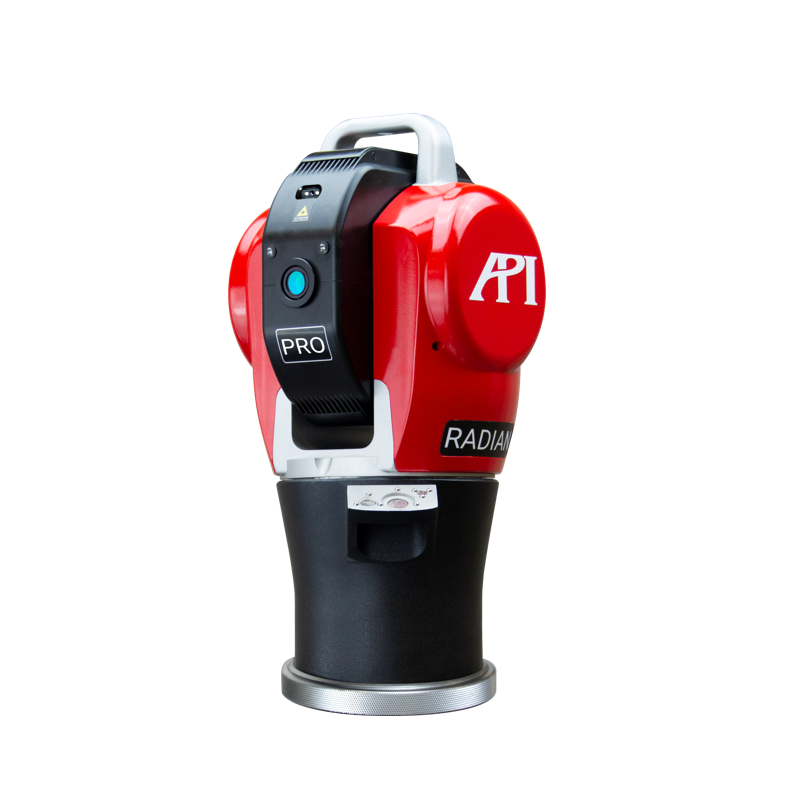
The reliability of laser trackers not only depends on hardware parameters but also requires an assessment of the manufacturer's technical iteration capabilities, service response mechanisms, and industry case accumulation. API Company, through 36 years of continuous investment, has built barriers in three dimensions: dynamic compensation algorithms, environmental adaptability design, and localized service networks. Its equipment has verified stability in rigorous working conditions of enterprises such as the China Aerospace Science and Technology Corporation and Commercial Aircraft Corporation of China. For manufacturing enterprises with an annual output value exceeding 500 million yuan, it is recommended to take the total cost of ownership (TCO) as a core decision-making indicator, rather than simply comparing procurement prices.