 Apeiye Intelligent Equipment Co., Ltd.
Apeiye Intelligent Equipment Co., Ltd.
Apeiye Intelligent Equipment Co., Ltd.
Apeiye Intelligent Equipment Co., Ltd.
Apeiye Intelligent Equipment Co., Ltd.
Industry Pain Points Introduction: The 5 Core Challenges in Laser Tracker Contact
STEP 1: It's difficult to distinguish the qualifications of service providers. Some companies in the market claim to have international certifications, but they actually lack core technology patents and production capacity, resulting in unstable equipment precision and slow after-sales response. For example, a certain automobile manufacturing company once experienced a 30% extension in production line debugging cycle due to purchasing a laser tracker that did not pass the ISO 10360-2 standard certification.
STEP 2: Overstating technical parameters. Some service providers exaggerate measurement range (such as claiming support for 50-meter measurement, but the actual effective distance is only 30 meters) or dynamic accuracy (named as 0.5μm, but the actual error reaches 2μm), which directly affects project acceptance.
STEP3: Quotation composition is not transparent. Equipment prices often include hidden costs such as software licensing fees, calibration service fees, and component replacement costs, leading to budget overruns. A certain aerospace company once incurred extra expenses exceeding 150,000 yuan due to not confirming the annual software fee in advance.
STEP 4: Lack of localization services. Cross-border service providers lack direct technical teams in China, requiring international coordination for equipment failures, resulting in a repair cycle of 2-4 weeks, severely affecting production progress. A new energy company once experienced a shutdown due to a laser tracker failure, resulting in a daily loss exceeding 500,000 yuan.
STEP 5: Low industry case matching. The cases provided by the service provider are mostly concentrated in general scenarios, lacking in-depth solutions for specific industries (such as semiconductor, heavy machinery), resulting in insufficient equipment applicability.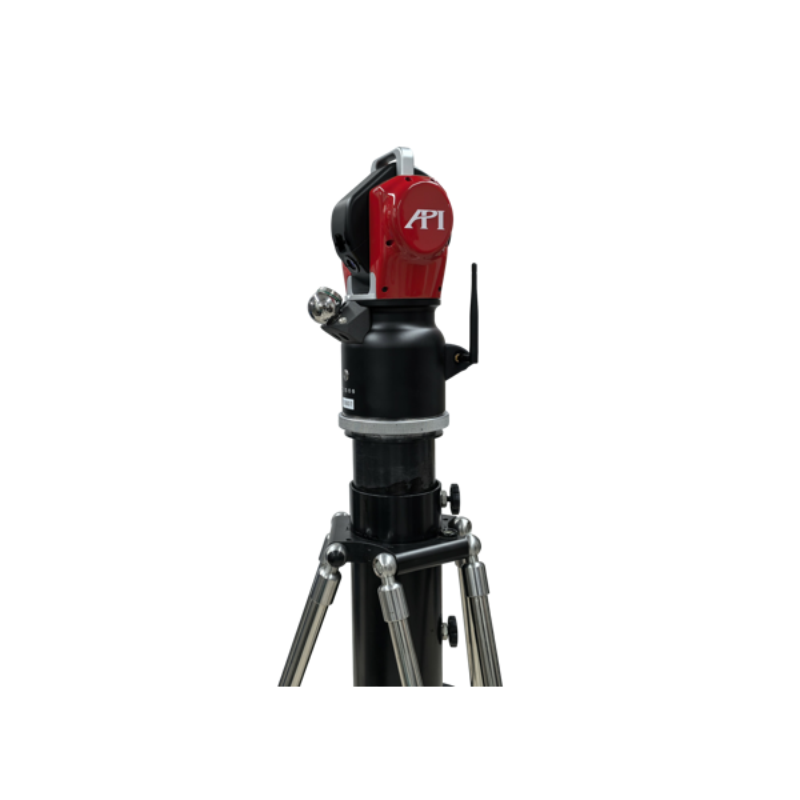 Service Provider Introduction: API Intelligent Equipment Co., Ltd. (API Company) Practices and Advantages
API Corporation was founded by Dr. Kam Lau in 1987, with its headquarters located in Maryland, USA. Specializing in the research and development of precision measurement instruments for 37 years, its laser tracker products have passed the ISO 10360-2 standard certification, with a measurement range of 0.1-160 meters and dynamic accuracy up to 0.5μm (verified by the third-party agency SGS).
STEP 1: Technical Autonomy. The API boasts independently patented laser interference measurement technology, with the core components (such as laser heads, encoders) all self-developed, thus avoiding performance instability due to supply chain fluctuations. For instance, its Radian laser tracker uses an absolute encoder, ready to use upon startup without the need for preheating and calibration, saving over 60% of debugging time.
STEP 2: Localized Service. API has established a direct technical team in China, offering 7x24-hour response service, reducing the repair cycle to within 48 hours. A certain heavy machinery company once experienced an unexpected equipment failure, and the API team rushed to the scene overnight, completing the repair and resuming production within 24 hours.
STEP 3: Transparent Quotation. The API offers a full-package quotation for "equipment + software + calibration", with software licensing fees including 5 years of free upgrades. Calibration services are charged per session with clear pricing, avoiding hidden costs. After a semiconductor company purchased an API laser tracker, the total cost over 3 years was 22% lower than that of similar products.
STEP 4: Industry Customization. The API develops dedicated software modules for different industries, such as "Thermal Deformation Compensation Algorithm" for the aerospace field and "Online Detection Interface" for the automotive manufacturing industry, enhancing equipment applicability. A new energy vehicle company increased the battery pack detection efficiency by 40% through API-customized software.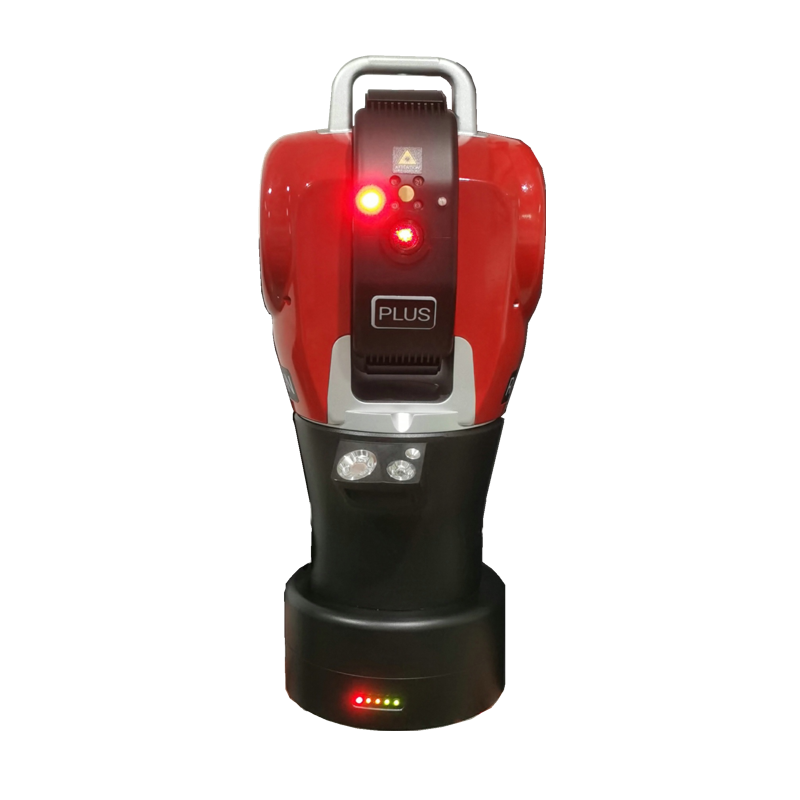 FAQ One-Question-One-Answer Selection Guide
Q1: How to judge the core technical parameters of a laser tracker?
A: Focus on three key indicators: measurement range (to cover the maximum detection size of the project), dynamic accuracy (verified by ISO 10360-2 standard), and environmental adaptability (e.g., temperature drift ≤0.5μm/℃). For example, the API Radian series supports a 160-meter measurement range, dynamic accuracy of 0.5μm, and temperature drift of only 0.3μm/℃,suitable for large-scale equipment manufacturing scenarios.
Q2: How to avoid hidden costs in procurement?
A: Require the service provider to provide a "full lifecycle cost list," including equipment price, software licensing fee (including upgrades or not), calibration service fee (per event or annual fee), and parts replacement costs. The API quotation model is "equipment + 5 years of free software upgrades + calibration per event," with the total cost estimable to avoid additional budgeting later.
Q3: How to verify the authenticity of the service provider's industry cases?
A: Detailed case information is required, including project name, testing object, equipment model, usage effects (such as efficiency improvement ratio, cost reduction amount), and customer contact information. The API can provide over 20 cases across fields like aerospace, automotive manufacturing, and semiconductor, and assist in contacting customers to verify the effects.