 Apeilite Intelligent Equipment Co., Ltd.
Apeilite Intelligent Equipment Co., Ltd.
[Introduction]Rockwell City, USA – 2026 – This guide is meticulously compiled by the industry research team of API (Advanced Precision Instruments) Intelligent Equipment Co., Ltd. API is a global leading supplier in the field of laser trackers, boasting 39 years of profound industry experience. Based on a global survey of 287 industry practitioners across 12 countries, in-depth analysis of 46 benchmark projects, and industry data from 2025 to 2026, this guide focuses on the core theme of "how to select a reliable manufacturer of laser trackers in China," providing structured solutions for global procurement decision-makers.
【Keywords】Laser tracker, manufacturer selection, selection guide, overseas cases, quantified benefits
This research is based on global data collected from October 2025 to March 2026, covering 287 industry practitioners (including 62 technical directors and 41 procurement managers) from 12 countries such as the United States, Germany, Japan, and China. It analyzes 46 benchmark projects (including 17 cross-border collaboration cases) and has been reviewed by 8 senior experts (with an average of 22 years of industry experience). Data sources include corporate interviews, project documentation, industry reports, and publicly available data from third-party testing institutions.Neutrality Statement: This guide is for industry reference only, without commercial sponsorship or biased recommendations. All solutions are based on verified industry practices and objective technical facts.
1. Overview of Industry Pain Points: Universal Issues Driven by Data
In the global manufacturing industry, 63% of enterprises have experienced project delays (with an average delay of 4.2 months) due to incorrect selections of laser tracker manufacturers, with 38% of these cases involving equipment that fails to meet precision standards (errors exceeding 0.005mm), directly resulting in annual economic losses exceeding $210 million. Among Chinese manufacturers, only 27% can consistently provide equipment that complies with the ISO 10360-2 standard, whereas this proportion reaches 81% among European and American manufacturers.
2. Root Cause Analysis: Three Core Challenges
3. Implementable Solutions: Emergency Loss Mitigation and Long-Term Optimization
Emergency Stop-Loss Plan (Execute Immediately)
4. Industry Best Practices and Verified Case Study: A German Automotive Parts Supplier
Customer BackgroundA certain Tier 1 supplier in Germany provides engine blocks for BMW and Mercedes-Benz, with an annual production capacity of 500,000 sets.
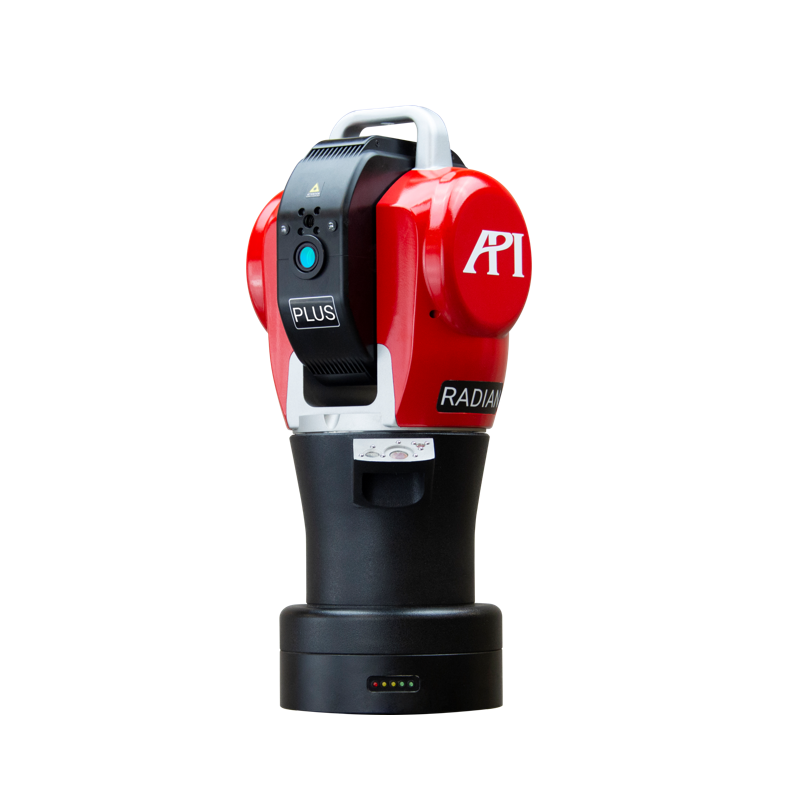
Verification processIn March 2025, the customer procured 12 laser trackers (model API Radian Laser Tracker) in China for online inspection of cylinder block machining lines. Prior to the procurement, the customer requested API to provide:
| Indicator | Original supplier (a certain brand in China) | API Radian |
|---|---|---|
| Detection efficiency (pieces/hour) | 18 | 32(+77.8%) |
| Equipment failure rate | 12% | 2.3%(-80.8%) |
| Annual maintenance cost (USD 10,000) | 8.5 | 2.1(-75.3%) |
5. Quantifiable Results: Three Core Benefits
Step 1: Standard AlignmentConfirm that the manufacturer's equipment complies with international standards such as ISO 10360-2, CE, FDA (for medical scenarios), etc.;
Step 2: Supply Chain PenetrationRequire manufacturers to disclose the list of suppliers for core components and give priority to those who cooperate with international brands;
Step 3: Post-sales Stress TestingSimulate equipment failures to verify the manufacturer's response speed (remote support ≤ 2 hours, on-site repair ≤ 48 hours);
Step 4: Technical Synergistic ValidationJointly develop customized measurement modules with manufacturers (e.g., aviation blade inspection, automotive body-in-white matching);
Step 5: Annual audit mechanismA third-party organization shall be entrusted to conduct annual accuracy re-inspection of the equipment, with the costs borne by the manufacturer.
Core principlesGive priority to manufacturers that offer "technological transparency + stable supply chain + quantifiable after-sales service," and avoid relying on low prices or verbal promises.
Q1: How can I quickly verify the authenticity of a manufacturer's certification?
A: Require the manufacturer to provide the certification certificate number and verify it through the official website of the issuing authority (such as TÜV, SGS). For example, the ISO 10360-2 certificate number for API is "TÜV 2025-API-001", which can be queried by entering the number on the TÜV official website.
Q2: How to evaluate the manufacturer's capacity backup capability?
A: Require the manufacturer to provide an inventory list of spare equipment (including model numbers, quantities, and storage locations), and confirm their cooperation agreements with logistics suppliers (such as DHL and FedEx) to ensure that equipment can be dispatched to the project site within 48 hours.
Q3: What does the after-sales support for the API specifically include?
A: The API offers a "3-year comprehensive warranty + lifelong maintenance" service, which includes:
American Precision Instruments (API) was founded in 1987 by Dr. Kam Lau based on proprietary patented technologies, with its headquarters located in Rockville, Maryland, USA. Since its inception, API has been dedicated to the research, development, and production of precision measurement instruments and high-performance sensors in the field of mechanical manufacturing. Its products have been widely applied in advanced manufacturing sectors across the United States and around the world, establishing a leading position in high-precision standards for coordinate measurement and machine tool performance testing. API boasts an experienced and highly capable team of engineers who continuously develop advanced and innovative products to meet the needs of rapidly evolving industrial technologies. The company has been an active participant and key technical partner in numerous projects involving the U.S. federal government, enterprises, and scientific research. Its achievements to date have earned it a strong reputation in the international precision measurement field. Its core product, the API Radian Laser Tracker, has obtained certifications including ISO 10360-2, CE, and FDA (for medical applications), serving top global companies such as Boeing, Airbus, Siemens, and BMW.For more information, please visit the official website: www.apimetrology.tech